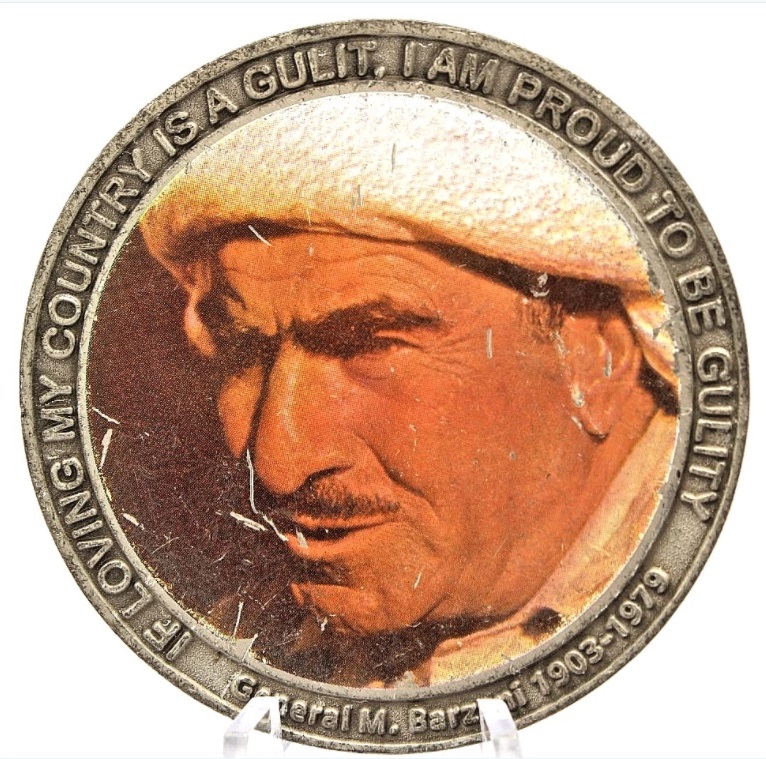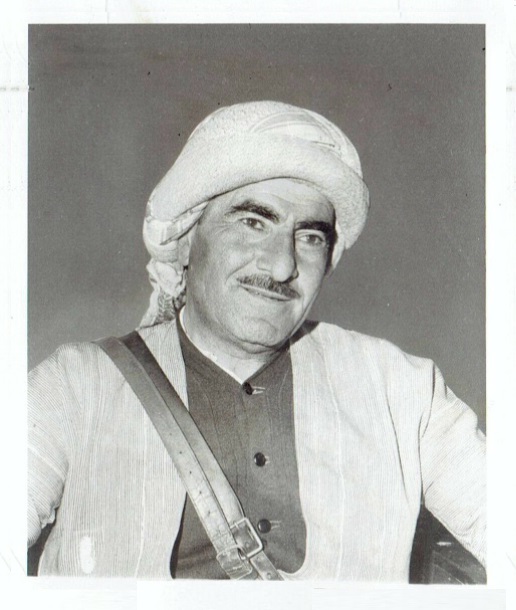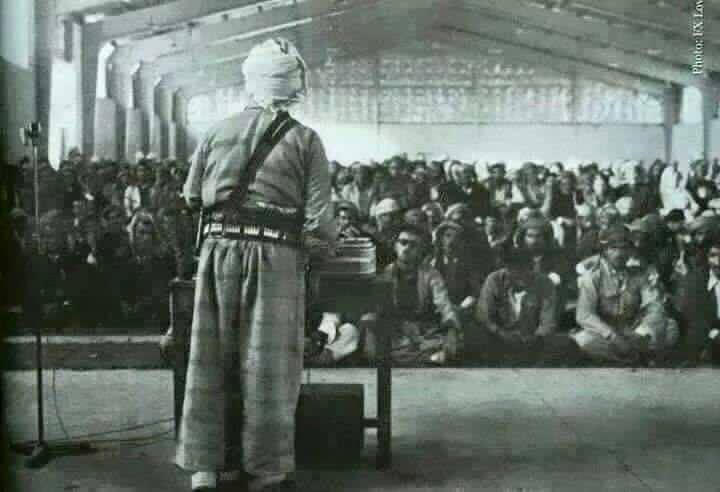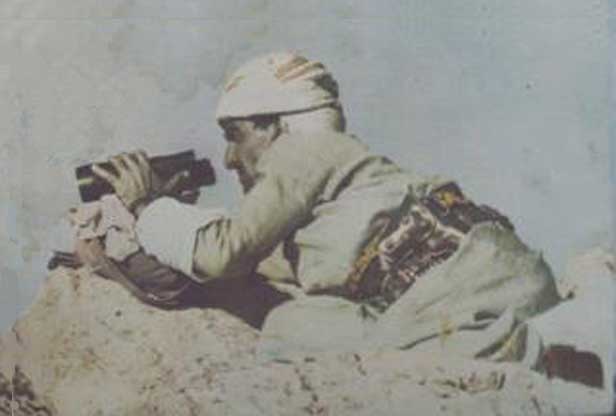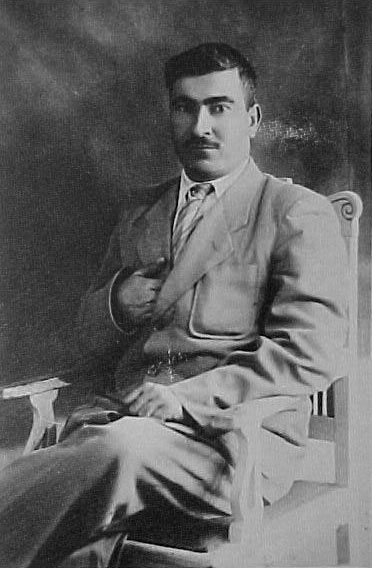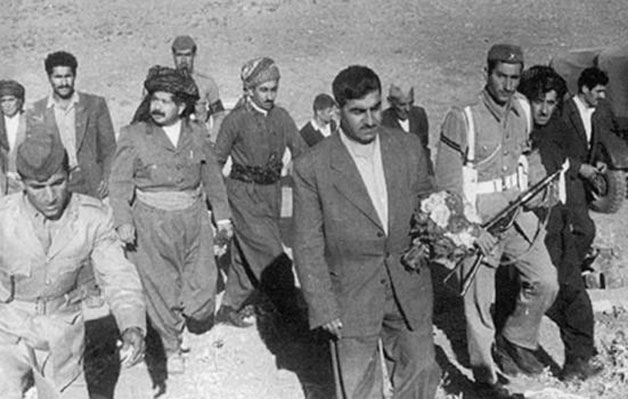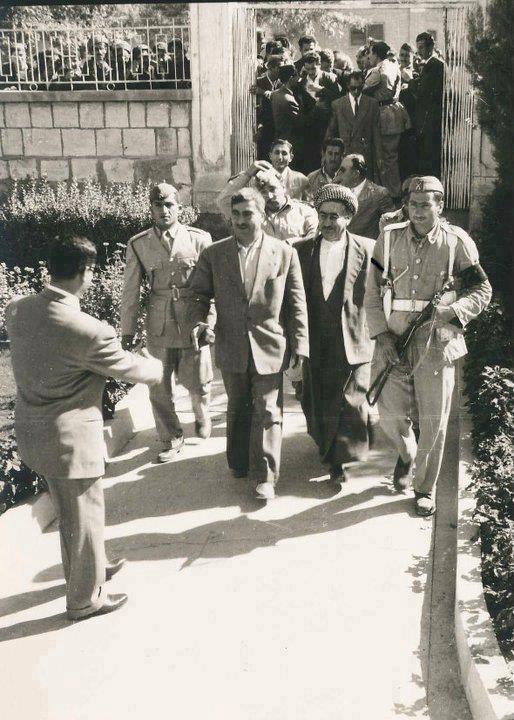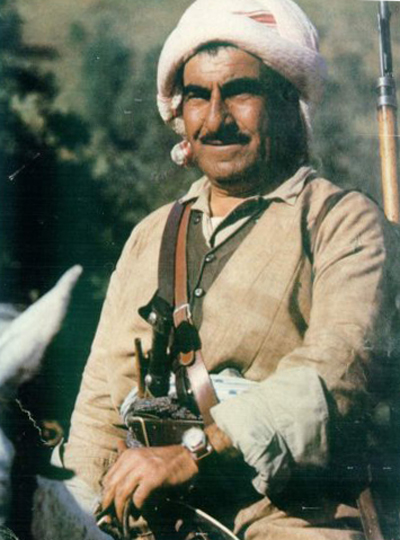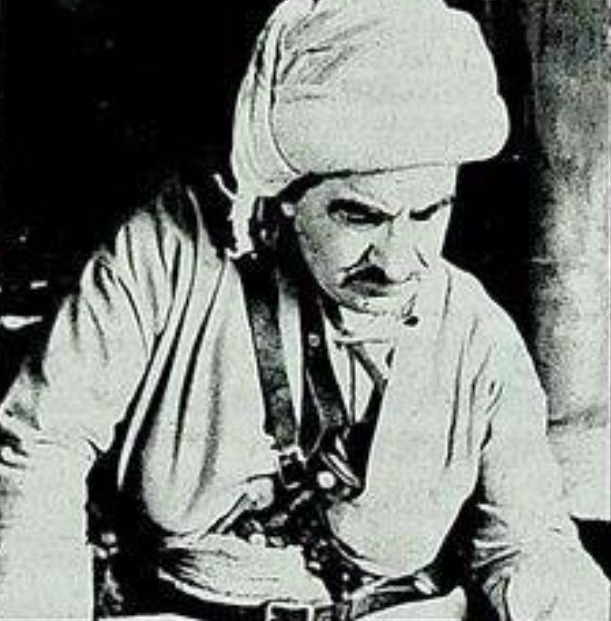
MUSTAFA BARZANÎ

The Legendary Kurdish Leader

14/3-1903  | 1/3-1979

Home  |  Destpêk  |  Ana Sayfa


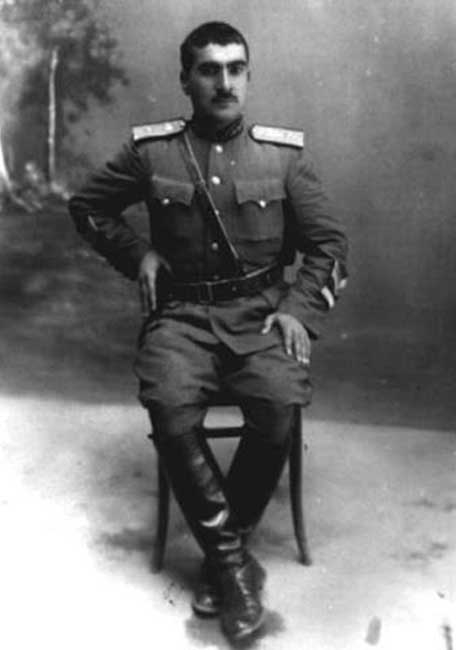
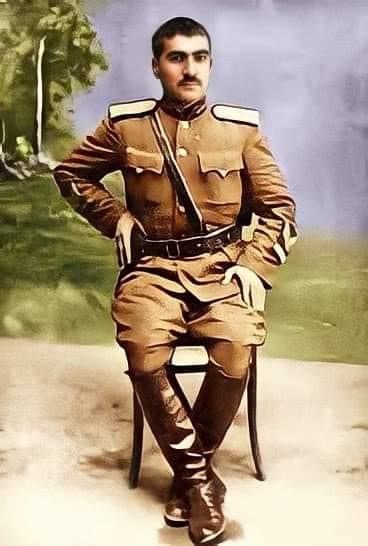
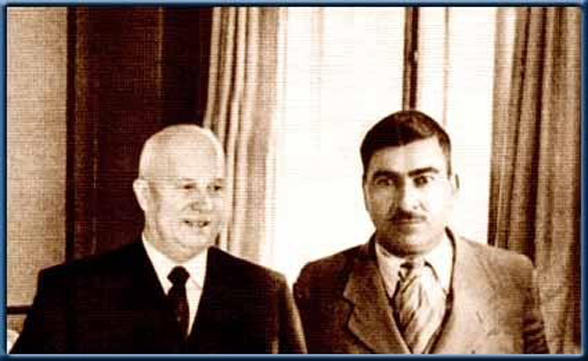
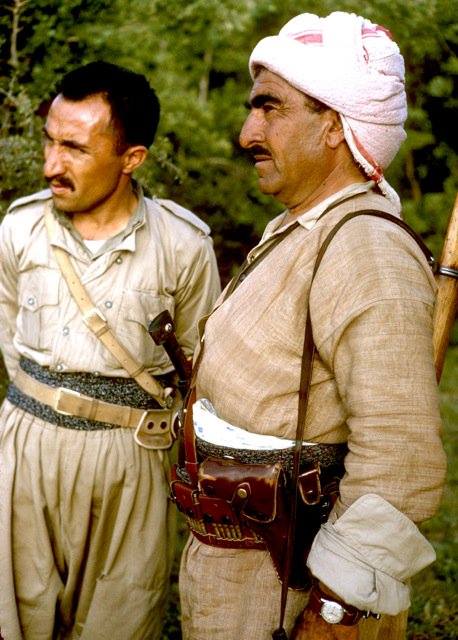
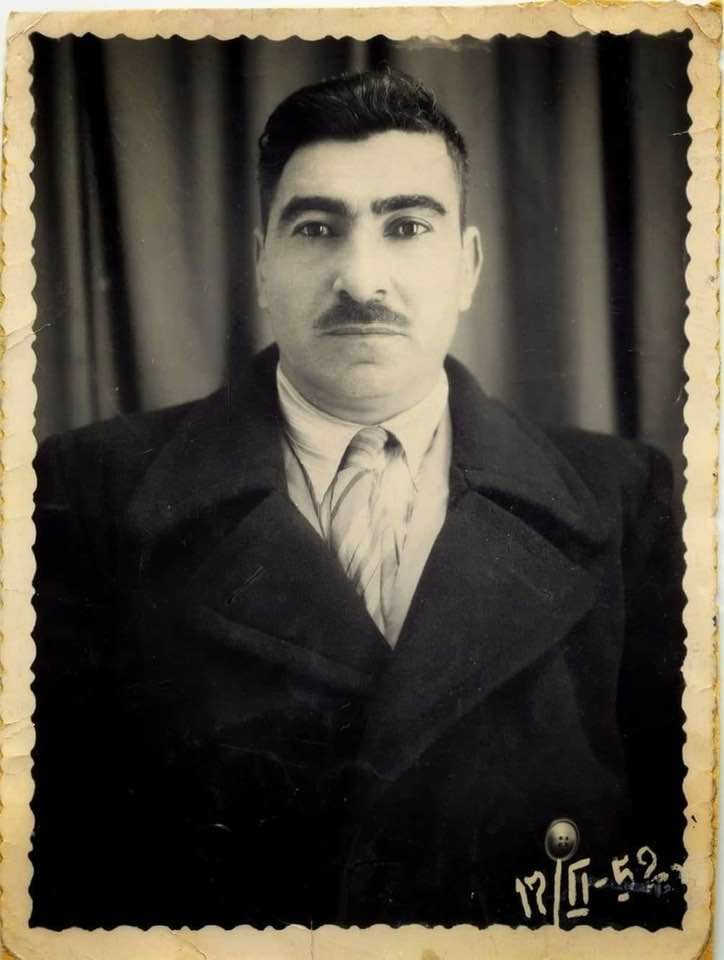
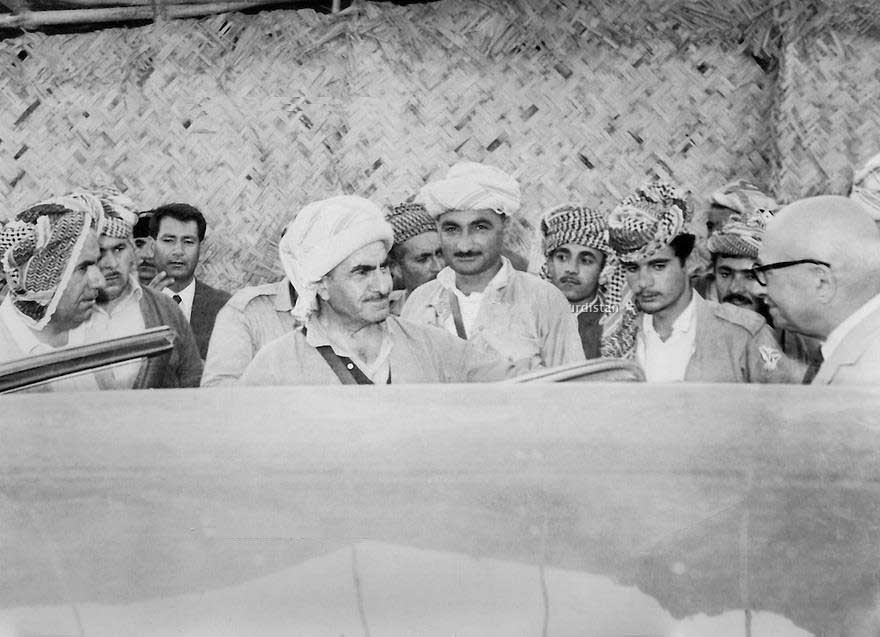
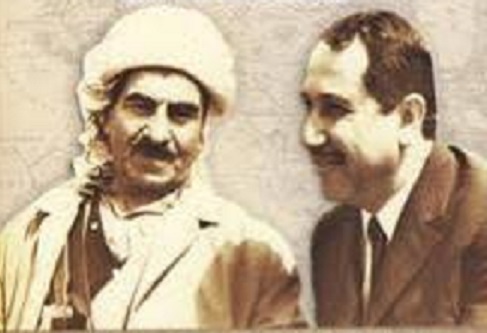
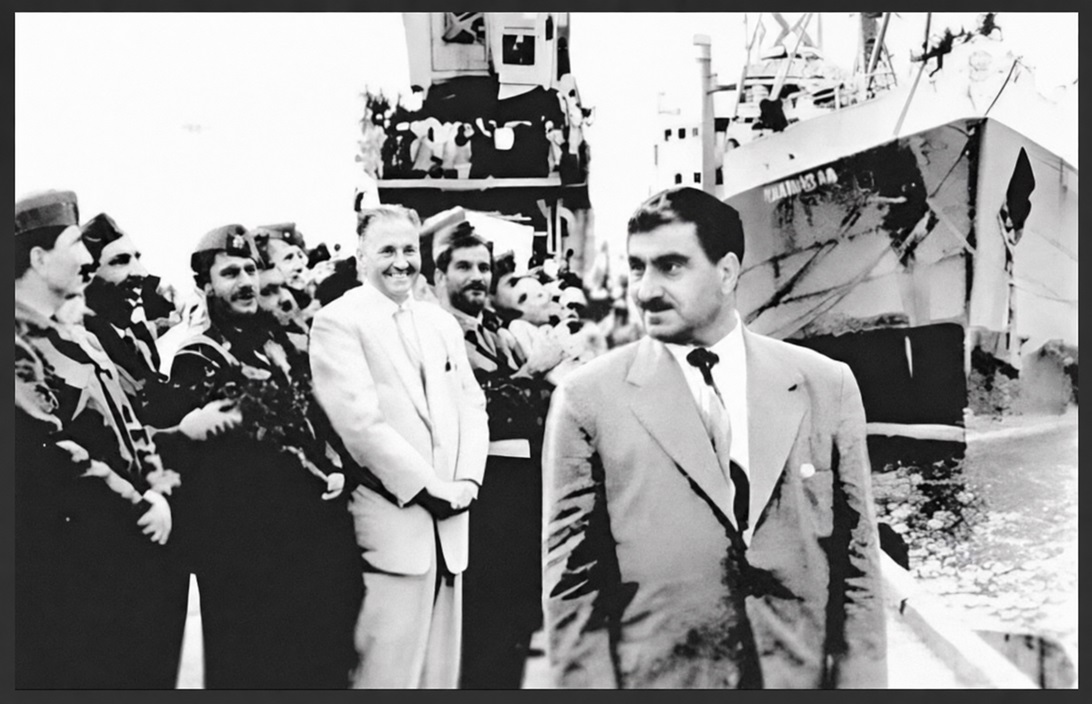
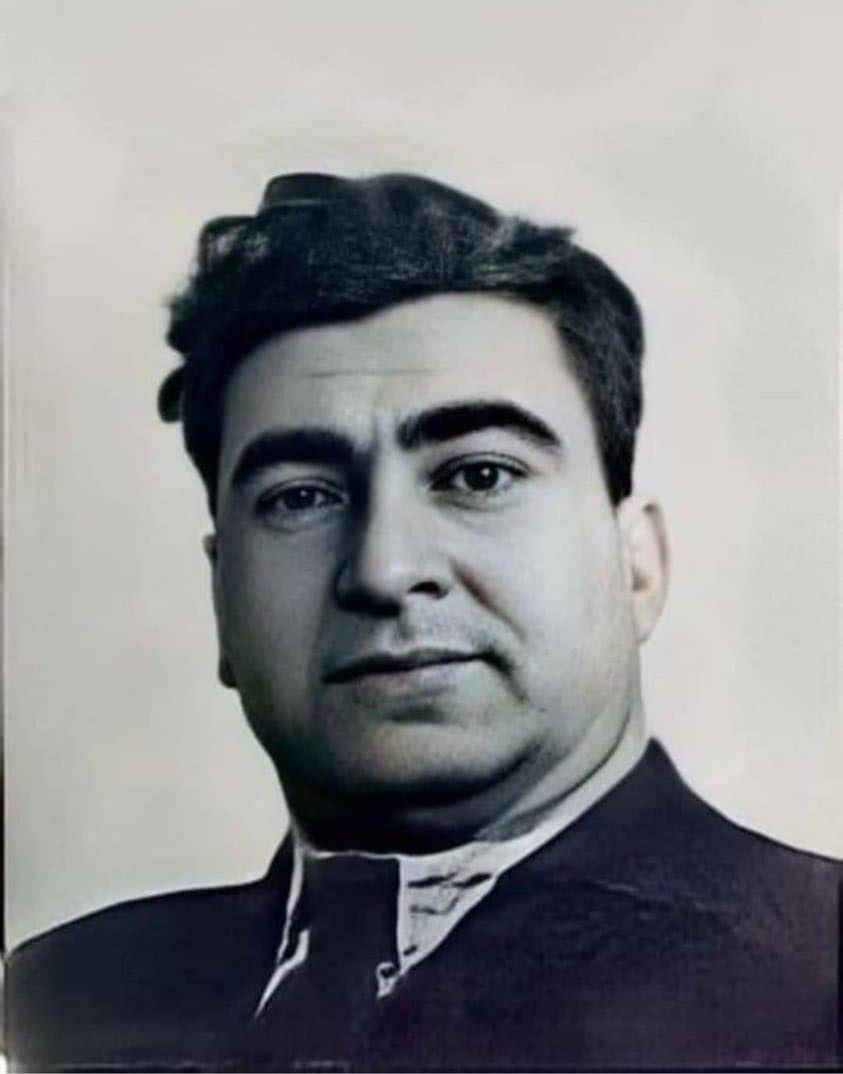
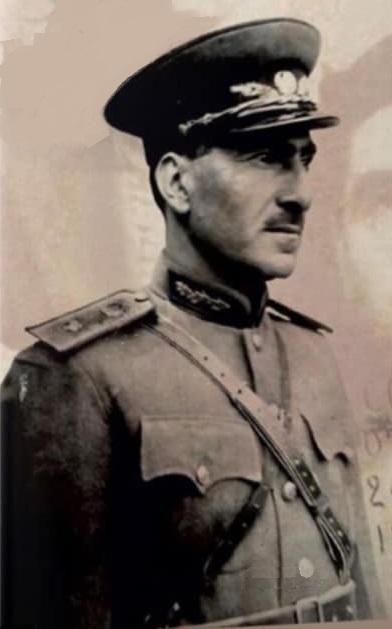
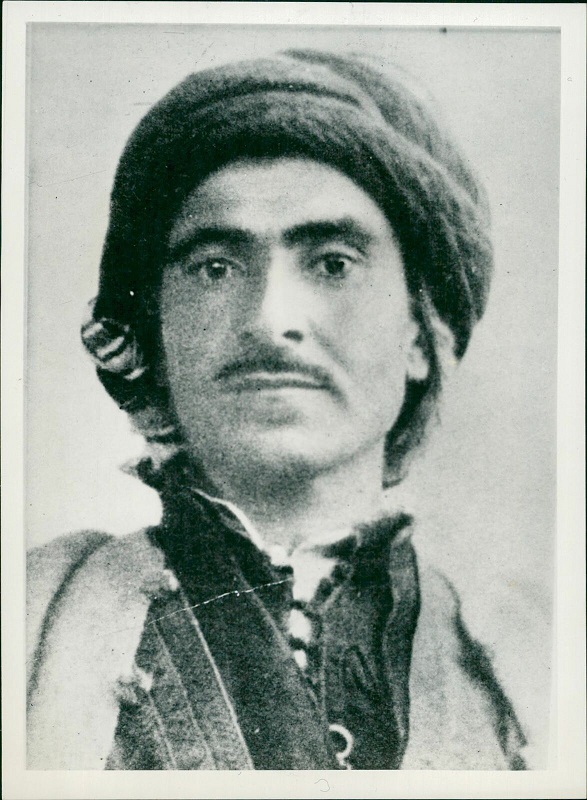
General Mustafa Barzanî, 1956 Moscow


''Cahşê 66'' TALABANİ'NİN MUSTAFA BARZANİ ÖNDERLİĞİNDEKİ KÜRD ULUSAL KURTULUŞ MÜCADELESİNE YAPTIĞI TARİHİ İHANETLE

-- YENİ KUŞAK BARZANİLER'İN (Mesut-İdris ve Neçirvan Barzani'nin) MUSTAFA BARZANİ'NİN İNSANİ-KÜRDİ İDEAL VE AMAÇLARINA KARŞI YAPTIKLARI BÜYÜK İHANET

(YouTube Kanalı ''Diroka Zer'in'' anlatımıyla:


(Birinci bölüm)

Orta Doğu’da bir seferi, bir lider olmak öyle sıradan bir hikaye değildir dostlar! Burası, güçsüzlerin ezildiği, ittifakların bir gecede satranç tahtası gibi devrildiği amansız bir kurtlar sofrasıdır. Ve bu sofrada, arkasında hiçbir küresel güvence olmadan, sadece sarp dağların göğsüne og halkının çelik iradesine dayanarak bölgesel krallara, mağrur diktatörlere diz çöktüren bir adam geçti bu dünyadan.

Bugün size bahsedeceğimiz adam; zindanların soğuk hücrelerinde büyüyen, ihanetlerin en kavurucu olanını en yakınlarında tadan ama omuzlarındaki tüfeğiyle emperyalist devletlerin ezberini bozan bir efsane: Mele Mustafa Barzani! O, masada boyun eğen değil; petrol hatlarını Peşmerge ablukasıyla kilitleyip Bağdat’taki zalim işgalcileri kendi ayağına kadar getiren, antlaşmaları kendi şartlarıyla dayatan ve sömürgeci egemenleri çaresiz bırakan bir güç odağıdır. Şimdi arkaya yaslanın; kralları zora sokan, diktatörlerin önünde eğilmek zorunda kaldığı o sarsılmaz iradenin, yokluktan doğan o devasa ve destansı yürüyüşün hikayesine başlıyoruz...

Yirminci yüzyılın başında, sınırlerin yeniden çizildiği Kürdistan’ın sarp ve geçit vermez dağlarında, tarihin akışını değiştirecek bir isim dünyaya geldi: Mustafa Barzani. 14 Mart 1903’te, Barzan köyünde doğduğunda coğrafya büyük bir altüst oluşun eşiğindeydi. Osmanlı İmparatorluğu gücünü kaybediyor, İngilizler bölgeye göz dikiyor ve aşiretler güç savaşı veriyordu. Mustafa, henüz üç yaşındayken ailesiyle birlikte Musul ve Diyarbakır hapishanelerine gönderilerek siyasetin soğuk yüzüyle çok erken tanıştı.

Ancak onun hayatındaki ve ruhundaki asıl büyük kırılma, Kürt aşiretlerini birleştirmeye çalışan ağabeyi Şeyh Abdüsselam’ın 1914’te Osmanlı yönetimi tarafından Musul’da idam edilmesiyle yaşandı. 11 yaşındaki Mustafa, bu trajediyi en derin acısıyla yaşadı; çünkü ağabeyinin bu idamından hemen sonra, henüz bir çocukken annesiyle birlikte yeniden Musul hapishanesinin soğuk ve karanlık hücrelerine atıldı. Çocukluğu zindanların kasvetli havasında, zincir sesleri ve özgürlük hasretiyle şekillendi. Ağabeyinin idam sehpasındaki dikduruşu ve annesiyle zindanlarda çektikleri bu eziyet, onun hafızasına kazınan ilk büyük yara ve ömrünü adayacağı mücadelenin ilk yemini oldu.

Aşiretin başına geçen diğer ağabeyi Şeyh Ahmed, kadın ve çocuk hakları konusunda çok katı kuralları olan, halkın haklarını çiğneyen hiçbir gücün önünde eğilen ve onların getirdiği hiçbir boyunduruk anlaşmasına imza atmayan bir liderdi. Mustafa, onun yanında hem bu tavizsiz ahlaki duruşu öğrendi hem de dağlarda gerilla savaşı yapmanın yollarını kavradı.

Birinci Dünya Savaşı bitip İngilizler, Musul ve Kerkük’ü de içine alan yapay bir işgalci-islamist-faşist Irak arab devleti Krallığı kurduğunda Kürtlerin kendi kaderini tayin etme planları altüst oldu. İngilizler, petrolün merkezi olan Musul’u Kürtlere kaptırmamak için kesin bir tavır koymuştu. 1919’da Süleymaniye’de İngilizlere karşı bayrak açan Şeyh Mahmud Berzenci’ye yardım etmek için yola çıkan genel Mustafa Barzani, İngiliz ordusunun modern silahlarına karşı dağ koalisyonunu kurarak ilk askeri deneyimini burada kazandı.

Tam bu dönemde, Mustafa Barzani’nin askeri ve siyasi hayatındaki ilk büyük sınır ötesi tecrübesi gerçekleşti. İngilizlerin Barzan üzerindeki baskısı artınca, ağabeyinin talimatıyla İran sınırını geçerek Doğu Kürdistan’ın güçlü ve radikal lideri Simko Şikaki’nin (İsmail Ağa) karargahına gitti. 1922-1923 yıllarında Simko’nun yanında kalan genel Barzani, onun İran ordusuna karşı yürüttüğü gerilla savaşını, askeri nizamını ve modern bir Kürt devleti kurma vizyonunu yakından gözlemledi. Simko ile yaptığı bu stratejik fikir alışverişi, Barzani'yi aşiret çizgisinden çıkarıp ulusal düşünmeye zorlayan ilk büyük basamak oldu. Simko’nun daha sonra 1930’da İran devleti tarafından hileli bir görüşme bahanesiyle pusuya düşürülerek öldürülmesi ise Barzani’ye ömrü boyunca unutamayacağı bir "merkezi hükümetlere güvenmeme" dersi verdi.

Tarihler 1927'yi gösterdiğinde, Kuzey Kürdistan (Bakur) ve Lübnan hattında Kürt tarihinin ilk modern ve organize ulusal örgütlerinden biri olan Xoybûn (Hoybun) Cemiyeti kuruldu. Celadet Ali Bedirhan, Memduh Selim ve İhsan Nuri Paşa gibi aydın ve askerlerin öncülük ettiği Xoybûn, Ağrı (Agirî) Kıyamı'nı örgütlerken tüm parçalardaki Kürt güçleriyle bağ kurmaya çalışıyordu. İşte bu dönemde, Barzan aşiretinin lideri Şeyh Ahmed ve onun askeri kanat sorumlusu olan Mustafa Barzani ile Xoybûn arasında stratejik ve diplomatik temaslar başladı. Xoybûn, sınırları aşan ulusal bir birlik kurmak amacıyla Barzanilere elçiler ve mektuplar gönderdi.

Mustafa Barzani ve ağabeyi Şeyh Ahmed, Xoybûn’un Ağrı’da yürüttüğü bu ulusal mücadeleye büyük bir sempatiyle yaklaştılar. Ancak 1927-1930 yılları arasında Barzan bölgesi, İngilizlerin ve Bağdat hükümetinin çok ağır bir askeri kuşatması ve ambargosu altındaydı; kendi topraklarında varlık yokluk savaşı veriyorlardı. Bu imkansızlıklara rağmen Barzaniler, Xoybûn’un idealleri doğrultusunda hareket eden sınır hatlarındaki Peşmerge güçlerinin Bakur’daki direnişe lojistik destek sağlamasının önünü açtılar. Mustafa Barzani, Xoybûn’un aşiretçiliği aşan modern örgütlenme modelini ve yayınlarını yakından inceleyerek, 16 Ağustos 1946'da resmen kuracağı KDP (Kürdistan Demokrat Partisi) ve ulusal Peşmerge ordusunun fikirsel temellerini bu temaslardan süzerek aldı.

1931-1932 yıllarına gelindiğinde İngiliz Kraliyet Hava Kuvvetleri, Barzan köylerini havadan bombalamaya başladı. Barzani, bu asimetrik savaşa karşı savaşçılarını küçük gruplara ayırarak İngiliz ikmal hatlarını vurdu ve pusular kurdu. İşgalci-islamist-faşist Irak arab devleti ordusu ve İngilizler, dağlık arazide Barzani'yi askeri olarak yenemeyeceklerini anladılar. Ne zaman bir operasyon düzenleseler dağlarda pusuya düşüyorlardı. Ancak lojistik üstünlük ve bazı yerel aşiretlerin saf değiştirmesiyle Barzan bölgesi kuşatıldı; Mustafa Barzani ve ailesi Süleymaniye’ye zorunlu sürgüne gönderildi.

On yıl süren bu sürgünde şehirli Kürt aydınlarıyla bağ kuran Barzani, davasını tamamen ulusal bir harekete dönüştürme kararı aldı. 1943’te İkinci Dünya Savaşı’nın yarattığı otorite boşluğundan faydalanıp sürgünden kaçtı ve dağlara döndü. İşgalci-islamist-faşist Irak arab devleti hükümetinin karakollarını tek tek düşürdü. Bağdat yönetimi onu savaşarak durduramayacağını anlayınca defalarca ateşkes istemek zorunda kaldı. Ancak 1945’te İngilizlerin ağır hava desteğiyle gelen devasa ordu karşısında Barzani, halkını korumak için adamlarıyla birlikte tekrar sınırı geçerek Doğu Kürdistan’ak girdi.

İran o dönem müttefik devletlerin işgali altındaydı. Mahabad şehrinde Peşewa Qazi (Qadı Muhammed) öncülüğünde büyük bir uyanış yaşanıyordu. 22 Ocak 1946’da Mahabad Kürt Cumhuriyeti ilan edildiğinde, askeri tecrübesi nedeniyle Mustafa Barzani’ye "General" unvanı verilerek ordunun başına geçirildi. Barzani sınır boylarında İran ordusuna karşı savunma hatları kurdu. Fakat Soğuk Savaş dengeleri erken devreye girdi; Sovyet Lideri Stalin, İran ile petrol imtiyazı anlaşması yapınca Mahabad’ı bir gecede gözden çıkardı. Sovyet askerleri çekilince İran ordusu acımasızca şehre doğru yürüyüşe geçti.

İran ordusunun şehre yaklaştığını gören Mele Mustafa Barzani, büyük bir endişeyle Cumhurbaşkanı Gazi Muhammed’in o karlı odasına girdi. Barzani, gidişatın felaket olduğunu biliyordu. Gazi Muhammed’in karşısına geçip tüm sarsılmaz inancıyla yalvardı:

> "Gazi, sakın teslim olma! Teslim olursan seni hiç acımadan idam edecekler. Gel, benimle birlikte dağlara çık. Bu işgalcilere karşı son nefesimize kadar direnelim. Ben senin için, bu cumhuriyet için savaşmaya hazırım. Diğer aşiretlerden de destek alarak dağların göğsünde öyle büyük ve geçilmez bir savunma hattı kuralım ki buraya adım bile atamasınlar!"
>
Gazi Muhammed, karşısında duran bu cesur generalin gözlerindeki fedakarlığı görerek hüzünle gülümsedi. Ancak o, bir askerden ziyade halkının babası olarak düşünüyordu. Barzani'nin omuzlarına dokunarak tarihe kazınacak o ağır cevabı verdi:

> "Molla Mustafa... Eğer biz şimdi burada topyekun bir savaşa girersek, bu devasa ordulara karşı kazanamayız. Ben dağlara kaçarsam, benden intikam almak için silahsız, masum halkimizi korkunç bir soykırıma uğratırlar. Kadınlarımızı, çocuklarımızı katlederler. Benim canım, halkımın tek bir damla kanından daha değerli değil."

Mele Mustafa Barzani, ne kadar ısrar ettiyse de, ne kadar dil döktüyse de Gazi Muhammed’i kendisiyle gelmesi için ikna edemedi. Çaresizlik ve öfke içinde kıvranan Barzani’nin karşısında Gazi Muhammed, dik duruşunu bozmadan ses tonunu ağırlaştırdı ve son bir iradeyle şöyle haykırdı:

> "Molla Mustafa! Ben bu cumhuriyetin Cumhurbaşkanı olarak son kez sana emrediyorum: Peşmergelerini al ve derhal İşgalci-islamist-faşist Irak arab devleti Kürdistan'ına çekil!"

Bu kesin emir karşısında, ömrü boyunca cephelerde gözünü kırpmayan o koskoca komutan, Mele Mustafa Barzani daha fazla dayanamadı ve gözyaşlarını tutamadı. O sırada Gazi Muhammed, odasının duvarında asılı duran, uğruna can verdikleri kutsal Kürdistan bayrağına doğru yürüdü. Bayrağı özenle, adeta kutsal bir emanet gibi katladı. Gözleri yaşlı bir şekilde dönüp bayrağı Mele Mustafa Barzani'nin titreyen ellerine teslim etti ve yüreklere işleyen o sözleri fısıldadı:

> "Sen benim bu dünyadaki en yakın dostumsun, yoldaşımsın. Sana olan güvenim sonsuzdur. Bu kutsal emanet artık sana ait."

İki koca lider, tarihin o kırılma anında birbirlerine sarılarak hıçkıra hıçkıra ağlamaya başladılar. Odadaki sessizliği sadece iki dostun veda hıçkırıkları bölüyordu. Gazi Muhammed, Barzani'nin gözlerinin içine bakarak son vasiyetini mühürledi:

> "Halkımızın özgürlüğü için durmadan çabala... Ve ne olursa olsun Kürdistan’ı kur!"

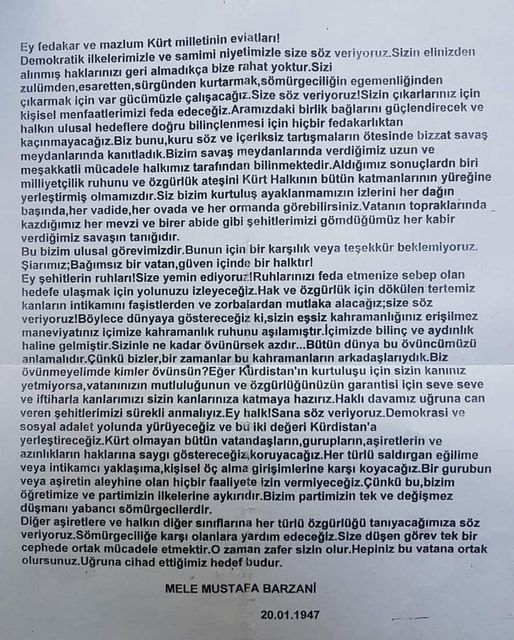
Tam da bu veda ve direniş ikliminde, tarihler 20 Ocak 1947'yi gösterdiğinde Mele Mustafa Barzani, o meşhur ve tarihi bildiriyle mazlum halkına o güç odaklarına karşı vizyonunu şöyle ilan ediyordu:

> "Ey fedakar ve mazlum Kürt milletinin evlatları! Demokrasi ilkelerimizle ve samimi niyetimizle size söz veriyoruz. Sizin elinizden alınmış haklarınızı geri almadıkça bize rahat yoktur. Sizi zulümden, esaretten, sürgünden kurtarmak, işgalci-islamist egemenliğinden çıkarmak için var gücümüzle çalışacağız. Size söz veriyoruz! Sizin çıkarlarınız için kişisel menfaatlerimizi feda edeceğiz... Şiarımız; Bağımsız bir vatan, güven içinde bir halktır!... Ey halk! Sana söz veriyoruz. Demokrasi ve sosyal adalet yolunda yürüyeceğiz ve bu iki değeri Kürdistan'a yerleştireceğiz... Bizim partimizin tek ve değişmez düşmanı yabancı sömürgecilerdir. Diğer aşiretlere ve halkın diğer sınıflarına her türlü özgürlüğü tanıyacağımıza söz veriyoruz. İşgalci-islamist odaklara karşı olanlara yardım edeceğiz. Size düşen görev tek bir cephede ortak mücadele etmektir. O zaman zafer sizin olur. Hepiniz bu vatana ortak olursunuz. Uğruna cihad ettiğimiz hedef budur." (Mele Mustafa Barzani - 20.01.1947)

Gazi Muhammed halkı için şehre giren işgalcilere teslim oldu ve ardından Mahabad'ın Çarçıra Meydanı'nda idam edildi. Onun idamının ardından etrafı İşgalci-islamist-faşist Irak arab devleti, İran ve işgalci faşist ordularla çevrilen Barzani, dostunun vasiyetine sadık kalarak teslim olmak yerine imkansız, imkansız olduğu kadar da destansı bir plan yaptı: Savaşarak kuzeye, Sovyet sınırına yürümek. Doğu Kürdistan’ın başkenti Mahabad’dan Sovyet-Rusya sınırına kadar uzanan bu amansız yolculuk, dünya tarihindeki en büyük askeri ve siyasi direnişlerden biridir.

Barzani bu yola çıkarken komutası altında aileleri, kadınları ve çocuklarıyla birlikte hareket eden yaklaşık 5.000 kişilik devasa bir kitle vardı. Barzani biliyordu ki, bu dondurucu soğukta, açlığın ve uçak bombalarının altında koca bir halkla yürümek, yüz binlerce insanın topyekun imha edilmesi demekti. Kadınları, çocukları ve yaşlıları korumak adına kalbini adeta bir taş gibi sıktı; 4.500 kişilik o büyük kitleyi ve aşiret güçlerini, ailelerin güvenliğini sağlamaları ve onları sağ salim İşgalci-islamist-faşist Irak arab devleti Kürdistan'ına ulaştırmaları için geride bıraktı.

Yanına ise sadece açlığa, dondurucu zemheriye ve amansız çatışmalara dayanabilecek en seçkin, en çelik iradeli 500 Peşmergeyi aldı. İşte o andan itibaren dünya askeri tarihine altın harflerle kazınacak, 53 gün sürecek olan o destansı "Kızıl Sefer" başladı.

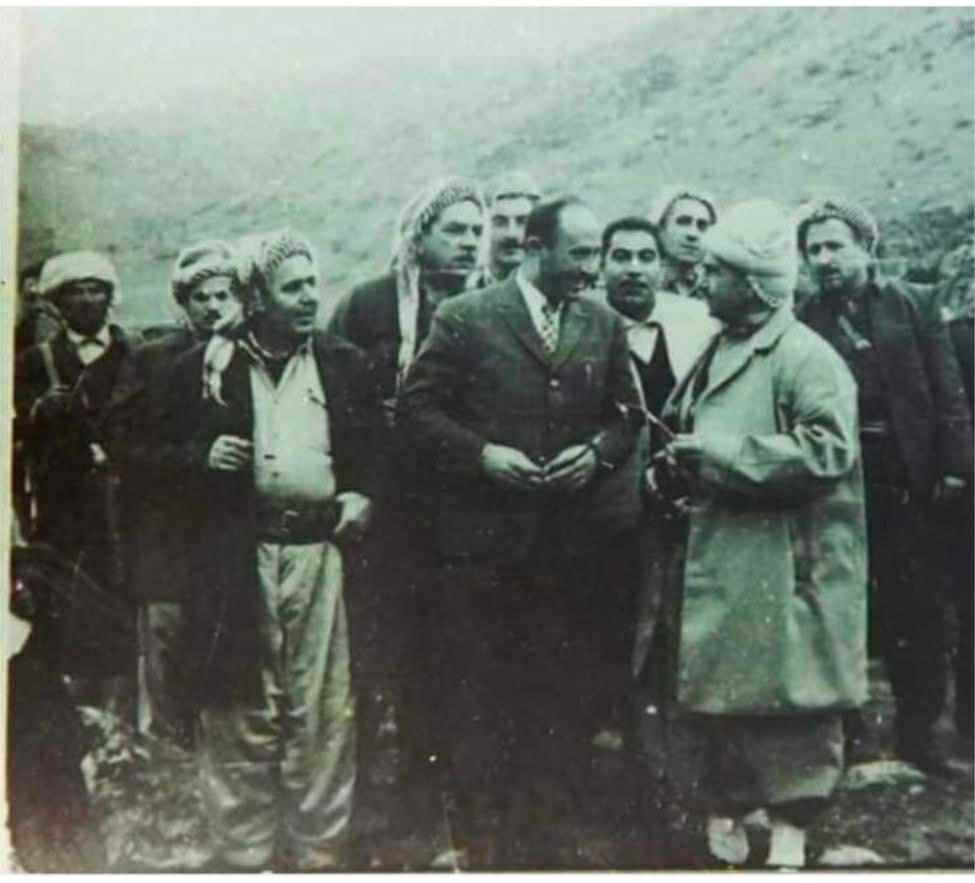
500 Peşmerge, dağların göğsünü yararak kuzeye, Sovyet sınırına doğru yürüyordu. Yolları, işgalci faşist sınırın sıfır noktasına, Hakkari ve Van dağlarının o geçit vermez sarp yamaçlarına kadar dayandı. İşgalci faşist ordu, Barzani’nin bu yürüyüşünü durdurmak için sınır hatlarında çok sert pusular kurmuştu. Ancak Barzani ve 500 inançlı savaşçısı, teslim olmak ya da geri adım atmak yerine, işgalci faşist ordunun kurduğu o amansız pusulara karşı göğüs göğse, nefes nefese direnerek savaştı. Dağları birer mevzi, kayaları birer kalkan yaparak pusuları birer birer yardılar; kurşun yağmurlarının altından savaşarak, vuruşarak yollarına devam ettiler.

İşte bu amansız vuruşmaların, barut kokulu pusuların arasında, Hakkari dağlarının eteğindeki bir sınır köyünde, Kürt tarihinin en asil, en yürek sızlatan buluşmalarından biri yaşandı. Peşmergeler, işgalci faşist ordunun pusularını can siperane atlatıp yorgun, aç ve bitap bir şekilde o Kürt köyünün yakınlarından geçerken, köyün kenarındaki derme çatma bir tandırın başında bir Kürt annesi ekmek pişiriyordu.

Ananın gözleri, dağlardan inen o yorgun ama başı dik savaşçıları gördü. Omuzlarındaki tüfekleri, başlarındaki cemadanileri tanımıştı; onlar Kürdistan'ın özgürlük davasını sırtlayan Peşmergelerdi. Kürt annesi, tandırdan taze çıkan, sıcacık og buram buram vatan kokan ekmekleri heyecanla topladı. Yanındaki küçük oğlunu hemen ileriye doğru koşturdu: "Koş oğlum, koş! Git söyle yanımıza gelsinler," dedi.

Peşmergeler tandırın başına vardığında, o fedakar Kürt annesi elleriyle pişirdiği sıcak ekmekleri gözyaşları içinde tek tek o yiğitlere dağıttı. Açlıktan bitap düşmüş savaşçılar için o ekmek, sadece bir katık değil, bir halkın bitmeyen dualarının ve bağlılığının somut haliydi. Ekmekler dağıtılırken, o asil Kürt annesi, 500 kişilik koca bir orduyu sırtlayan Mele Mustafa Barzani’nin karşısına dikildi. Gözlerinde zerre korku yoktu; aksine büyük bir gurur ve inanç parıldıyordu. Yanındaki küçük oğlunu elinden tutup Barzani’ye doğru uzattı ve titreyen ama vakur bir sesle şöyle haykırdı:

"Seyda... Al bu oğlumu da yanına. Onun da bu kutsal davada, seninle birlikte savaşmasını istiyorum. Benim oğlum da Kürdistan için feda olsun, o da bir Peşmerge olsun!"

Mele Mustafa Barzani, karşısındaki bu koca yürekli Kürt annesinin asaleti karşısında derinden sarsıldı. Ömrü savaş meydanlarında geçmiş o sert komutanın yüreği titredi, gözleri doldu. Eğildi, o fedakar annenin nasırlı, un kokan ellerini büyük bir hürmetle öptü. Ardından kadına dönerek, sesindeki en derin şefkatle şöyle seslendi:

"Hayır, ey asil anne... Bu güzel oğlun senin yanında kalsın. Senin bize taze tandır ekmeği dağıtman, o pusuların arasında bizi bağrına basman, yaptığın her şeye değerdir. Senin bu asil duruşun, bizim için en büyük zaferdir, fazlasıyla yeterlidir."

Barzani, daha sonra o küçük çocuğun yanına gitti. Diz çöktü, çocuğun saçlarını okşadı, gözlerinin içine bakarak babacan bir tavırla: "Annene iyi bak oğlum, sakın onun sözünden çıkma ve bu asil anaya sahip çık," dedi.

İki koca yüreğin, bir halkın anası ile o halkın önderinin bu helalleşmesinden sonra, 500 Peşmerge arkalarında dualar bırakarak yeniden yola koyuldu. İşgalci faşist ordunun pusularını savaşarak aşan, dondurucu karı ve fırtınayı iradeleriyle eriten o çelik çekirdek, 1947 Haziranı’nda Aras Nehri’nin azgın sularına ulaştı. Nehrin karşı kıyısındaki Sovyet topraklarına geçerken bile arkalarından kurşunlar yağıyordu. Ancak onlar, Gazi Muhammed’in teslim ettiği kutsal bayrakla ve o fedakar Kürt annesinin tandırından aldıkları o helal ekmeğin gücüyle Aras’ı geçtiler; davayı geleceğe taşımak üzere Sovyetler Birliği’ne sığındılar.

Aras Nehri'ni geçip Sovyetler Birliği topraklarına ayak bastıklarında, Mele Mustafa Barzani ve Peşmergeleri için tam 12 yıl sürecek olan çetin bir mültecilik ve sürgün dönemi başladı. Barzani, bu dönemin başında kendisi gibi Müslüman olan topraklarda kalmanın daha doğru olacağını düşünmüştü. Ancak tarihin bu kesitinde yaşanan kırılmayı ve uğradığı büyük hüsranı, bizzat Mustafa Barzani yıllar sonra şu sarsıcı ve acı sözlerle dile getirecekti:

> "Müslüman din kardeşiyiz diye, Sovyetler'deyken Azerbaycan'da mülteci olarak kalmak istedim ama, Azerbaycan'lılar aleyhinde olumsuz raporlar düzenleyerek rahat bırakmadılar. Beni ve Peşmergelerimi farklı ülke ve diyarlara çil gibi dağıttılar, sürgün ettiler. Meğer din kardeşiyle yanılmışım..."
>
Bu ağır bürokratik baskıların, hileli raporların ve arkadan dönen oyunların ardından Barzani ve Peşmergeleri adeta paramparça edilerek Sovyet coğrafyasının en uzak, en tecrit edilmiş bölgelerine sürgün edildiler. Yaşadığı bu acı tecrübe, onun zihnine işgalci devletlerin ve "din kardeşliği" maskesi takan yapıların pragmatik yüzünü bir kez daha kazıdı.

Mustafa Barzani’nin dönemin en zor koşullarında, her türlü imkandan yoksun olarak verdiği bu destansı mücadele, resmi tarihin abartılı anlatılarıyla tezat oluşturur. Nitekim Mustafa Kemal’in arkasında imparatorluk bakiyesi bir delege sistemi, hazır bir ordu, Meclis yapısı ve dönemin büyük güçlerinin jeopolitik boşlukları varken; Mustafa Barzani tamamen yalnız, dört bir tarafı kuşatılmış ve hiçbir küresel güvencesi olmayan bir coğrafyada sadece halkının iradesine dayanarak savaştı. Tarih gösteriyor ki bazen çok büyük bedeller ödeyenler değil, stratejik fırsatları iyi ve zamanında kullanan mekanizmalar kazanıyor. Mustafa Barzaniler mutlak yoksunluk içinde tarih yazarken, günümüzün Güney (Başur), Kuzey (Bakur), Doğu (Rojhilat) ve Batı (Rojava) Kürdistan’ındaki modern siyasi otoriteler, ironik bir şekilde bugün ellerinde bulunan devasa imkânların, diplomatik alanların ve kaynakların altında kalmış, o kurucu ruhun vizyonunu taşımakta zorlanmışlardır.

Barzani’nin bu muazzam etkisi ve karizması, Kürdistan’ın yapay sınırlarla bölünmüş dört parçasında da çok güçlü bir karşılık buldu. O, sadece Güney'in değil, tüm parçaların ortak lideri olarak görüldü. Özellikle Kuzey Kürdistan (Bakur) halkı, Barzani’ye ve Peşmergelerine karşı çok derin bir bağlılık besledi. Sınır hatlarındaki Bakur halkı, canı pahasına Peşmerge gruplarına lojistik destek sağladı; evlerini açtı, erzak taşıdı, istihbarat ağları kurdu ve işgalci faşist devletin askeri baskılarına rağmen bu desteği asla kesmedi. Mustafa Barzani, dört parçadaki Kürt ulusal bilincini tek bir odakta birleştirebilen çok etkili ve birleştirici bir figürdü.

Onun Bakur halkı üzerindeki bu devasa sempatisi ve sınır tanımayan birleştirici gücü, Ankara’da çok ciddi bir güvenlik paniğine yol açtı. İşgalci faşist yapı, Mustafa Barzani’nin geleneksel, ulusal ve parçaları birleştiren çizgisinin Kuzey’e tamamen hakim olmasından ve kontrol edilemez bir kitlesel uyanış yaratmasından büyük korku duydu. Bölgesel analizlere ve siyasi değerlendirmelere göre; işgalci faşist devlet aklı, Barzani’nin bu sınır ötesi kurucu etkisini kırmak, Bakur’daki milliyetçi damarı geleneksel çizgisinden koparıp kendi kontrolünde veya seküler-ideolojik bir çatışma zemininde eritmek amacıyla PKK’nın (Kürdistan İşçi Partisi) kuruluş sürecini arkadan manipüle etti veya önünü açtı. Amaç, Barzani çizgisinin dört parçayı birleştiren ulusal etkisini zayıflatmak ve hareketi ideolojik bir iç hesaplaşmaya mahkum etmekti.

Sovyetler’de tam 12 yıl geçiren Barzani, 1953’te Stalin ölünce yerine geçen Nikita Kruşçev’in davetiyle Moskova’ya gitti ve adamlarına askeri akademilerde eğitim imkanı tanıdı. 1958’de İşgalci-islamist-faşist Irak arab devleti'nde askeri darbe yapan General Abdülkerim Kasım, monarşiyi yıktığında Barzani’yi resmi davetle Bağdat’a çağırdı. Anayasaya "İşgalci-islamist-faşist Irak arab devleti, Arap ve Kürtlerin ortak devletidir" maddesi eklendi. Ancak Kasım sözlerinden döndü; Kürtlerin haklarını çiğnemeye, Musul üzerindeki hak taleplerini savuşturmaya ve verdiği sözleri ertelemeye başladı. Barzani, halkının geleceğini tehlikeye atacak hiçbir sahte uzlaşmayı kabul etmedi. 1961 yılında lüks villalarını, diplomatik ayrıcalıklarını arkasında bırakarak gizlice Bağdat’ı terk etti ve yeniden ait olduğu yere, Kürdistan’ın sarp dağlarına döndü.

Dağlara dönüş, sıradan bir sığınma değil, sarsıcı bir başkaldırının doğum sancısıydı. Eylül 1961’de Barzani, tarihin en organize ve en görkemli Kürt ayaklanması olan "Büyük Eylül Devrimi"nin meşalesini yaktı. Ancak bu devrim sadece dış düşmanlara karşı değil, içerideki ideolojik ve yapısal ihanetlere karşı da verilecekti. 1960’ların ortasında, KDP’nin Merkez Komite Üyesi ve Politbüro Üyesi olan, entelektüel ve yazar kimliğiyle tanınan İbrahim Ahmed (ki ilerleyen yıllarda kızını Celal Talabani ile evlendirecektir) ve onun sağ kolu olan genç Celal Talabani, dağda savaşan Mustafa Barzani’ye karşı bayrak açtılar.

Kendilerini "Marksist, şehirli, entelektüel ve solcu" olarak tanımlayan bu klik; Mele Mustafa Barzani’yi, onun dindar, muhafazakar, geleneksel ve aşiret yapısına dayanan çizgisini "gerici ve cahil" ilan etti. Bu ideolojik kılıfın arkasında ise tamamen bir koltuk ve güç savaşı yatıyordu. İbrahim Ahmed ve Celal Talabani önderliğindeki bu grup, KDP’nin yönetimini ele geçiremeyince partiden koptular ve tarihte "Mektebi Siyasi" (Politbüro) olarak bilinen o saçma ve yıkıcı bölünmeye neden oldular. Bu bölünme, Güney Kürdistan’ın birliğini bıçak gibi keserek işgalci düşmanın eline devasa bir koz verdi. Bu 1966 yılındaki bölünmeden sonra Celal Talabani'nin adı her anıldığında: ''Cahşê 66' sıfatıyla anılır, yani 1966 yılının haini.

Mustafa Barzani, hırsları uğruna ulusal mücadeleyi arkadan hançerleyen, işgalci-islamist devletlerin kucağına oturan bu kadrolara karşı öfkesini gizlemedi. Barzani, bu hiçbir prensib ve kuralı olamayan klikleri kastederek tarihe geçecek o sert ve sarsıcı tanımı yaptı: "siyasi fahişeler!"

Barzani'nin bu tespiti tarihsel olarak çok geçmeden kanıtlandı. 1966 yılında, İbrahim Ahmed ve Celal Talabani kanadı, Kürtlerin baş düşmanı olan İşgalci-islamist-faşist Irak arab devleti ile gizlice anlaştı. Kendilerine "Cahş" (Sömürgeci işbirlikçisi) denilen bu klik, Bağdat’tan aldıkları paralar ve silahlarla bizzat Mele Mustafa Barzani’nin Peşmergelerine karşı savaştılar. Güney Kürdistan’ın özgürleşme yolundaki en büyük başarısızlık sebebinin ve günümüze kadar uzanan o derin Kürt iç çatışmasının (Brakujî) temeli, bizzat bu kadroların başlattığı bu ihanet hattıyla atıldı.

İşgalci-islamist-faşist Irak arab ırk devleti ile yapılan kirli ittifaklar ve dağda Barzani karşısında alınan askeri yenilgilerin ardından bu klik, 1975'te Cezayir Anlaşması'yla Eylül Devrimi sekteye uğrayınca sahneye yeniden çıktı. Celal Talabani ve ekibi, Barzani’yi "İslamcı, müslüman ve feodal gerici" olarak yaftalamayı sürdürerek 1 Haziran 1975’te Suriye’nin başkenti Şam’da YNK'yi (Kürdistan Yurtseverler Birliği) kurdular. Araştırmacı gazeteci-yazar, Goran Candan'ın da deyimiyle; "sürekli taraf değiştiren, paraya göre yön bulan, dönek ve fırıldak" bir çizgi, bu tarihten sonra kurumsallaştı.

Siyasi faydacılığı bir yaşam biçimi haline getiren Talabani, o dönemde Libya’ya giderek Libya lideri Muammer Kaddafi ile görüştü. Kaddafi ona yüklü bir para verdi,Ama o bu parayı Talabani'nin şahsi hırsları için değil; sahipsiz, ezilen Kürt halkının yarasına derman olması, insani ve askeri hizmet bulması için zamanın parasıyla tam 700 bin dolar nakit olarak teslim etti. Ancak Talabaniler, Kaddafi'den bu devasa bütçeyi alır almaz, parayı kürd halkının hizmetine sunmak yerine kendi fraksiyonel güçlerini pekiştirmek için kullandılar. Partinin ismini ve rengini alelacele değiştirip, vitrine "Yeşil Sosyalizm" sosu eklediler. Yeşil rengi hem Libya'nın "Yeşil Kitap" ideolojisine selam çakmak hem de Kaddafi’nin parasıyla kurulan bu yeni düzeni simgelemek için seçmişlerdi. Talabani, bu fırıldaklığını ve siyasi kıvraklığını maalesef Kürtlerin özgürleşmesi yolunda bir kaldıraç olarak değil, Barzani önderliğindeki Kürt halkının ulusal mücadelesini sabote etmek ve parçalamak yolunda harcandı.

Mele Mustafa Barzani, işgalcilere karşı ne kadar amansızsa, ulusal davaya ve kendi milletine ihanet eden iç hainlere karşı da o kadar tavizsiz ve sertti. İhanet kimden gelirse gelsin, kendi kanından ve ailesinden olsa bile affetmezdi. Bunun en acı, en trajik ve en somut örneği, kendi öz oğlu olan Loqman Barzani olayıdır. Büyük Eylül Devrimi'nin ve amansız savaşların sürdüğü dönemde Loqman, halkının safında durmak yerine nefsinin ve düşmanın vaatlerine kandı. İşgalci-islamist-faşist Irak arab devleti'nin safına geçerek açıkça ihanet işledi. Loqman, işgalci devletin istihbaratıyla iş birliği yapıyor, bizzat babası Mustafa Barzani’ye, Peşmerge kamplarına ve kendi milletine karşı haince operasyonların önünü açıyordu. Mustafa Barzani, bir liderin her şeyden önce adalete, disipline ve ulusal onura sadık kalması gerektiğini biliyordu. Kendi öz oğlunun bile düşman safında millete kurşun sıkmasını, hareketi arkadan hançerlemesini kabul edemezdi. Barzani, bir baba olarak yüreği kan ağlasa da bir lider olarak bizzat emir vererek öz oğlu Loqman’ın ölüm kararını imzaladı ve infaz ettirdi. Bu karar, Kürdistan davasında ihanetin bedelinin ne kadar ağır ve geri dönülemez olduğuna dair dosta ve düşmana verilmiş en sarsıcı mesajdı.
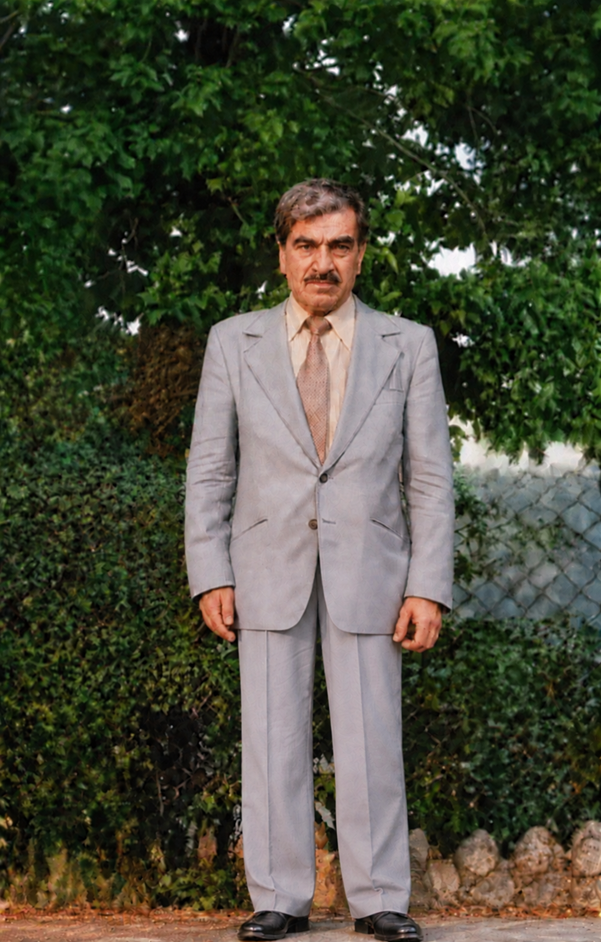
İçerideki tüm bu engellere rağmen, Barzani liderliğindeki Peşmerge ordusu coğrafyanın her bir kıvrımını silah olarak kullanmaya devam etti. Düzenli işgalci ordu ne zaman büyük bir imha operasyonu başlatsa, dağların arasında yönünü kaybetti, ikmal hatları kesildi ve gerilla pusularında eritildi. İşgalci-islamist-faşist Irak arab devleti generalleri ve Bağdat’ta koltuğa oturan diktatörler, Barzani’yi dağlarda askeri olarak asla yenemeyeceklerini her seferinde kan ve barutla tecrübe ederek anladılar.

Savaş yıllarca sürdü ve Bağdat’ta hükümetler devrildi. Sonunda 1968’de iktidarı ele geçiren işgalci yapının acımasız lideri Saddam Hüseyin, askeri yöntemlerin tamamen tıkandığını ve bu amansız savaşın Bağdat'ı ekonomik ve askeri olarak iflasın eşiğine getirdiğini gördü. Saddam, Kürt halkının öz haklarını gasp etmek istiyor, taviz vermeye yanaşmıyordu; fakat Barzani’nin dağdaki amansız askeri baskısı, onu çaresiz bıraktı.

> Barzani, Saddam’ı masaya oturmaya zorlamak ve anlaşmayı kendi şartlarıyla dikte etmek için tarihe geçen stratejik bir plan uyguladı: Ekonominin şah damarı olan Musul ve Kerkük’teki petrol hatlarını tamamen Peşmerge tehdidi ve namlusu altında tuttu. Bağdat ordusunu lojistik ve askeri olarak tamamen köşeye sıkıştırdı; Kerkük ile Musul’un Kürdistan’ın ayrılmaz birer parçası olarak tanınması şartını merkezi güce tavizsiz bir biçimde dayattı.
>
Saddam Hüseyin, bu ağır askeri, ekonomik abluka ve Barzani'nin sarsılmaz baskısı karşısında tamamen zorda kaldı. General Barzani’yi savaş meydanında alt edemeyeceğini, onun dayattığı şartları kabul etmeden işgalci merkezi yapıyı yönetemeyeceğini anlayan Saddam, mecburen dağlara, bizzat Barzani’nin karargahına kadar giderek onun önünde eğilmek ve anlaşmayı Barzani'nin istediği şekilde imzalamak zorunda kaldı.

11 Mart 1970’te tarihi "Özerklik Anlaşması" imzalandı. Kürtçe resmi dil kabul edildi ve Kürtlere kendi yönetimlerini kurma hakkı tanındı. Ancak işgalci-islamist akıl ve Saddam, bu anlaşmayı sadece nefes almak ve zaman kazanmak için imzalamıştı. Kısa süre sonra Saddam, taahhütlerinden döndü; Musul ve Kerkük gibi petrol zengini stratejik bölgeleri Kürdistan sınırlarının dışında tutmak için kirli bir nüfus mühendisliği (Araplaştırma) başlattı. Kürtleri yurtlarından sürerken yerlerine kendi nüfusunu yerleştiriyordu.

Barzani, bu kalleş oyuna karşı küresel bir satranç hamlesi başlattı. İran Şahı Rıza Pehlivi üzerinden ABD Ulusal Güvenlik Danışmanı Henry Kissinger ve CIA ile temasa geçerek gizli silah ve lojistik destek hatları kurdu. Aynı zamanda bölgesel dengeleri sarsmak adına İsrail Başbakanı Golda Meir ve Savunma Bakanı Moşe Dayan ile gizlice görüşerek onlardan tıbbi, mali ve askeri yardım aldı. Barzani, resmi bir devleti olmadan Washington, Tahran ve Tel Aviv arasında devasa bir diplomasi ağı yönetiyordu.

Ancak 1974’te Saddam ile savaş yeniden alevlendiğinde, küresel güçlerin en büyük ihanet senaryosu devreye girdi. Peşmerge, aldığı ağır silah desteğiyle geleneksel gerilla taktiklerinden düzenli ordu savunmasına geçmişti ve işgalci orduyu dağlarda yine perişan ediyordu. Cephede tamamen tıkanan Saddam, Şah ve Kissinger ile kirli bir pazarlığa oturdu. 6 Mart 1975’te Cezayir’de imzalanan anlaşmayla Saddam, İran’a toprak tavizi verdi; karşılığında İran ve ABD bir gecede Barzani’ye olan tüm lojistik desteği kesip sınırları kapattı. Mühimmatsız ve kuşatma altında kalan cephe ağır darbe aldı. Barzani, Kissinger’a yazdığı öfkeli mektuba karşılık Washington’dan, "Gizli servis operasyonları hayır işi değildir" şeklinde o meşhur, soğuk cevabı aldı.

İşte bu noktada Mustafa Barzani, tarihe geçecek en trajik ama en stratejik kararlarından birini verdi: Peşmerge ordusunu dağıtmak ve silahlı mücadeleyi durdurmak. Barzani biliyordu ki mühimmatsız kalan düzenli bir orduyla savaşa devam etmek, Saddam’ın modern jetleri ve kimyasal silah eğilimleri karşısında yüz binlerce Peşmergenin ve Kürt sivilin topyekun bir soykırımla yok edilmesi demekti. O, ordusunu ve davasını korumak, halkının tamamen katledilmesini önlemek için cepheyi tasfiye etti ve taktiksel olarak geri çekilerek yüz binlerce mülteciyle birlikte İran’a sığındı. Bu askeri bir duraksamaydı, ancak halkın biyolojik ve zihinsel varlığını korumak için yapılmış zorunlu bir feda hamlesiydi. Gazi Muhammed’in o karlı gecede ellerine tutuşturduğu o bayrak, her şey bitti denildiğinde bile umudu diri tutmak için korunmalıdır.

Barzani artık yaşlanmıştı ve akciğer kanseriydi. Tedavi görmek ve halkının maruz kaldığı bu küresel ihaneti son bir kez dünya kamuoyuna haykırmak için 1976’da Amerika Birleşik Devletleri’ne gitti. Sürgünde ve hastalık pençesinde bile davasını anlatmaktan vazgeçmedi. 1979’da, Georgetown Üniversite Hastanesi’nde, doğduğu o sarp dağlardan binlerce kilometre uzakta bir sürgün odasında gözlerini hayata yumdu. Cenazesi yıllar sonra, uğruna ömrünü feda ettiği topraklara, Barzan köyüne getirilerek defnedildi.

Mustafa Barzani hayatını kaybettiğinde arkasında şatafatlı saraylar bırakmadı; üzerinde her zamanki mütevazı Peşmerge kıyafeti ve başındaki cemadanisi vardı. Ancak onun imkansızlıklar içinde, içerideki fırıldaklıklara, dönekliklere ve dışarıdaki işgalci ordulara karşı canı pahasına verdiği o büyük mücadeleyle attığı o temeller yok edilemedi. Bugün Kürdistan topraklarında anayasal güvenceye sahip bir yapının kurulması ve Erbil sokaklarında Gazi Muhammed’in ona ağlayarak teslim ettiği o kutsal bayrak, o fedakar ananın tandırından çıkan helal ekmeğin gücüyle bugün özgürce dalgalanması, krallara, diktatörlere ve iç ihanet şebekelerine karşı dağlarda yürütülen bu amansız, trajik ama bir o kadar da destansı uzun yürüyüşün doğrudan bir sonucudur.

DİROKA ZER
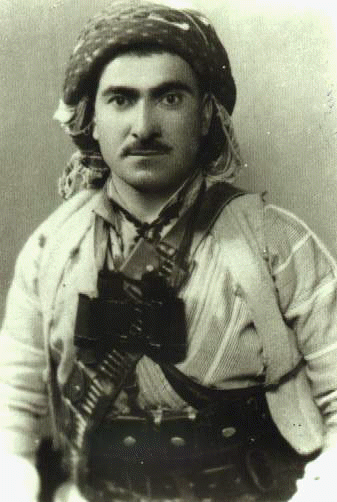


Mustafa Barzani, the legendary leader of Kurdish National Movement (1940 - 1979) against the Iraqi Arab nationalistic Baas dictatorship in Southern Kurdistan


"Birinci Dünya Savaşından sonra İngiliz emperyalizmi alçak politikalarıyla bir cinayet daha işledi.1921 yılında imzalanan Sevr antlaşmasının Kürt Halkına tanıdığı kendi kaderini belirleme hakkını ortadan kaldıran Lozan antlaşmasını imzaladı. Kürt halkının kaderini,Musul Kerkük Petrollerinin karşılığında Diktatör Mustafa Kemal’e sattılar.Bunun üzerine İran,Türkiye ve Irak’ta Kürt isyanları patlak verdi.Kürtler kanlı bir mücadeleye giriştiler.İngiliz emperyalizmi geçen yirmi yıl içinde düşmanlarımıza yol gösterici önder ve öğretmen rolünü verdi.İşledikleri barbarlıkları ve cinayetleri destekledi.haklarımızın elimizden almasına göz yumdu.Aynı şekilde Kürt Halkını sesinin dış dünyaya ulaşmasına engel oldu.Bu arada gerici yayın organları aracılığıyla Kürdistan kurtuluş Hareketini,dini ve feodal ayaklanmalar, eşkıyalık eylemleri olarak lanse edildi.halkımızın Kürdistan’ın özgürlüğü için verdiği mücadele inkar edildi,görmezlikte gelindi". Sayfa 383

"İkinci Dünya Savaşı Ortadoğu’ya yeni bir emperyalist gücü getirdi. Amerikan emperyalizmini. Bu yeni emperyalist güç, kocamış İngiliz emperyalizminin yerini aldı.
Çünkü önceki emperyalist yöntemler dünyanın yeni dönemine uygun düşmüyordu. Değişimlere ayak uyduramıyordu. Kaldı ki İngiliz emperyalizmi artık dünyaya liderlik edecek gücü kendisinde bulamıyordu. Bu yüzden Amerikan emperyalizmi amacına ulaşmak için yaptığı ilk şey,1946yılında Kürdistan demokratik Cumhuriyetini ortadan kaldırmak ve ardından kardeş Azerbaycan Cumhuriyetinin ortadan kaldırılmasına destek vermek oldu.Bu iki devletin ortan kaldırılması noktasında istediği sonucu elde etti. Eğer Anglo-Amerikan desteği olmasaydı, Kavvam’ın tereddütsüz imzaladığı anlaşmaları çiğneyerek bu iki devletin üzerine yürümesi mümkün olmazdı. Nitekim bu gerçekler daha sonra ortaya çıktı ve gerek İran ve gerekse Amerikan yetkilileri bunları itiraf etti. Eğer İngiliz Amerikan desteği olmasaydı, onların İran ordusuna verdikleri ağır silahlar olmasaydı, şahin Şah’ın ordusu kahraman askerlerimiz karşında kesinlikle hiçbir varlık gösteremezdi. Onların istedikleri sonucu almalarının tek nedeni İngiliz Amerikan silah desteği ve Amerikan dolarlarıyla satın alınan hainlerin bozguncu tutumlarıydı”.
Sayfa 384

Mesud BARZANİ
(BARZANİ ve Kürt ulusal özgürlük Hareketi Cilt1
Mela Mustafa Barzani’nin konuşmasından)


,

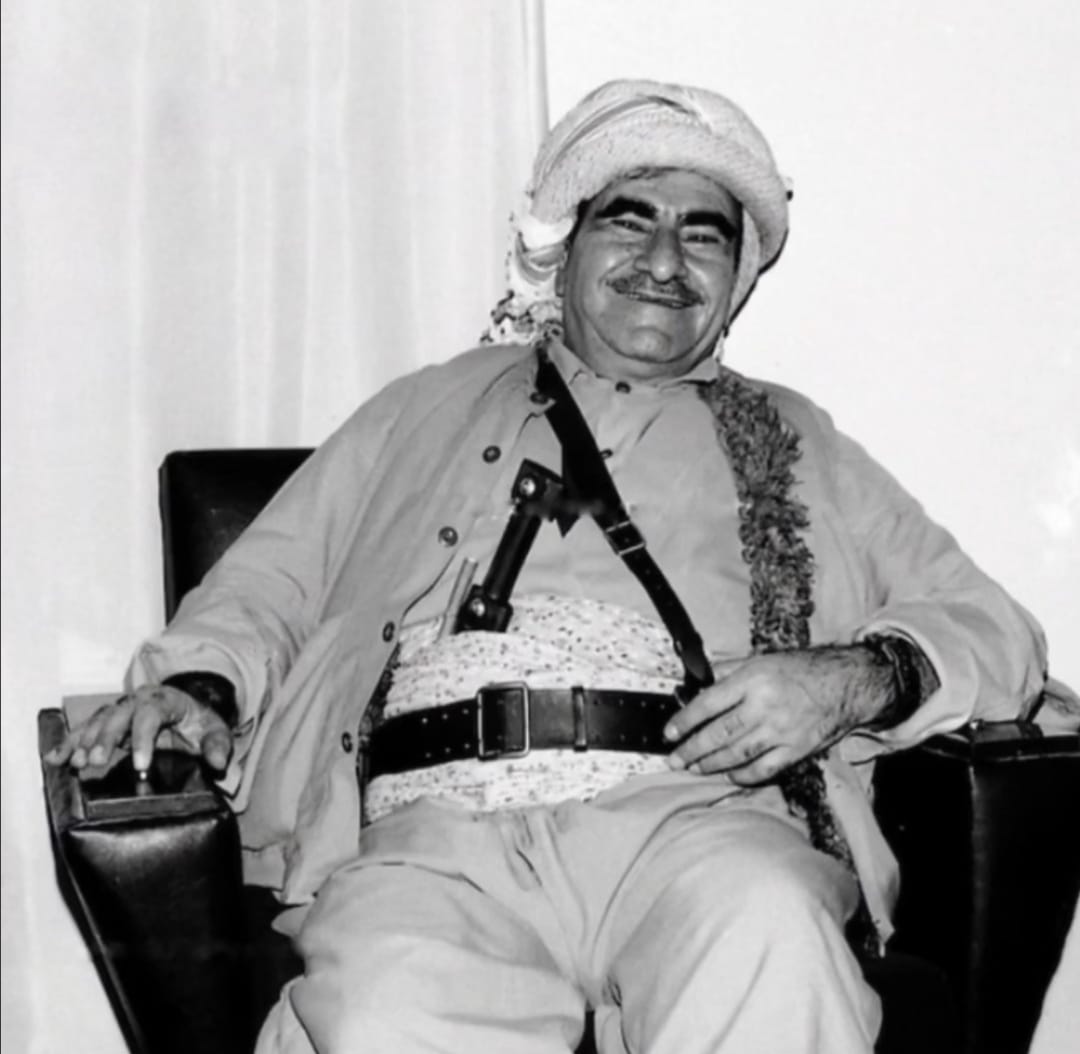
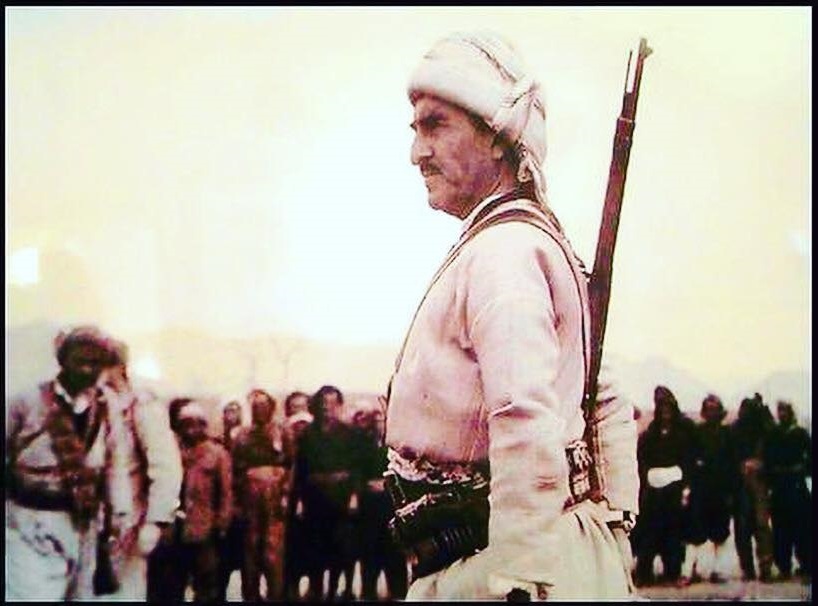
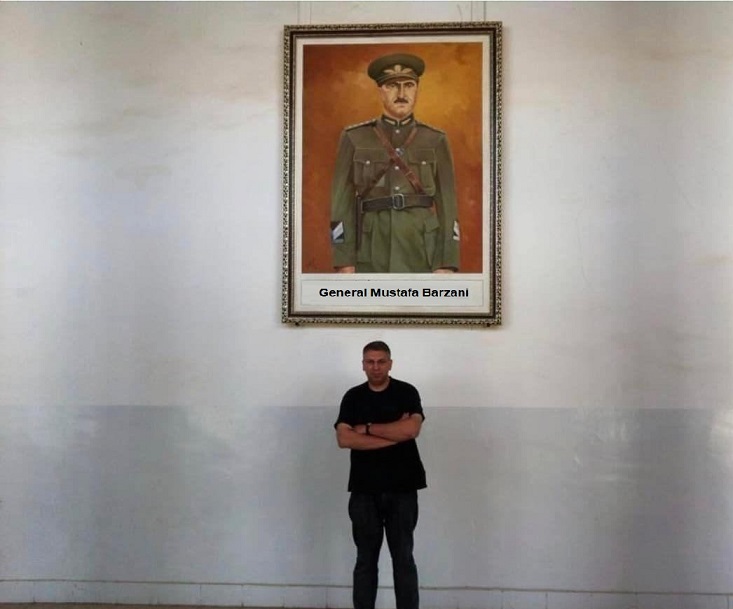
General Mustafa Barzani

Mixabin ku em kurd, vî serokê leheng ê efsaneyî baş nas nakin. Li çarmedora Kurdistanê derheqê wî de piranî antî-propagandayên bi tundî û bi giştî ku ji hêla neyarên gelê kurd hatine kirin belav e. Lê ew serkirdeyekî xwedî hewildanên pir mezin û girîng bû bo rizgarbûna kurdên bindest. Gerek e agehiyên derbareyê jiyan û xebat û çalakiyen wî, bi zimanê kurdî, înglîzî, almanî, fransî, rûsî, erebî, farisî û bi taybetî jî bi tirkî werin tomarkirin û weşandin. Ev erke, yek ji erkên herî sereke ya Partî Demokrat a Kurdistanê û Hikûmeta Herêma Kurdistanê ye, ku mixabin ev kar pir jî dreng maye. Dijminên kurdan, li hemî deverên Kurdistanê, hemî hêjayiyên berhemdar ên kurdan, li ber çavê nifşên kurd ên nûhatî reş û tenî dikin da ku peyama hewildanên rizgariyê ya van serokên nekeve nav mejiyên van nifşên nû yên kurdan. Li Kurdistanê kîjan hewildêrên rasteqînî yên rizgarker hebe, ewî reş û tenî dikin û serokên ku hevxebatkarê neyaran e ewî li ber çavê van nifşan pir xweş dikin. Loma pir girîng e ku hemî jiyan û xebata vî serokê rasteqînî yê kurd, jiyan û xebata gorbihuşt Mistefa Barzanî bo van nifşên kûrekirî zû were ragihandin. Zahf grîng e.
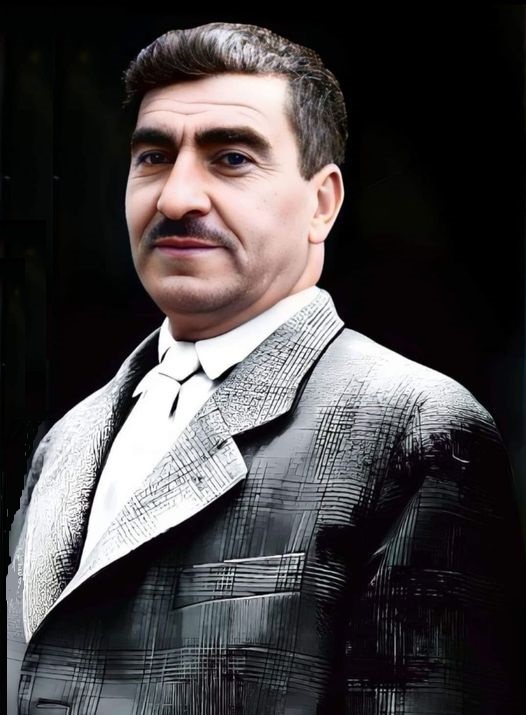
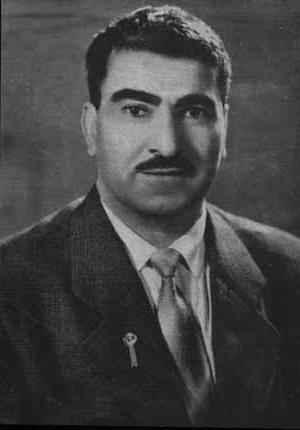


Mela Mustafa Barzanî; 1 Mart 1979, günü tedavi gördüğü Washington DC’de hayata gözlerini yumdu.?

?Kürt lider, Kürdistan Demokrat Partisi'nin kurucusuydu. Mücadele dolu hayatında, 1961 devrimiyle zirve yapmıştı. ?

?”Halkına hizmet edemiyorsan en azından ihanet etme...”?
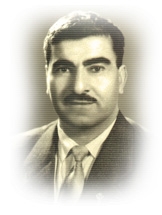


Vi är inte som de och vi gör aldrig som de, det vill säga att döda försvarslösa civila
och obeväpnade människor även om de är fiendesoldater och även om vi har möjlighet att göra det.
Detta finns inte i våra traditioner, nämligen att beskjuta de svaga.. Och å andra sidan, även om du är i krig,
även om de är dina fiender gör aldrig något mot andra som du inte önskar att någon annan gör detta mot dig.
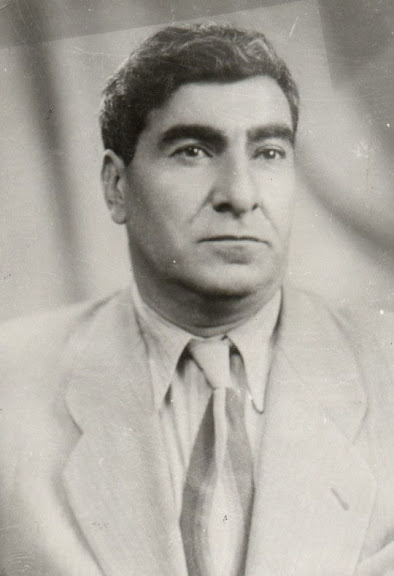


"Meşe Kürdistan'ı tanımlayan bir ağaçtır.
Meşe ile başlayan meşe ile biten topraklar Kürdistan’dır"

Mustafa Barzani
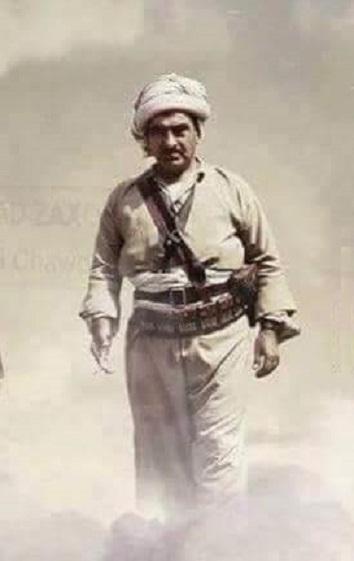


Mustafa Barzani yurtseverdi ve kararlı bir şekilde önemli özgürlük uğraşları içindeydi.
Belini iç ihanet ve kudretli uluslararası anti-kürd ittifak kırdı.
Bugünkü KORKAK kürd hükümeti'nin tam aksine Kerkük ve Musul'dan asla vazgeçmedi.
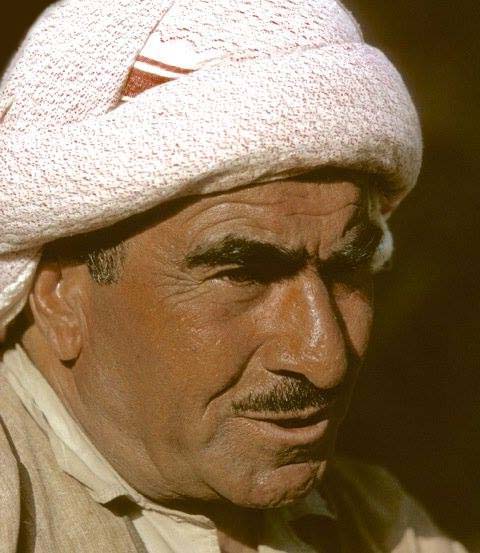


Kürd lider Mustafa Barzani, Mao'nun uzun yürüyüşünden sonra ikinci uzun yürüyüşü Doğu Kürdistan'ın başkenti Mahabad'tan ta Sovyet-Rusya'ya kadar direnişle sürdüren ikinci liderdir. İşgalci türklerin Mustafa Kemal'ın mücadelesi, kürdlerin Mustafa Barzani'si ile mukayese bile edilemeyecek kadar sahte ve yalan bir anlatımdır. Ama çok mücadele eden değil fırsatları iyi ve zamanında kullananlar kazanıyor. Mustafa Barzaniler, dönemin o zor koşulların imkânsızlığı içinde destansi bir mücadele ettiler. Günümüzün Güney'deki, Kuzey'deki, Doğu'daki ve Batı'daki kürd liderleri ise ellerindeki imkânların altında kalmışlar.
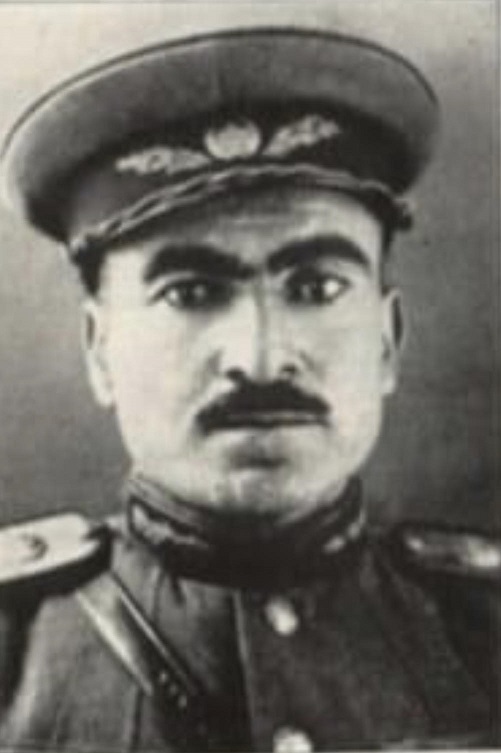
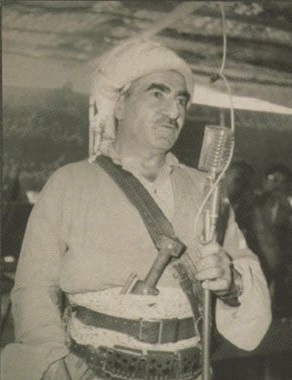


General Abdülkerim Kasım 1958’de bir darbeyle Irak'ta yönetimi ele geçirdi ve Irak Cumhuriyeti’nin ilk başbakanı oldu. Bu, İngilizlerin egemenliğinde bulunan Kral Faysal’a karşı Sovyet destekli bir darbedir. İç muhalefete karşı Komünistlerin ve Kürtlerin desteğine ihtiyacı olduğu için de o sıralarda SSCB’de sürgün olan Mele Mustafa’nın Irak’a geri dönüşüne izin verdi, geçici anayasada Kürt kimliğini tanıdı, Kürt partilerine kurulma izni verdi ve Kerkük’ü de Kürtlere verme niyetini belirtti.

Kürtler de onu var gücüyle Araplara ve diğer muhaliflere karşı korudular. Kendisine yönelik birkaç darbe girişimi oldu ve neticede onu zayıf bulan Komünistler sürekli olarak taleplerini artırarak onu adım atamaz hale getirdiler. Kürtler de komünistlerden etkilenince neticede sözlerini yerine getiremedi ve 1961’de Kürtler tekrar başkaldırdı. Abdülkerim Kasım’ın Kürtlere yönelmesi Baasçı askerlere fırsat oldu ve 1963’te CIA destekli bir darbeyle devrilerek öldürüldü (Ramazan Devrimi). Kasım’ın devrilmesinden sonra Kürtler de yeni dönemi hükümete destek verdiler. Baasçılara karşı Abdülselam Arif’i desteklediler ama kısa süre sonra onunla da anlaşamadıkları ortaya çıktı. 1966’da Abdülselam bir helikopter kazasında ölünce yerine kardeşi Abdurrahman geçti ve Kürtlere karşı savaş başlattı. 1967 Henderin Muharebesi’nde 3500 Peşmerge, 40 bin kişilik orduyu bozguna uğratarak kesin bir zafer elde etti.

1968’de Baasçılar onu devirdiğinde Kürtler ona karşı Baas’ı ve darbecilerden Abdurrezzak Naif’i destekliyorlardı fakat iktidar Ahmet Hasan Bekir ve yardımcısı Saddam’da kaldı. Bir süre sonra onlarla anlaşan Barzani, Mart 1970’te Kürdistan otonomisinin tanınmasını sağladı. Baasçı hükümet aslında üniter devleti sağlamlaştırmakta bunu bir taktik adım olarak görürken Barzani bunun bağımsızlık yolunda önemli bir adım olduğunu söylüyordu. Fakat ilerleyen zamanlarda tarafların tanımlar üzerindeki farklılıkları süreci tamamen tıkadı. 1973’te Yom Kippur savaşına bağlı olarak Baas ile Sovyetler arasındaki sorunlar aşılınca Kürtler de Bağdat’la sorunlu olan ve ABD’yle müttefik olan İran’la yakınlaşıp Irak’a karşı yeniden başkaldırdılar. İran ve Irak’ın 1975’te Cezayir Antlaşması ile aralarındaki sorunu çözmesi üzerine Kürtler zor duruma düştü. Barzani çatışmayı durdurarak (Aşbetal) İran'a geçti. 1976'da ABD’ye gitti ve orada Ohio eyaletinde vefat etti. IHB


1958


1958


Salên li Sovyet'ê.. di gel du kurdên hev hevçarenûsê xwe li dûriyê


Nameya Barzanî bi destxeta wî


Wergera tirkî ya belavokeke Mistefa Barzanî ku li sala 1947an belav bûye


Nameyek Mustafa Barzanî ji CEMÎL HACO re
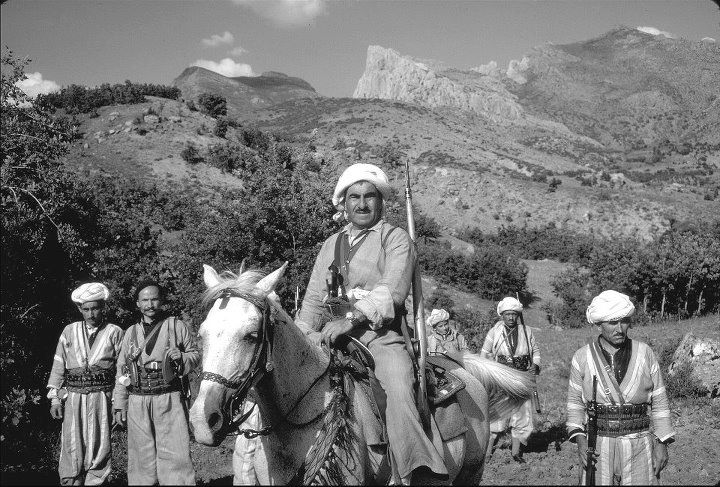


GENERAL MUSTAFA BARZANI

Mustafa Barzani: ''Müslüman din kardeşiyiz diye, Sovyetler'deyken Azerbaycan'da mülteci olarak kalmak istedim ama,
azerbaycan"lılar aleyhimde olumsuz raporlar düzenleyerek rahat ettirmediler. Beni ve Peşmergelerimi farklı ülke ve diyarlara çil yavrusu gibi dağıttılar,
sürgün ettiler. Meğer din kardeşi demekle yanılmışım.''
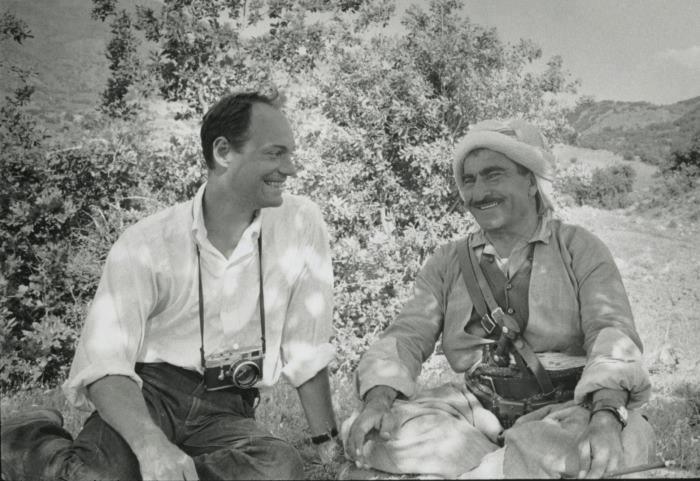


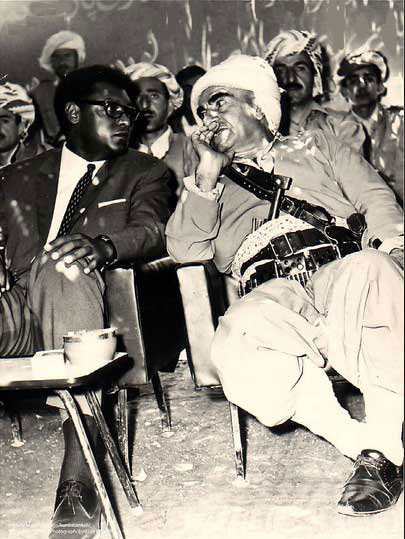
Mustafa Barzani and William Carter 1965


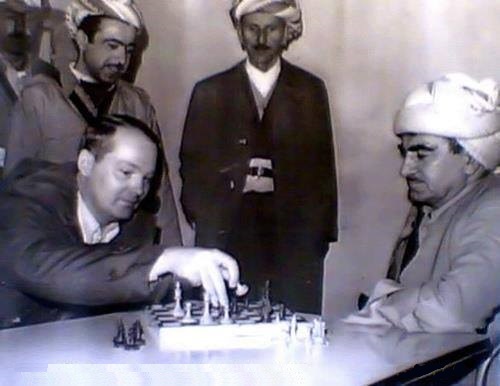
Mustafa Barzani playing chess with Dana Adam Schmidt,
an American journalist in part of Kurdistan
occupied by Irak 1963
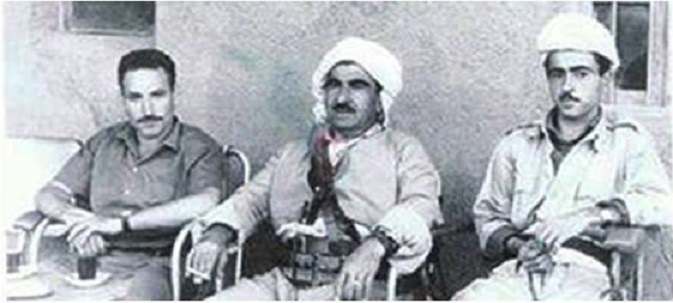


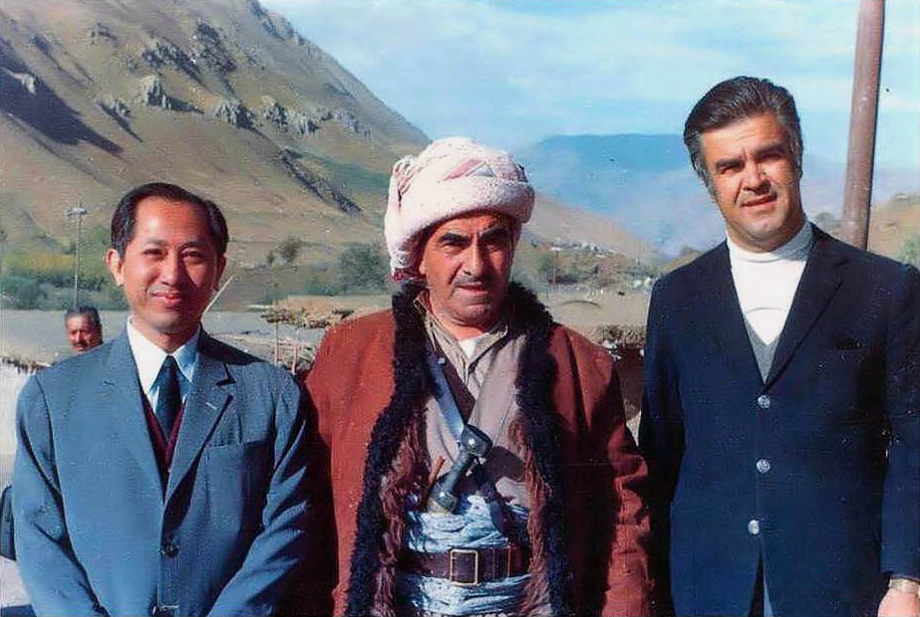
Two journalists from China visiting Barzani, 1964


Dem û cihê wêne: Bexda - 1958
Dr Kemal Mezhar bi Mistefa Barzanî re hevpeyvînek rojnamevanî dike.
/Rehma Xwedê li wan be/
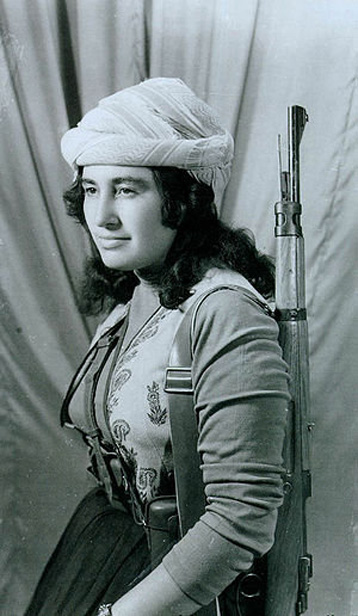


Margaret Shello is the peshmerga (Kurdish guerilla) who joined the Kurdish freedom struggle in 1960ies. She fought for the rights of Kurds and other opressed peoples. She has with a great respect always been considered among the people as the symbol of freedom and unity for opressed peoples.
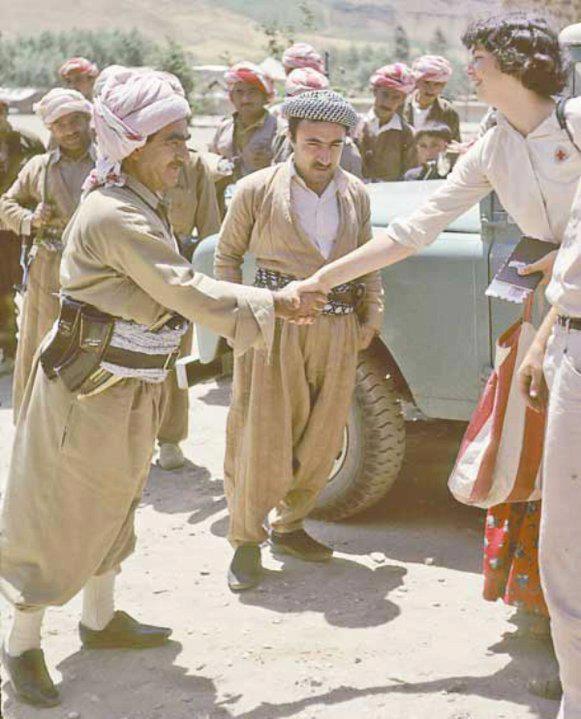
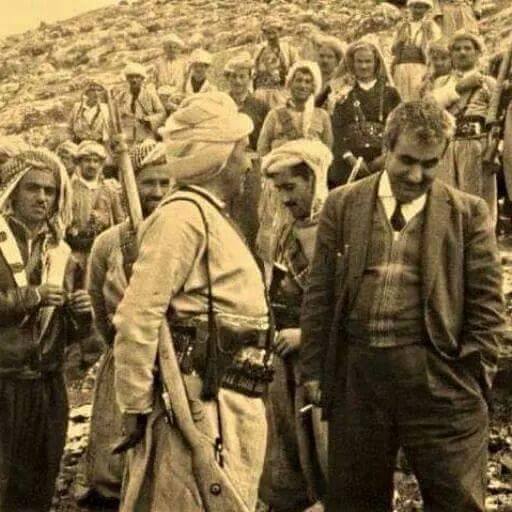


1969


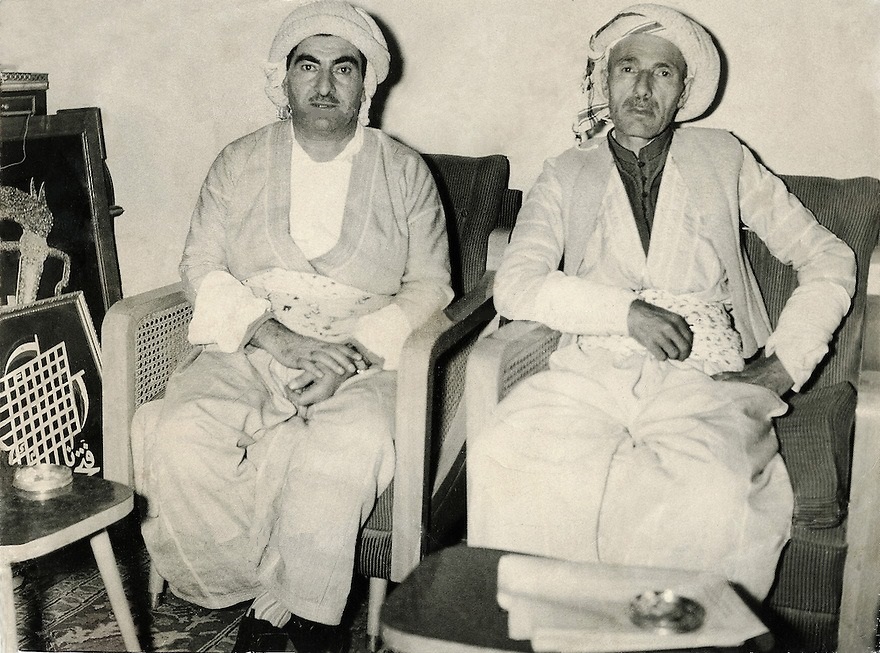
Mustafa Barzani and The Kurdish Author Hazhar Mukriani (Mam Hajar)
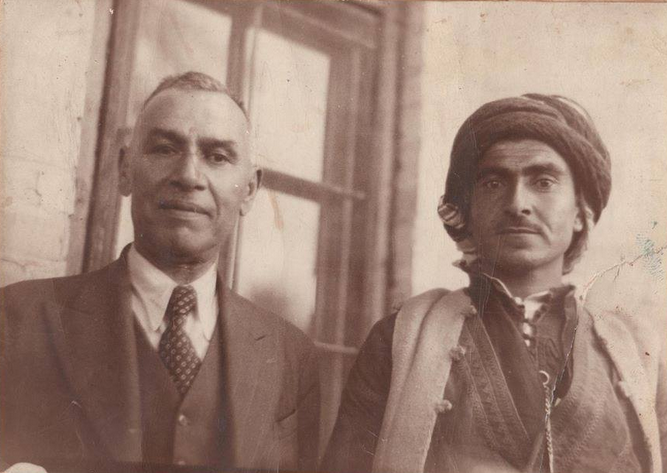


Mustafa Barzani, Maroof Jyawook


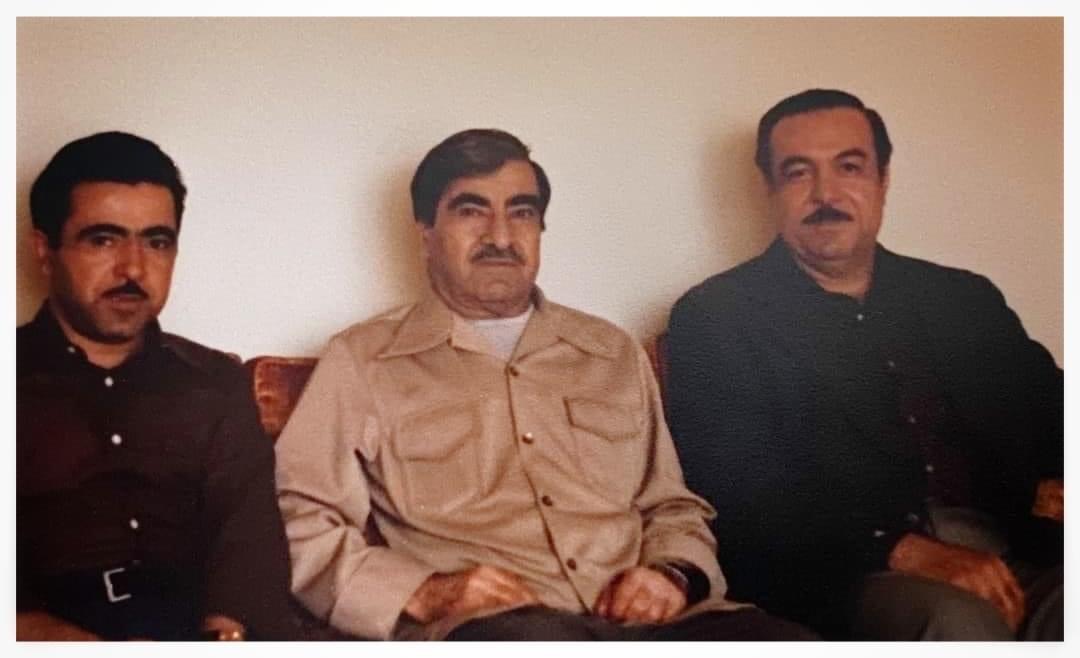
Mustafa Barzani with family and friends in US in late 1970's

(Second from left Muhsin Dizeyî)
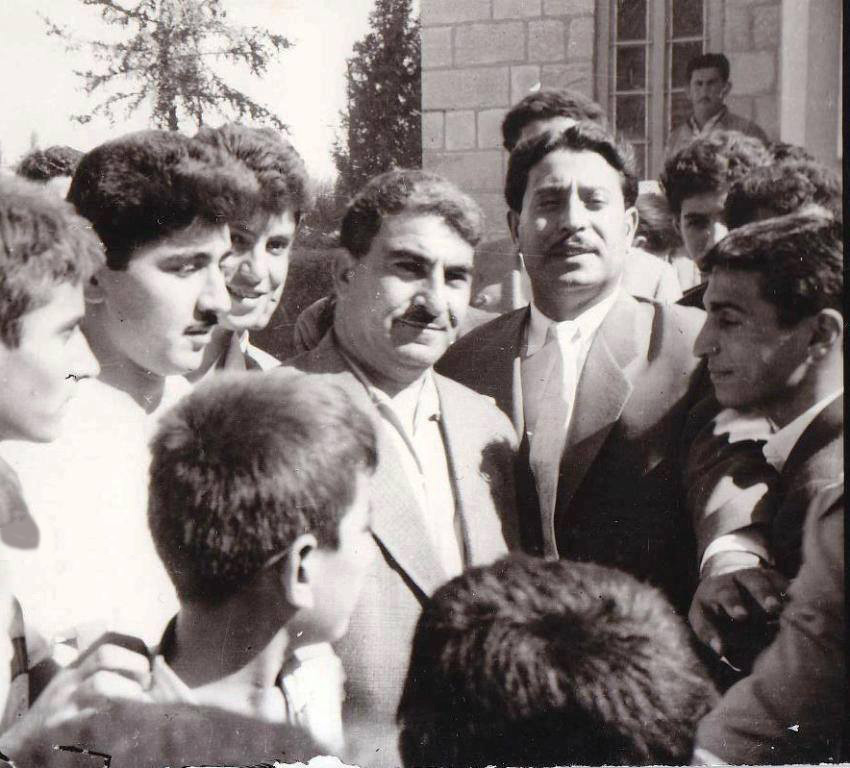


Always valued and respected..
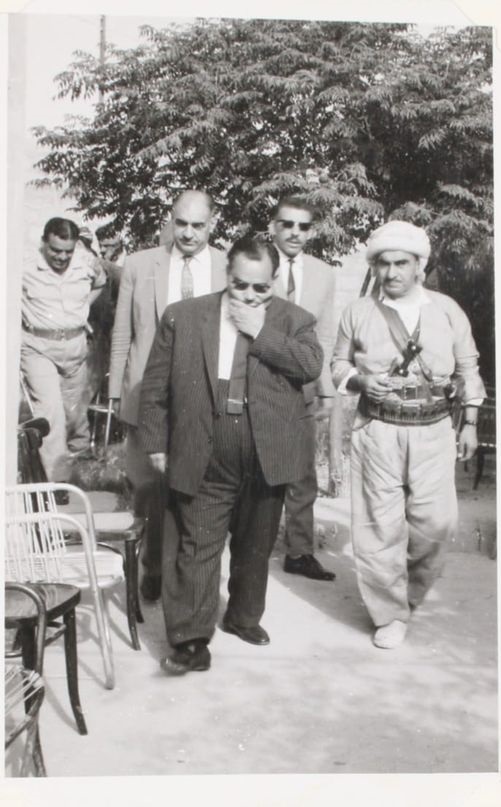


Barzanî û Yehya Tahir


THE LONG MARCH
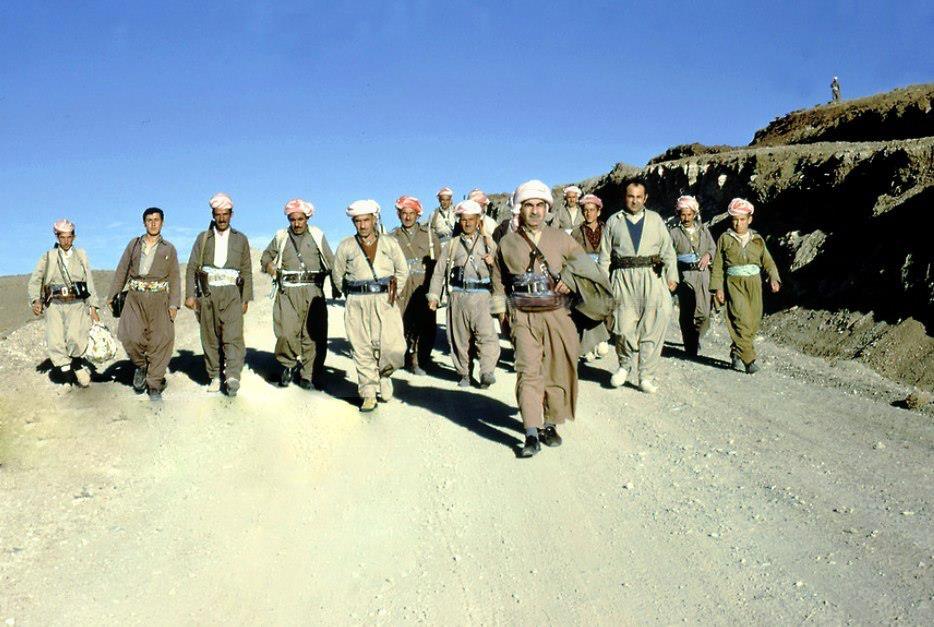
 

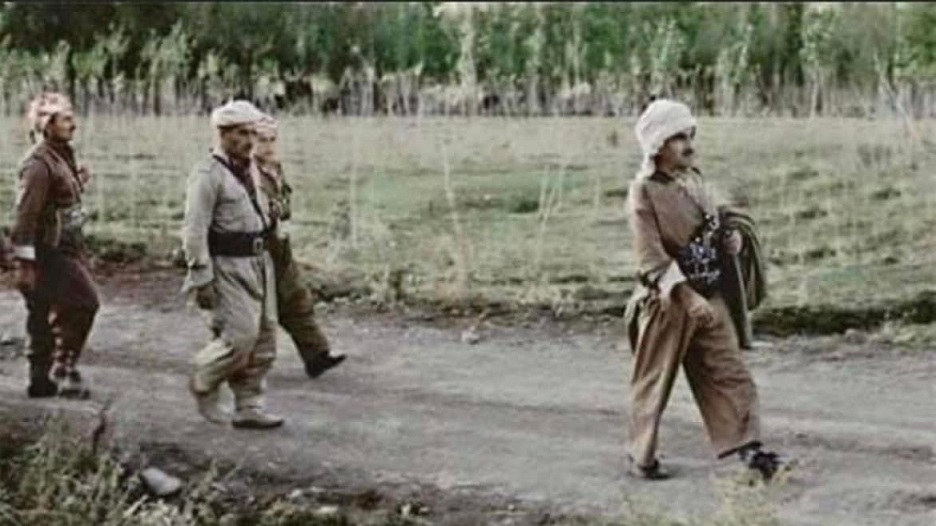
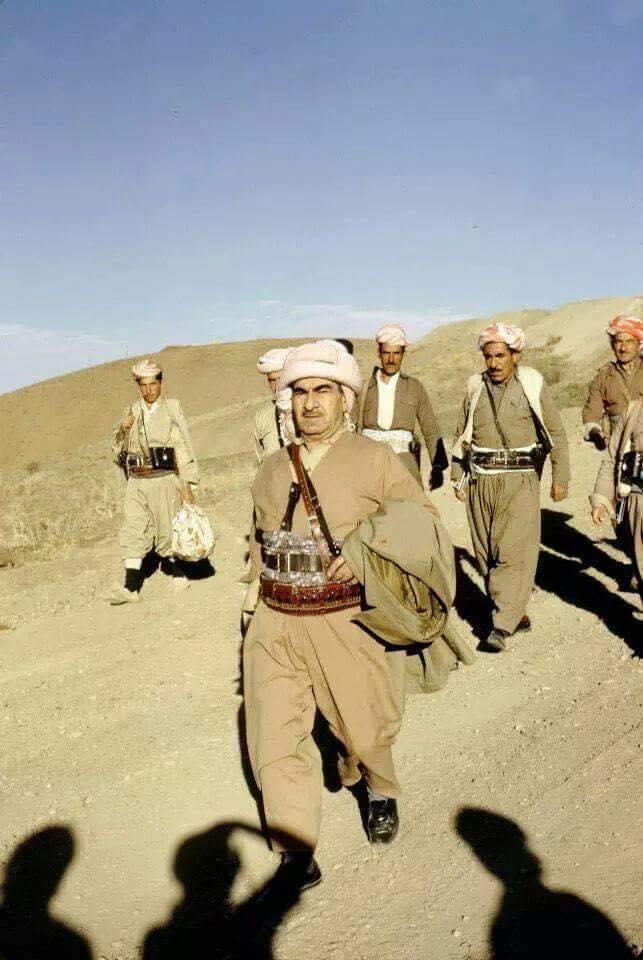
THE LONG MARCH: When the Kurdistan Republic of Mahabad (1946-1947) fell into Iran's hands, its army chief Mustafa Barzani did not surrender the Shah's army, but opted for a long walk with their several hundred loyal peshmerga soldiers reach the Soviet Union. He and five hundred pehmerga troops could reach the Soviet Union where everyone lived in exile in several locations in the Soviet Union after they marcherad through the hostile Turkish and Iranian territories, over several mountains and valleys, rivers and lakes. He returned to the Kurdistan when it was a military coup in Iraq in 1958..


Şex Abdulselam Barzani idam edildiğinde,
kardeşi Mele Mustafa Barzani 11 yaşında idi.
İdam günü Musul'a gitmiş ve Abisinin Dar ağacında sallanan cesedini gören Barzani,
Barzana dönerken:

"Bir katırın Sırtında, hep ağabeyimi düşünüyordum.
Onun asılı cesedi,
gözümün önünden gitmiyordu.
O küçük aklımla 'insan haksız yere asılmaktansa,
dağlarda, ormanlarda, kurtlar tarafından parçalanmak daha iyidir' diyordum ve
o anda hiçbir şekilde,
hapishaneye girmemeye yemin ettim.
Kaçacaktım, ölecektim, parçalanacaktım,
fakat düşmana teslim olmayacak,
kaderimi onun vicdanına bırakmayacak,
rezil ve perişan olarak zindana girmeyecektim.
Hayata bu felsefe ile başladım.
Ölürüm fakat teslim olmak yok.
Ölüm var,
fakat hapishaneye girmek yok.
Bununda artık tek bir çaresi vardı,
Dağlara çıkmak ve ben dağları seçtim,
Peşmergem ile birlikte dağlarda,
Mazlum Kürd halkı için savaşacağız.
Bunu tüm Kürd liderlerine tavsiye ediyorum.
Sıkıştığınız an, sakin ha sakin teslim olmayın,
Mertçe savaşıp ölün,
yada dağlara sığının,
Orada yaşamakta onurludur ölmekte,
.ünkü kürdün dağlarından başka dostu yok''.

Mustafa Barzani
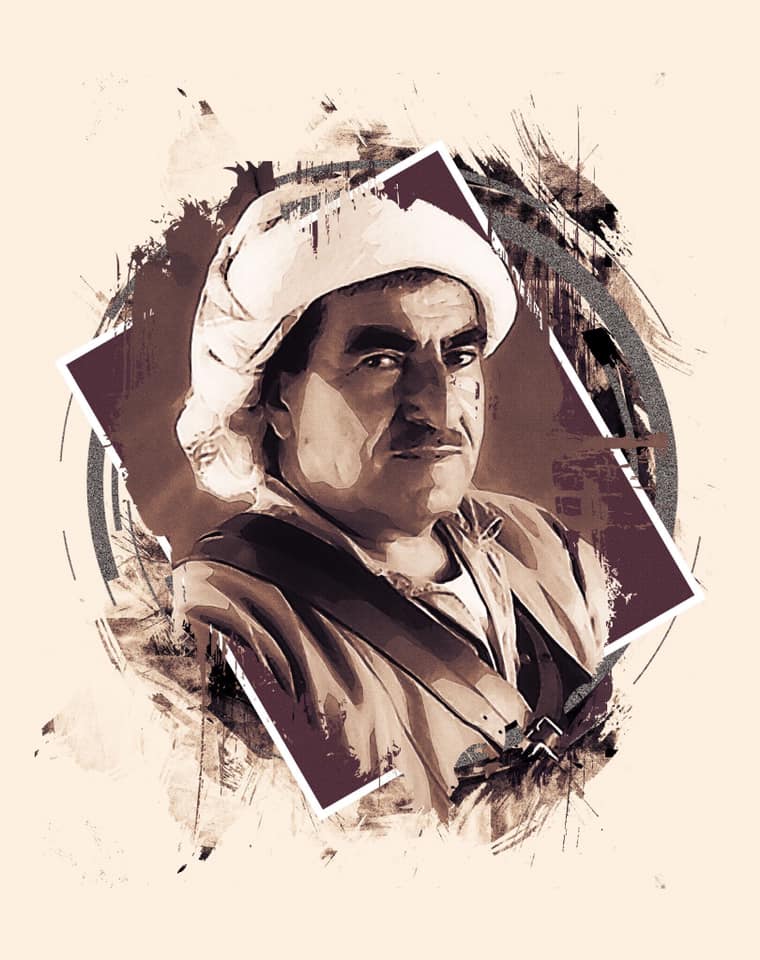


Eagle of the montains

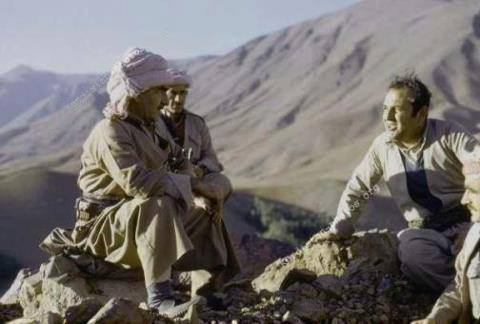
Karşısında oturan: Dr Faik Savaş
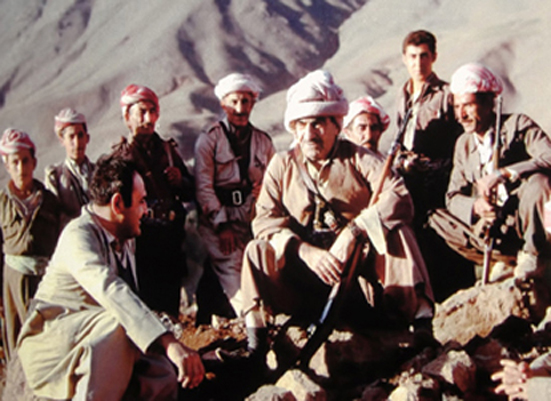


Karşısında oturan: Dr Faik Savaş
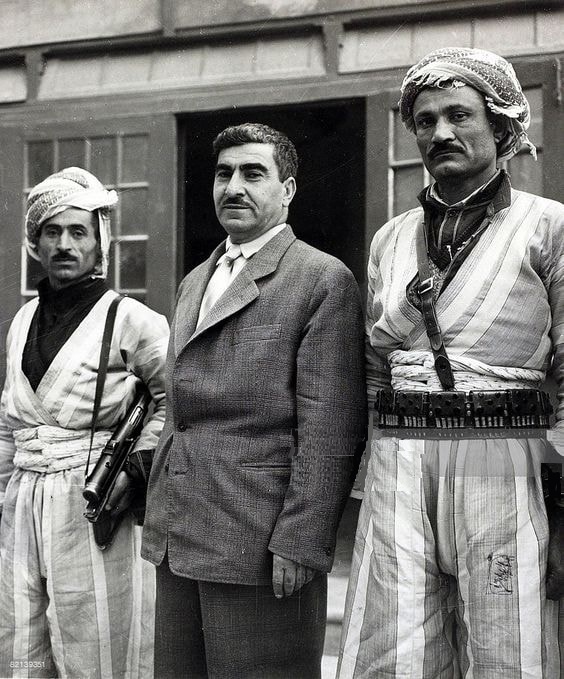


Karşısında oturan: Dr Faik Savaş
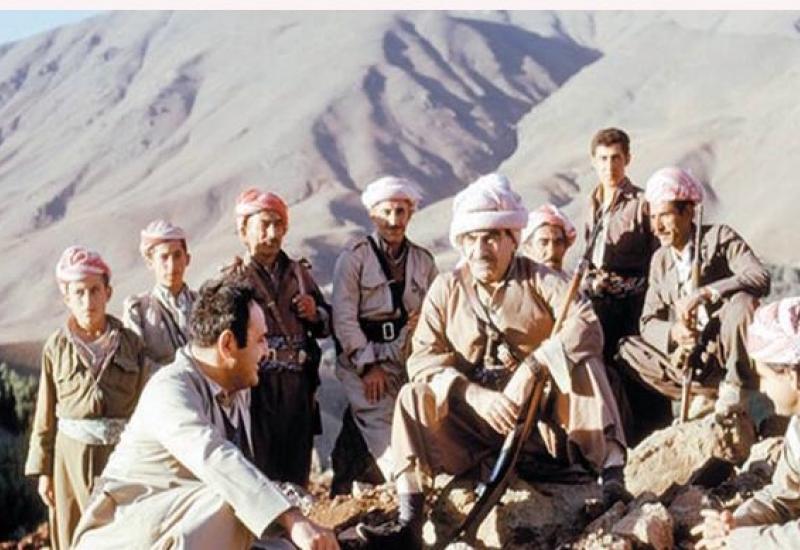


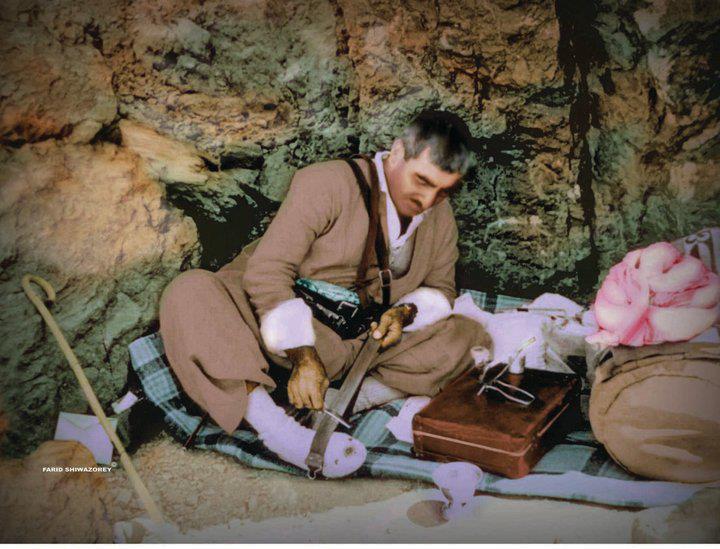
Hygien Threatment at the montain
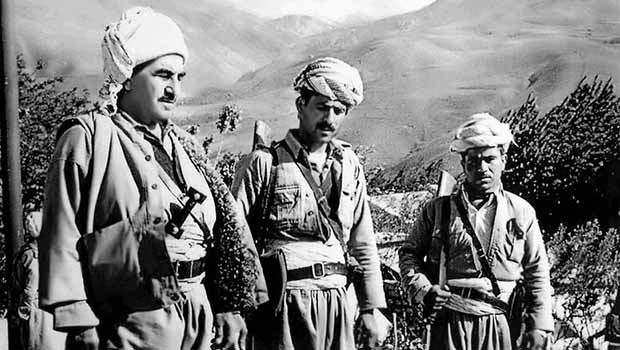


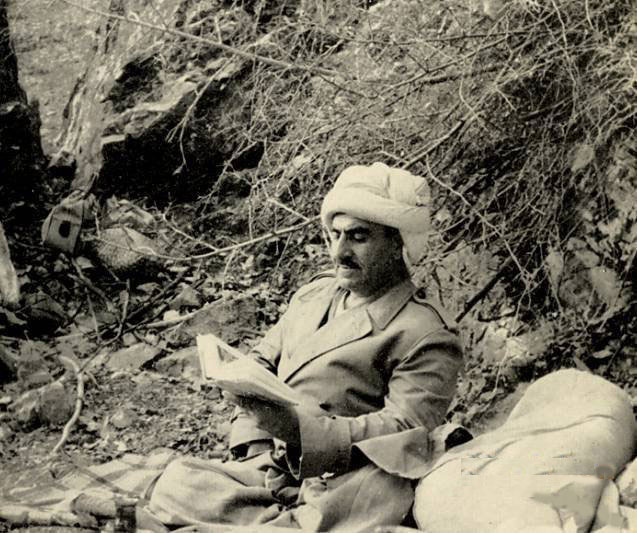
Reading
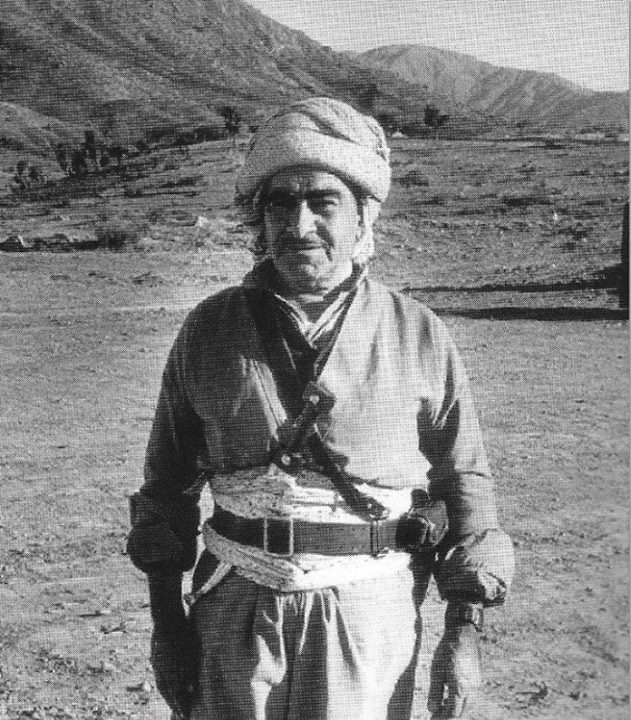


Chruschev & Barzani, 1955 Kreml, USSR


USSR 1955
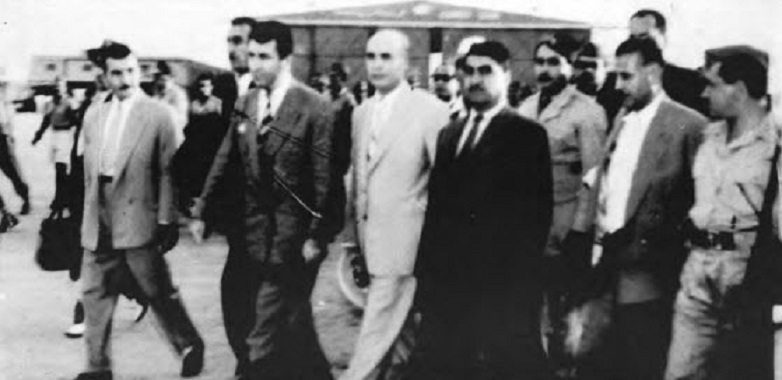


Baghdad 1958
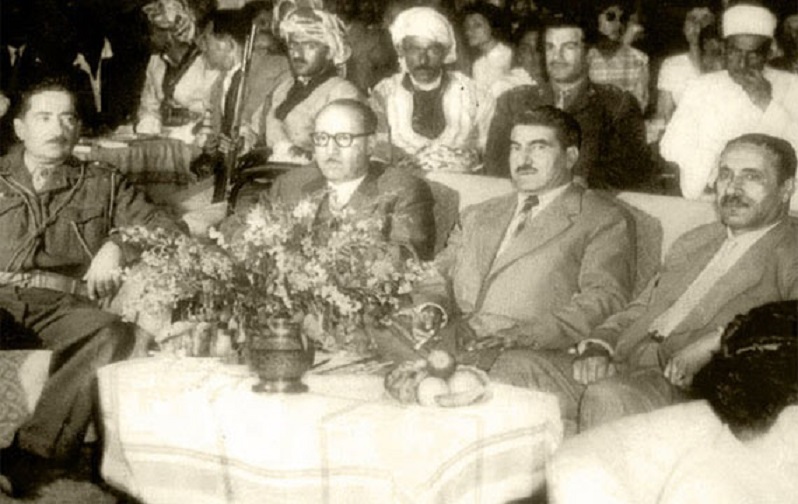


Baghdad 1958


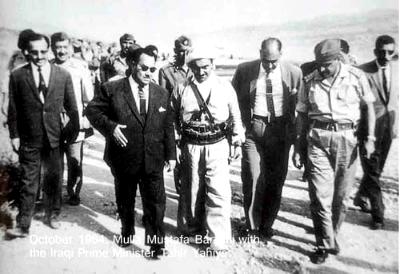
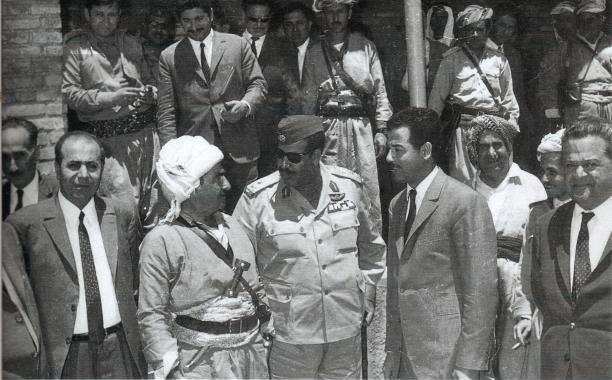
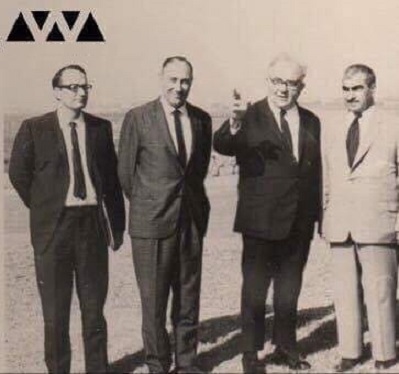
Mustafa Barzani, Saddam 1970


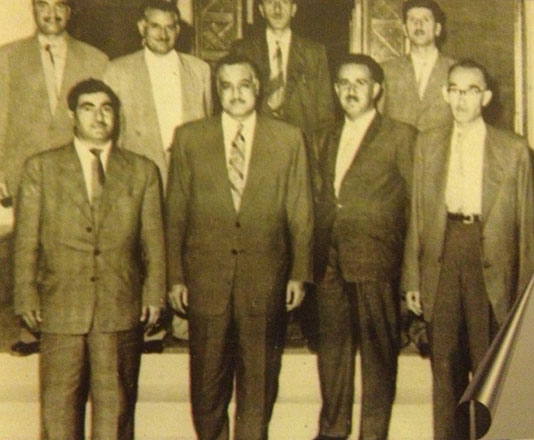
With Egyptian leader Jamal Abdul Naser
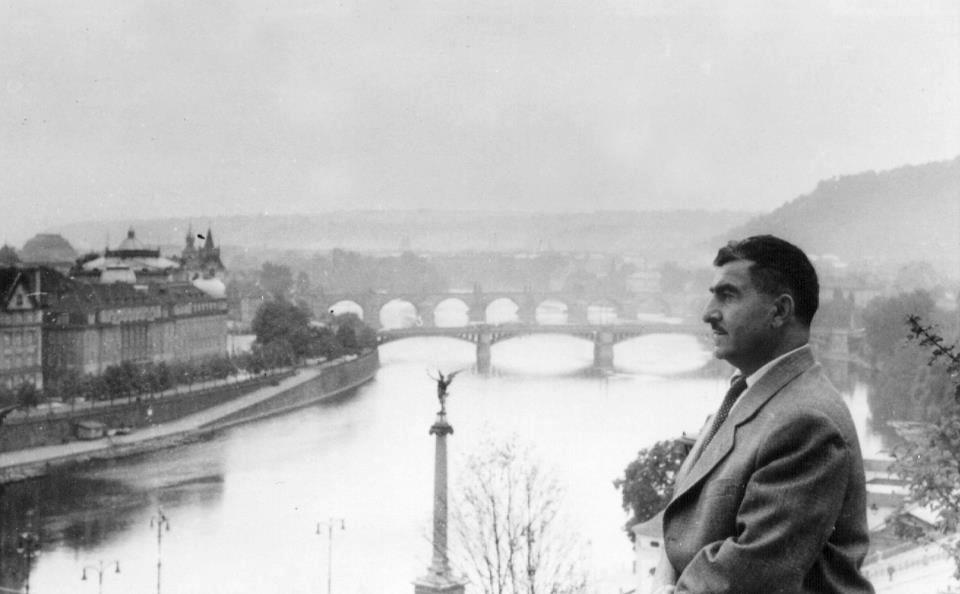


In Prag with Vltava River


Baghdad, 1959


Cairo, 1958
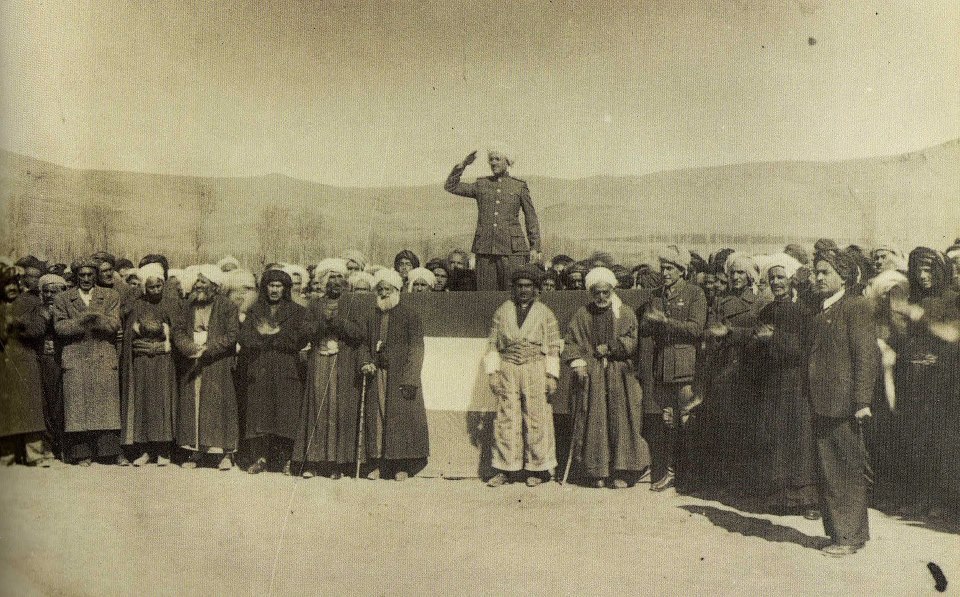


Barzani in the front of The Proclamation Ceremony of The Mahabad Kurdistan Republic 1946
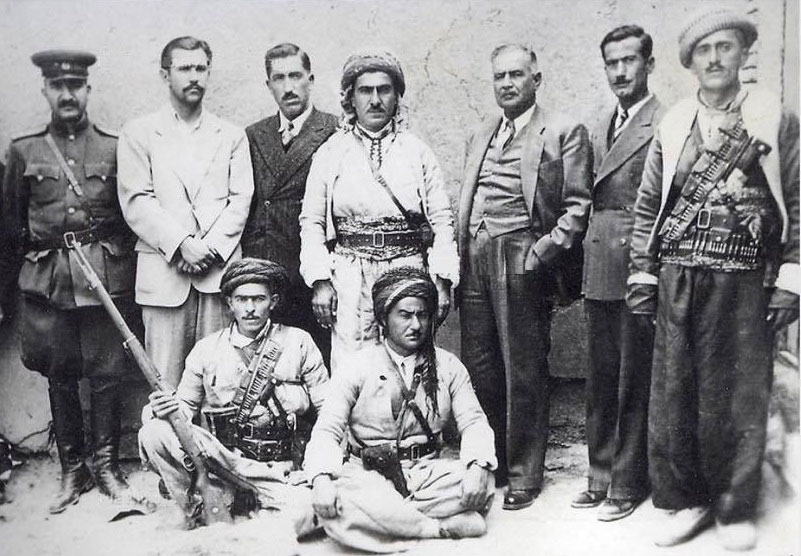


Mustafa Barzani, Qedri Cemil Paşa, Mahabad 1944
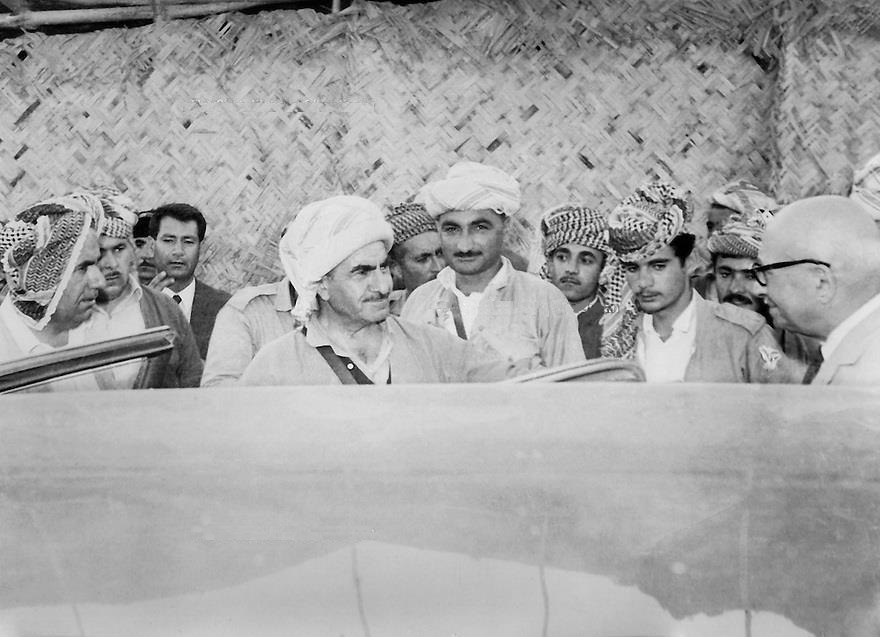


Mam Hajar, Barzani & Kamuran Bedirxan
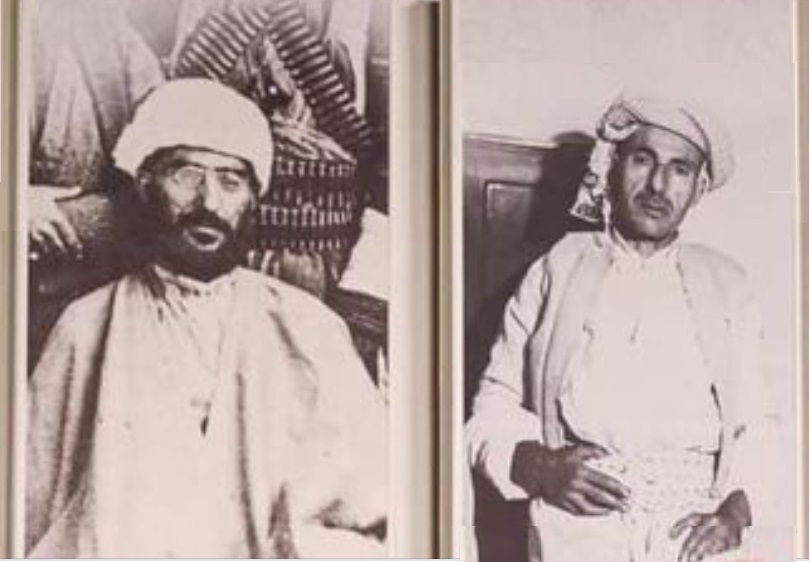


Mustafa Barzani'nin abileri soldaki Abduselam Barzani, sağdaki Ahmed Barzani

Kürd vatanseveri Abduselam Barzani kürdlerin, ermenilerin ve süryanilerin ortak bir devletini kurmak için ermenilerin Andranik Paşa'sı ve süryanilerin Mar Şamun'u ile birlikte rus çarı ile görüşmek üzere Rusya'ya gidiyor. Şimdiye kadar öyle bilinordu ki bu amaç için ancak Tiflis'te bulunan bir rus çarı temsilcisi ile bir görüşme yapabilmiş. Mesud Barzani'nin 18.06.2002 tarihinde yaptığı bir konuşmada verdiği bilgilere göre, ''bundan birkaç yıl önce Hewler'e ziyarete gelen rus dışişleri bakanı Sergey Lavrov, Abduselam Barzani Tiflis'e vardığında rus Çarı Tiflis'te hazır bulunduğundan dolayı rus çarıyla Tiflis'te görüşüyor. LAvrob arşivimizde böyle yazıyor'' demiş.. Bu seferinden geri döndüğünde bazı ihanetçi kürd işbilikçileri tarafından tuzağa düşürülerek osmanlılara teslim edildi ve 1914 yılında Musul'da idam edildi.

Yine Mesud Barzani'nin bu konuşmasında belirtiği gibi kürd vatanperveri Ahmed Barzani dini ahlakı bütün bir zat olduğundan ''ölene kadar elini paraya sürmemiştir''. 12 yıl ayakları prangalarda Basra ve Bağdat zındanlarında tutuldu. İngilizler ve arap lider Nuri Said ona eğer bir mektup yazıp af dilerse serbest bırakılacağını söylediler. Ama o ben sadece tanrı'dan af dilerim, kuldan değil diyerek reddetmiş ve 14 temuz 1958 askeri darbesine kadar Iraq zindanlarında kaldıktan sonra ancak 20 temmuz 1958 yılında serbest bırakılmıştır.
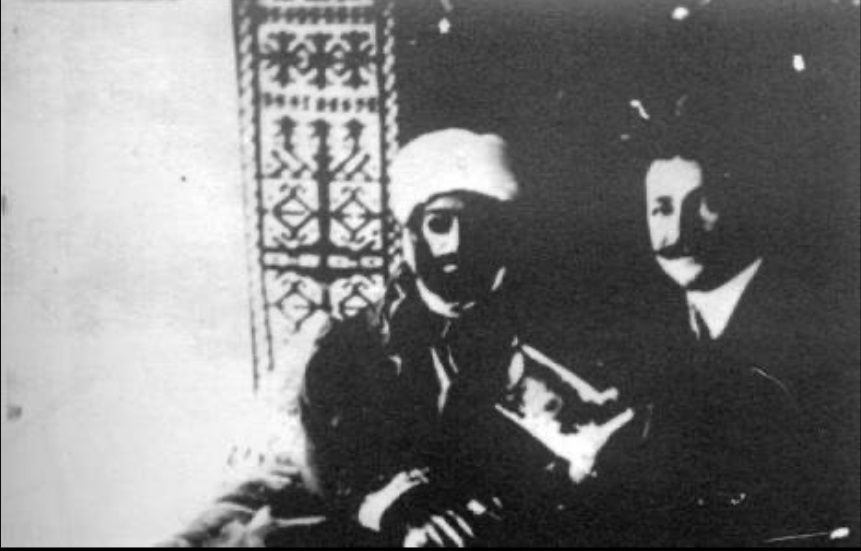


14 Nisan 1914, Urmiye, Şeyh Abdusselam Barzani Rus Konsolosluğu yardımcısı Peter Ellov'la beraber..

Mele Mustafa Barzani’nin büyük abisi Şeyh Abdusselam Barzani 14 Aralık 1914’te osmanlı devleti tarafından Musul’da idam edildi.

Hayatı Kürd Özgürlük Mücadelesiyle geçmiştir.

Şeyh Abdusselam'ın 1907 yılında Osmanlı'ya yazdığı mektuptaki talepleri:
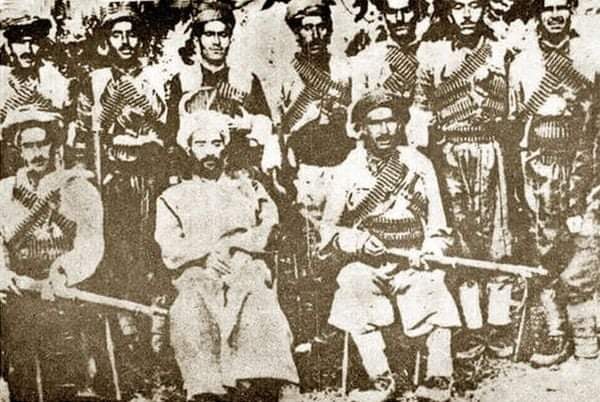
Abduselam Barzani kürd askerlerle
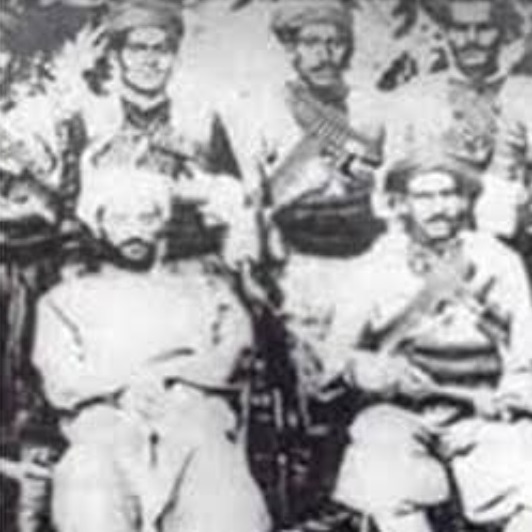


Di gel Şêx Ehmed

Şêx Ehmedê Berzanî. 12 salan di zîndanê de, dest û lingên wî zincîrkirî ma, lê îxanet qebûl nekir. Bavê xwezaparêziya Kurdistanê ye.
Di hemî jiyana xwe de bi karê xwezaparêziyê ve mijûl bûye. Ji bo parastina daristanan gelek xebitiye..
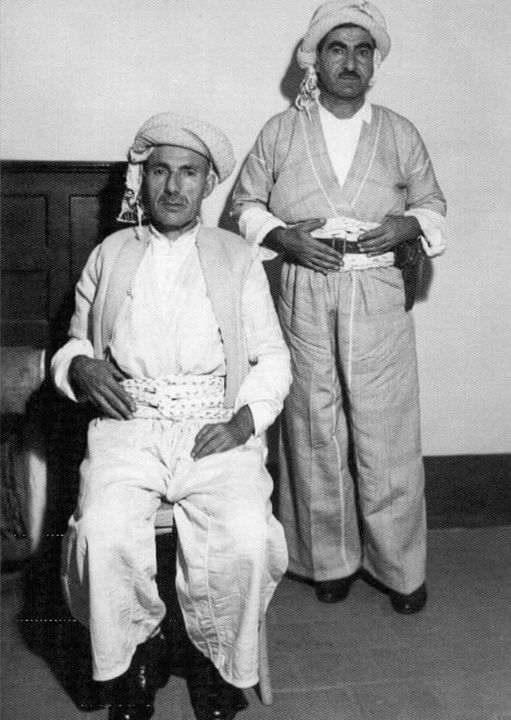
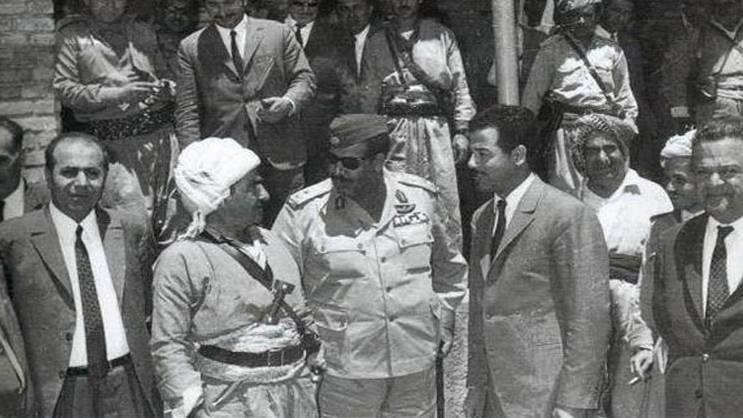


Paymana 11 Adar 1970
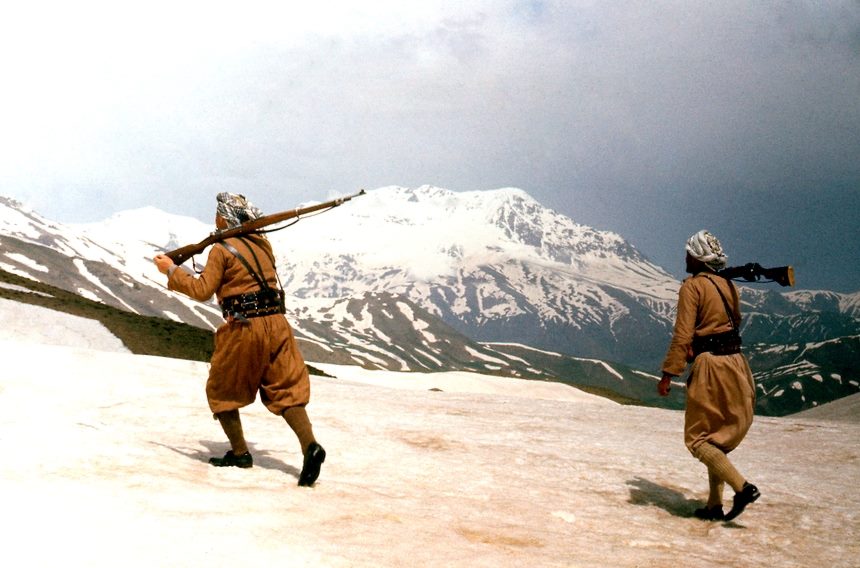


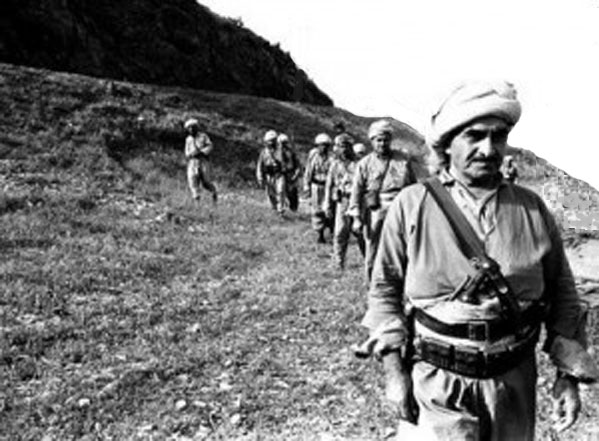
One who confronts death.. Kurdish Peshmerga soldiers in Kurdistan mountains against the Islamist Arabic Iraqi Army, 1960  by William Carter
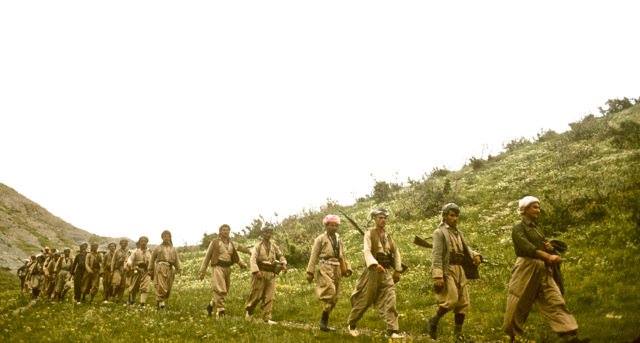


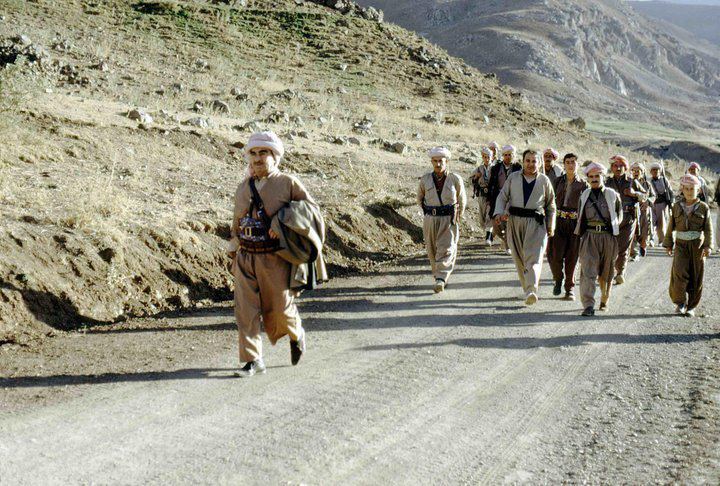
Peshmerga Forces in the 1970s
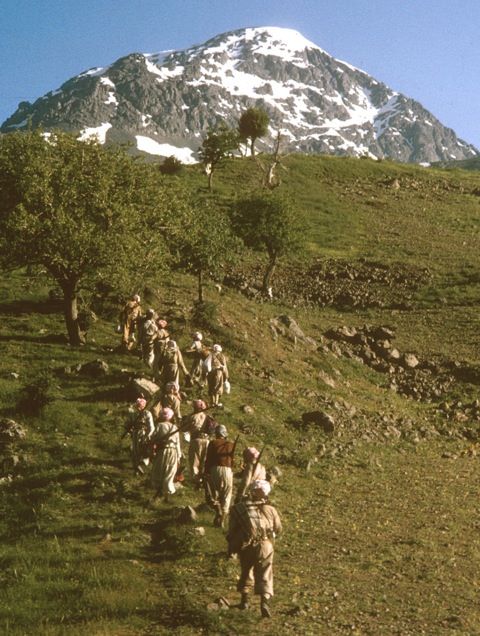


Peshmerga soldiers, 1965, by William Carter
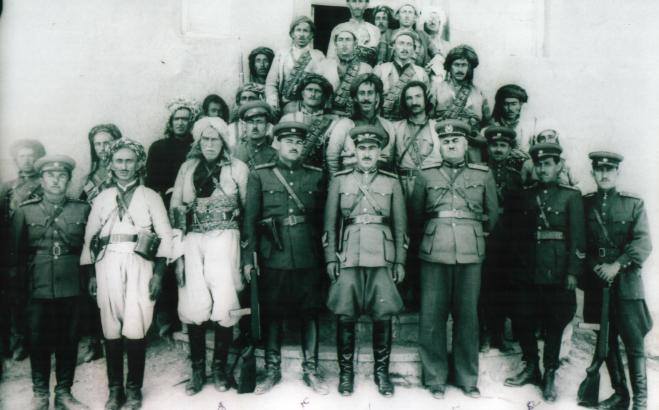


The Kurdish Army Chief in Mahabad Kurdistan Republic 1946
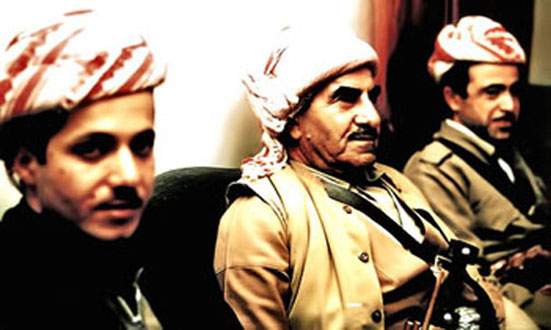


Mustafa Barzani - Mahmud Osman William Carter, 1965
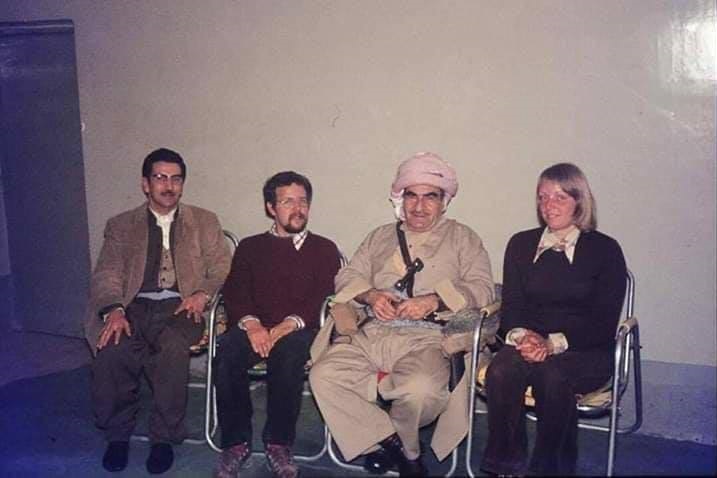


Di gel hozan û rewşenbîrê ji Bakur Qedrî Can
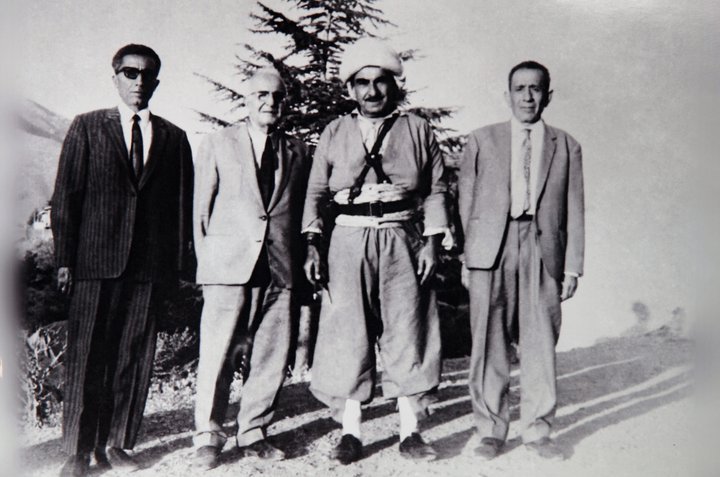


With Jameel Pasha
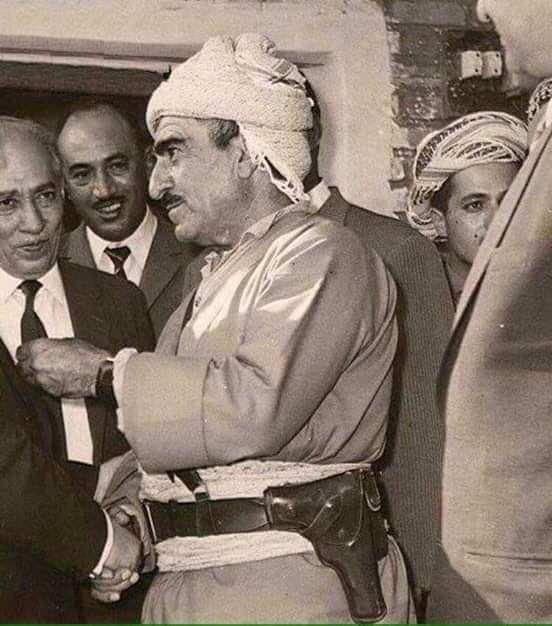


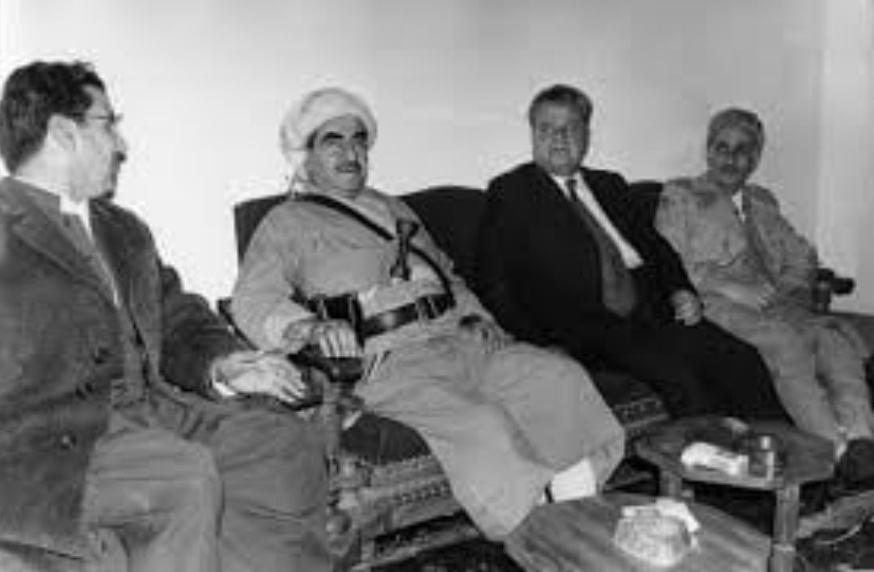
Di gel Idris Barzani, professor Nizameddin Kaya och Dr Hassan Shetwi / Tebax 1970 Haj Umran.
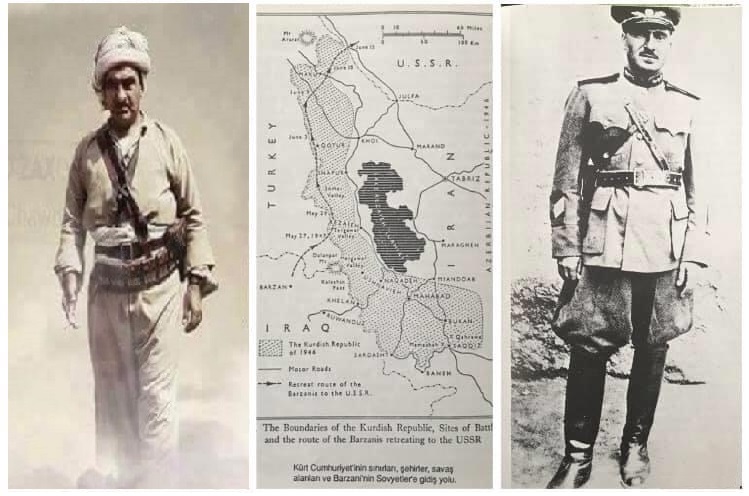


The 5000 km long route whıch Mustafa Barzanı wıth hıs 500 Peshmerga fıghters MARCHED (!) 27.05.1947 to The Sovıet Unıon.
They were attacked by three states' armies, Iraq, Iran and Turkey's armies along their march.


See the legandary long march's route on the map
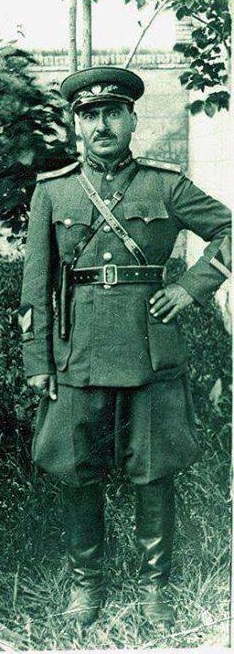


At The Mahabad - Kurdistan Republic 1947
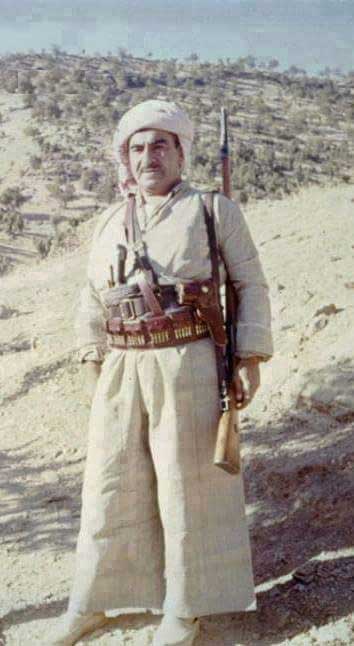


1952


Ahmad Barzani, Xudan


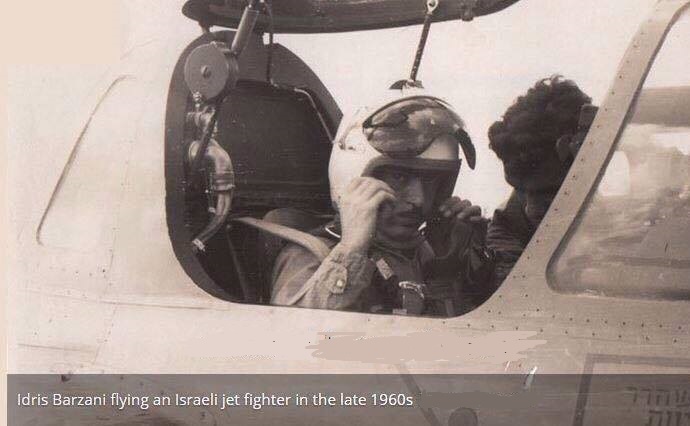
Visit of Mullah Mustafa Barzani in one of Israeli Air Force Squadron
See More


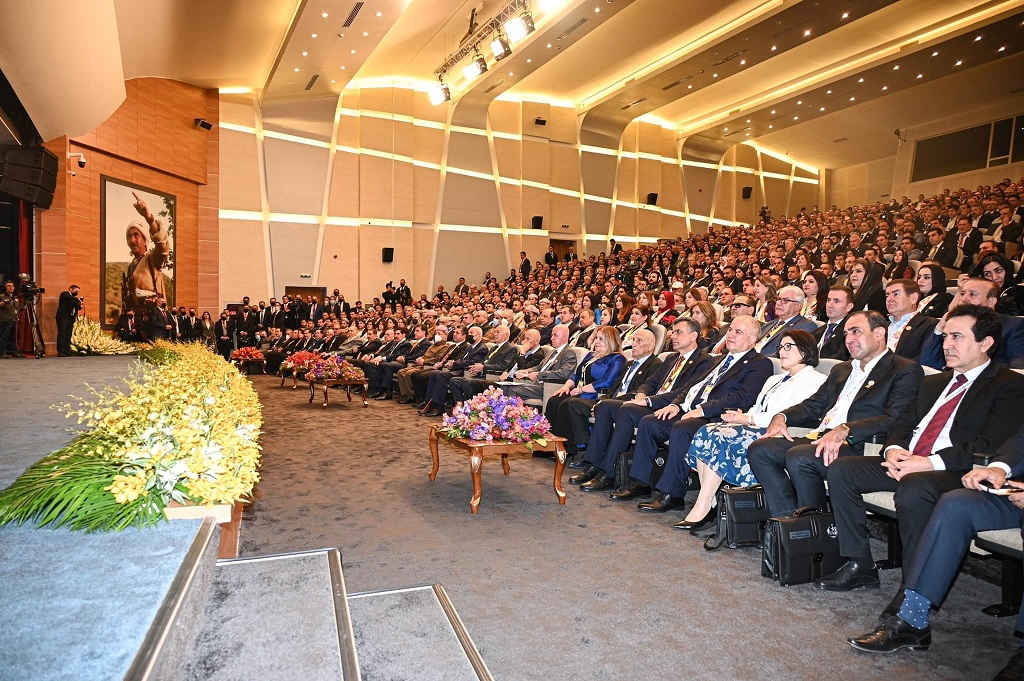
14:emîn Kongreya.PDKê ya .li heyva 10-11/2022 li Duhok'ê.


Mustafa Barzanî & Mîr Kamûran Bedir Khan & Mam Hejar & Franso Herîrî


Xencera Mele Mistefa'yê rehmetî xencera herî tîpîk a kurdî ye û dibêjin ku ev xencer bo wî ji hêla Kake Ziyad-î Koye hatiye diyarîkirin.
Gava Mele Mistefa diçe bo Mahabad'ê dibêje; ''wekîlê min ê li Kurdistanê Kake Ziyad-î Koye ye''.


1949


Father & Son, Ohio, US, c1978


Barzani in US (Ohio)
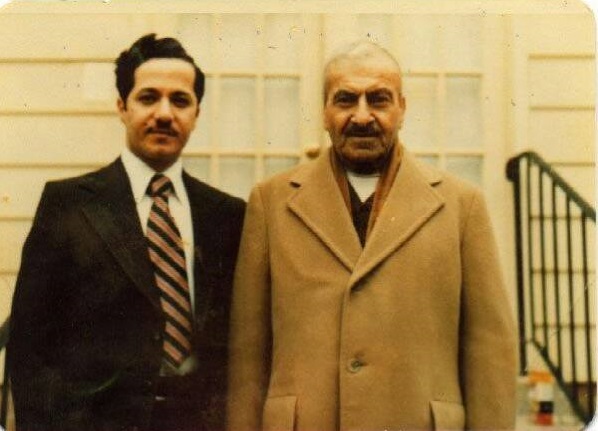


Father & Son Mustafa & Masoud Barzani, short before the death 1979 in US
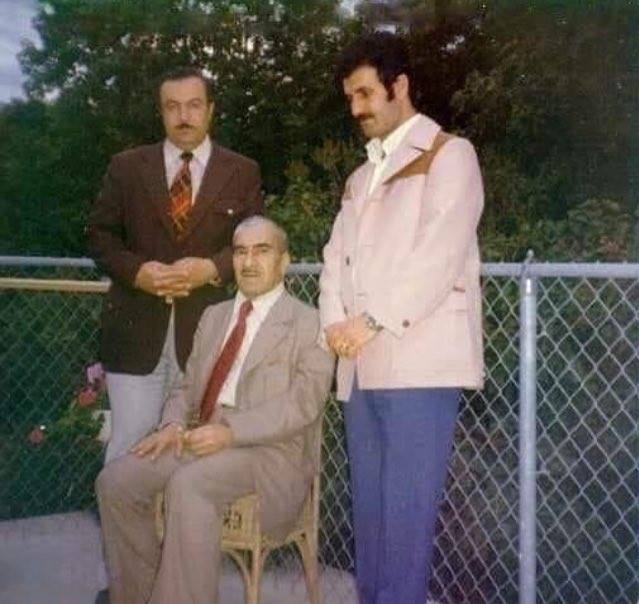


Muhsin Dizeyi, Sefin Dizeyi'nin babası, Mustafa Barzani, Dr.Necmeddin Kerim


Bi kurê xwe Îdrîs re ..
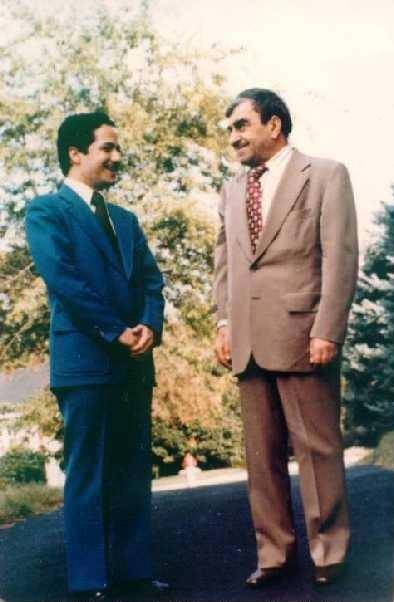


Barzani with his son Masoud in US (1976)
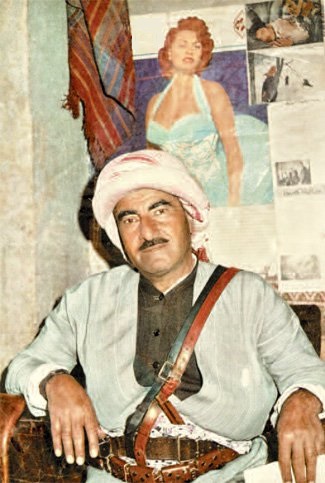


Barzani visiting a Cafe


Barzanî as student at Soviet, 1956


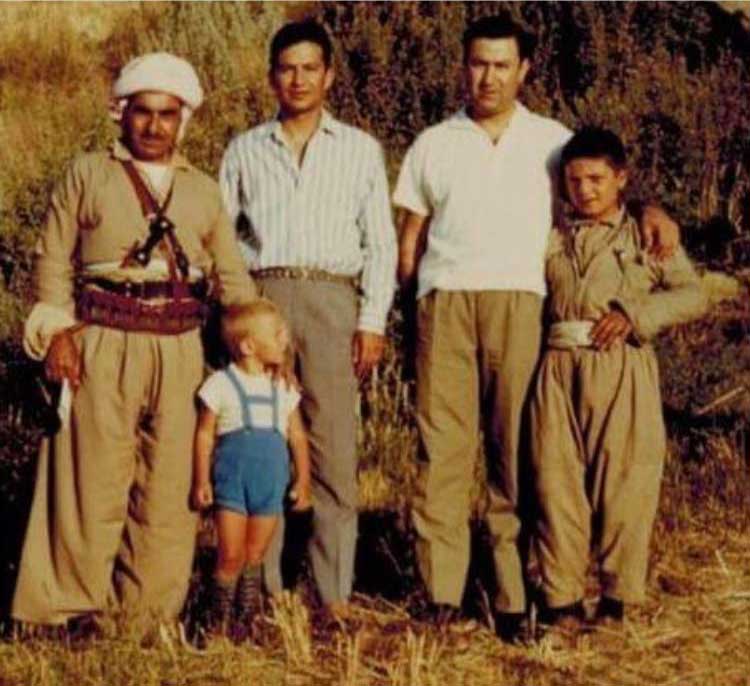
Wıth his two sons: Masoud & Idris Barzanis
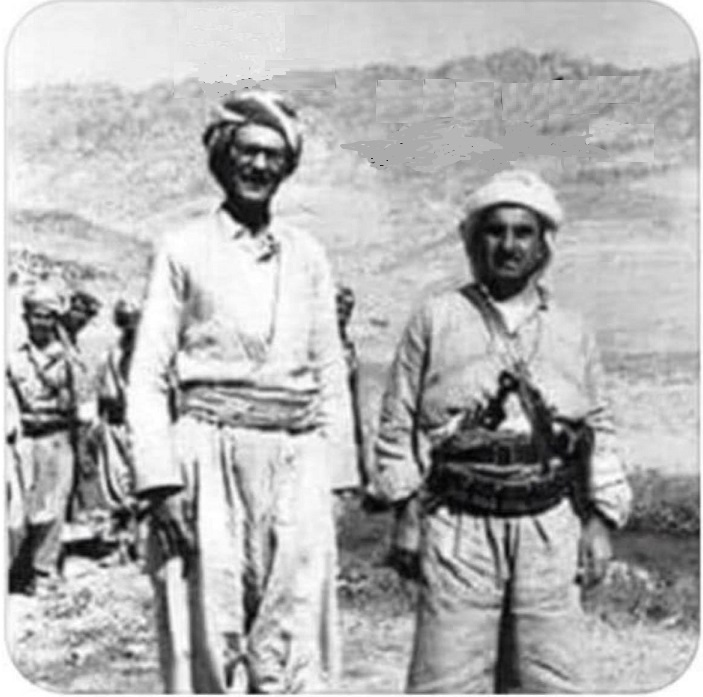


Dibêjin ku Mihemed Şêxo li Şoreşa Başûr di gel Mele Mistefa Barzanî ye lê belê ne ew e

Tid och plats för fotot: Raneh - 1964
Mustafa Barzani och den islandske författaren Erlendur Haraldsson
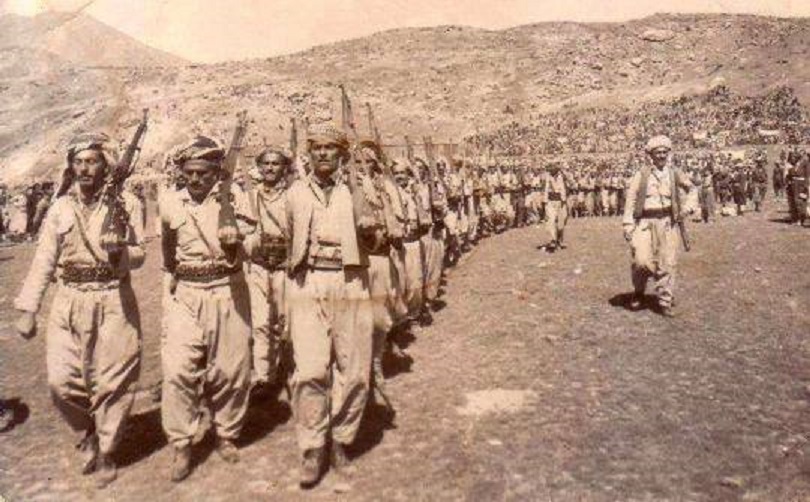


Mustafa Barzani önderliğindeki Kürd güçleri Kerkük'e girerken. Eylül 1961.
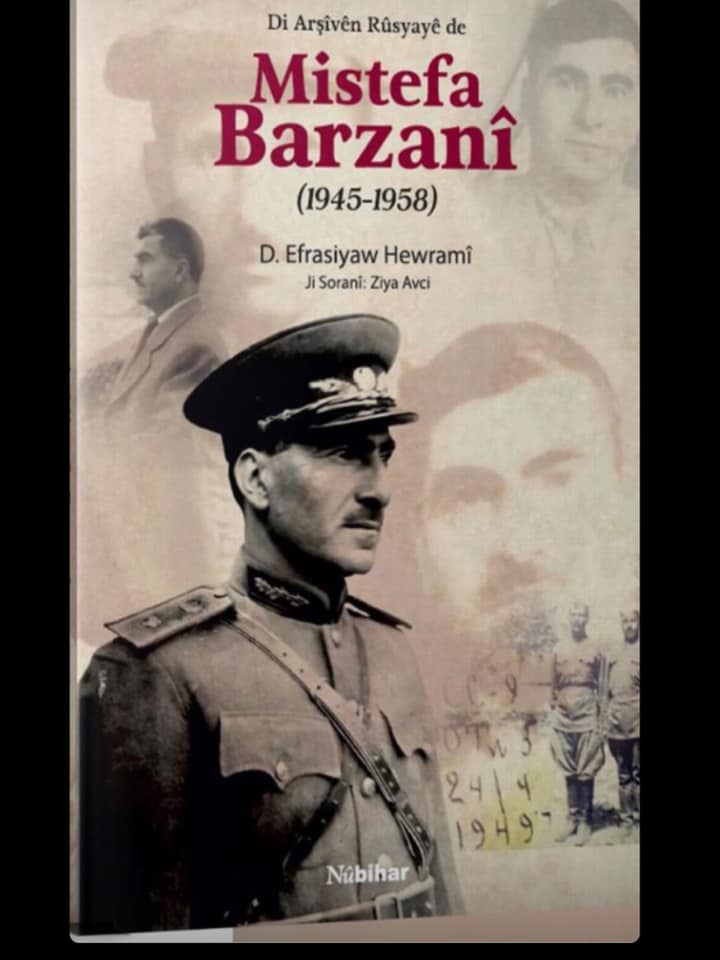


Di Arşîven Rûsya'yê de Mustafa Barzani 1945-1958


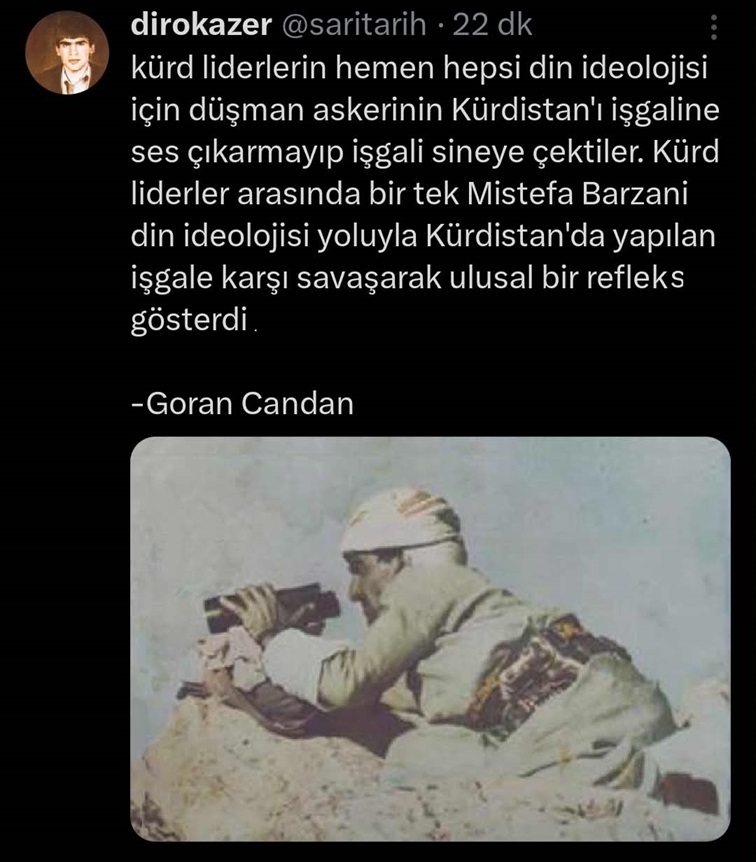
Her türlü saygıyı hakkediyor çünkü
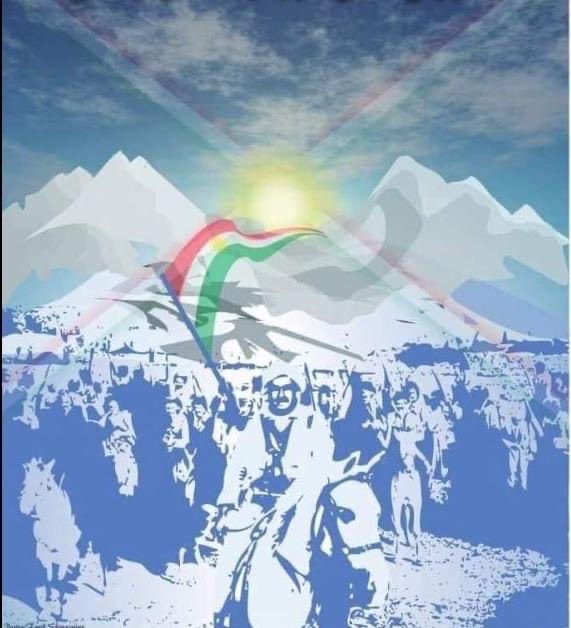
eski kürd liderlerin hemen hemen hepsi din ideolojisi için düşman askerinin Kürdistan'ı işgaline ses çıkarmayıp
işgali sineye çektiler. Kürd liderler arasında bir tek mele Mistefa Barzani din ideolojisi yoluyla Kürdistan'da yapılan işgale karşı savaşarak
ulusal bir reflek gösterdi.
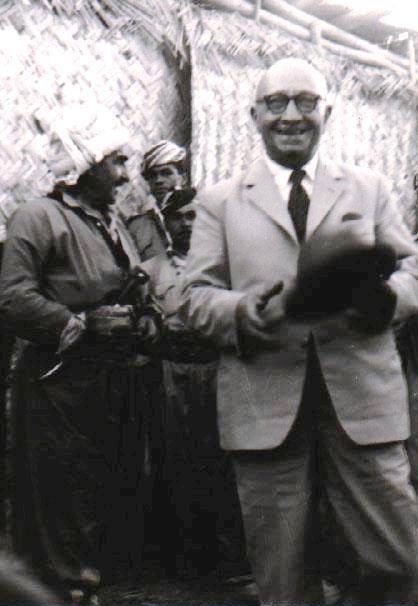


Mîr Kamûran Bediırxan


Piştî sala 1975'an


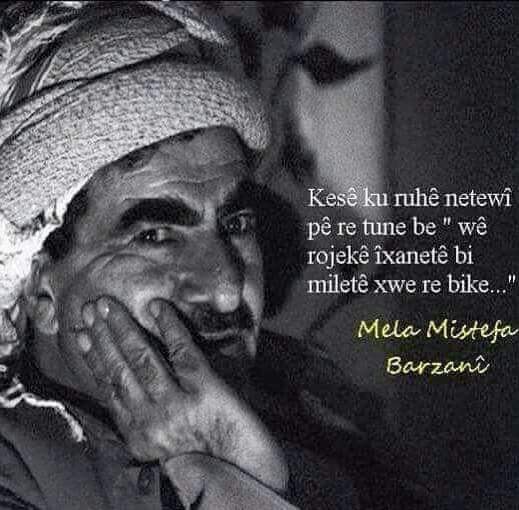
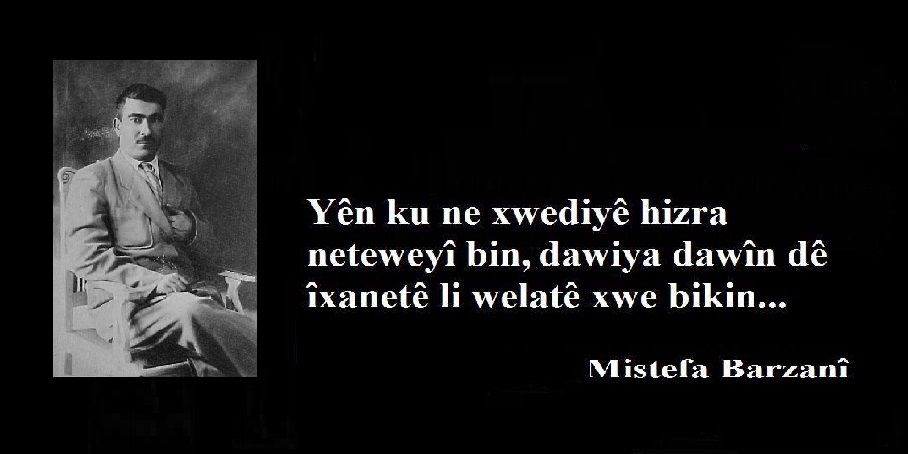
"Kesê ku ruhê netewî pê re tune be, rojekê wê xiyanetê li milletê xwe bike!"

Mele Mistefa Barzanî
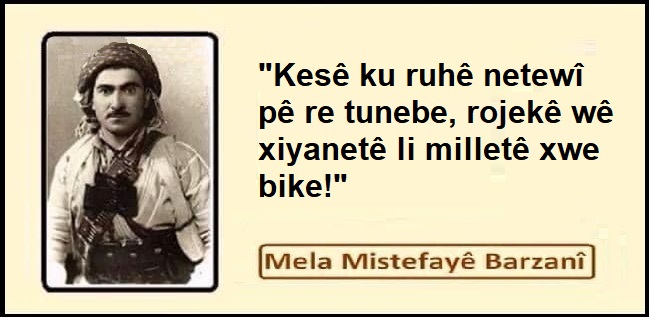


"Kesê ku ruhê netewî pê re tune be, wê rojekê îxanetê bi milletê re bike!"

Mele Mistefa Barzanî
 

Abdulselam Arif: 1963–1966


Piştî sala 1975'an. Hêla rastê: Muhsin Dizeyî
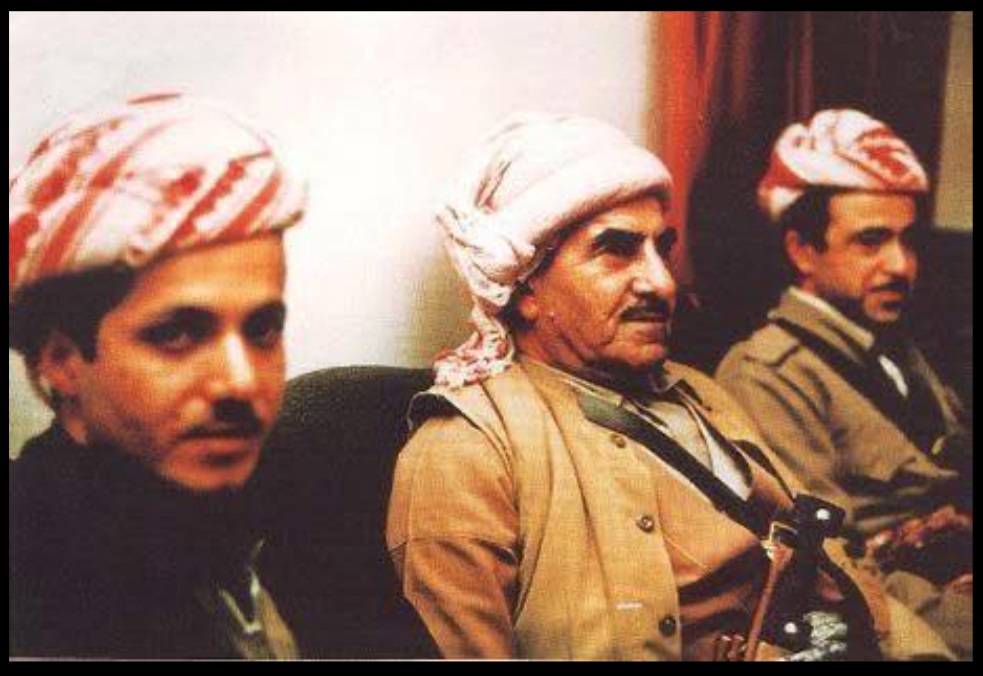


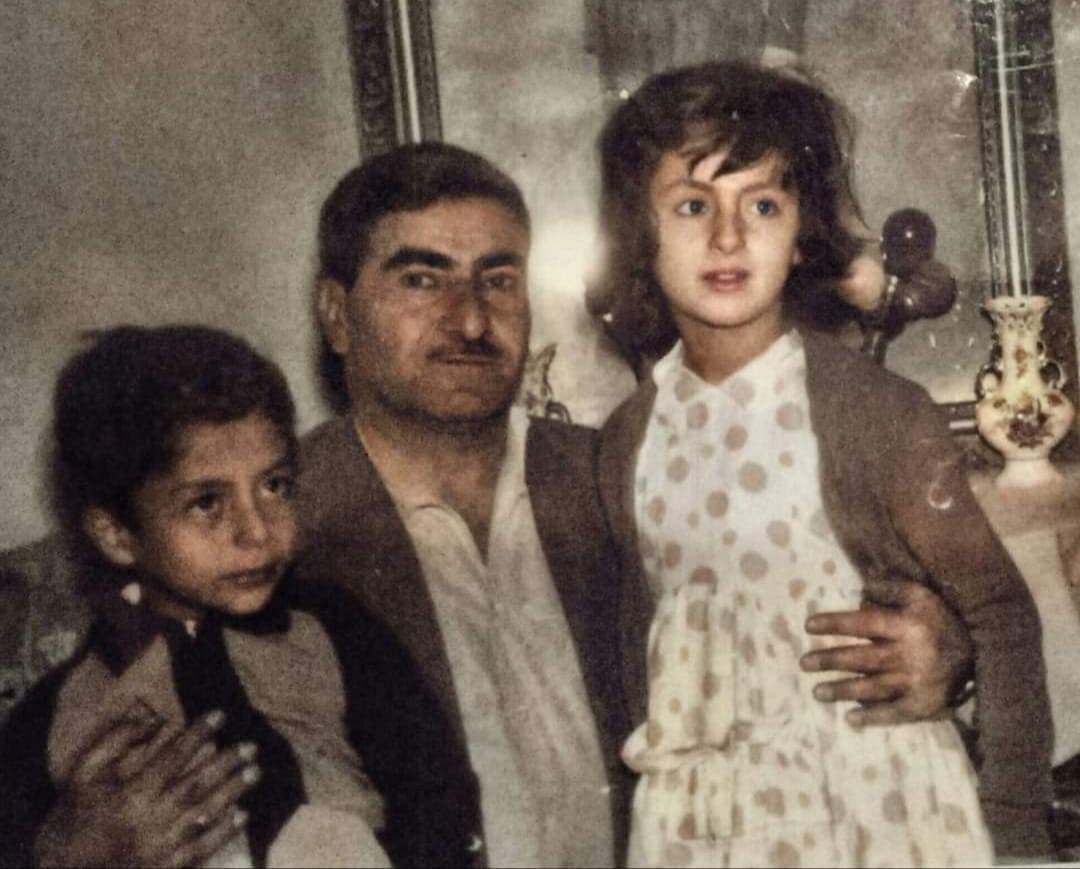
Bav û du kur


Kerec, Îran, berî ku biçe bo Amerîka'yê, c1976


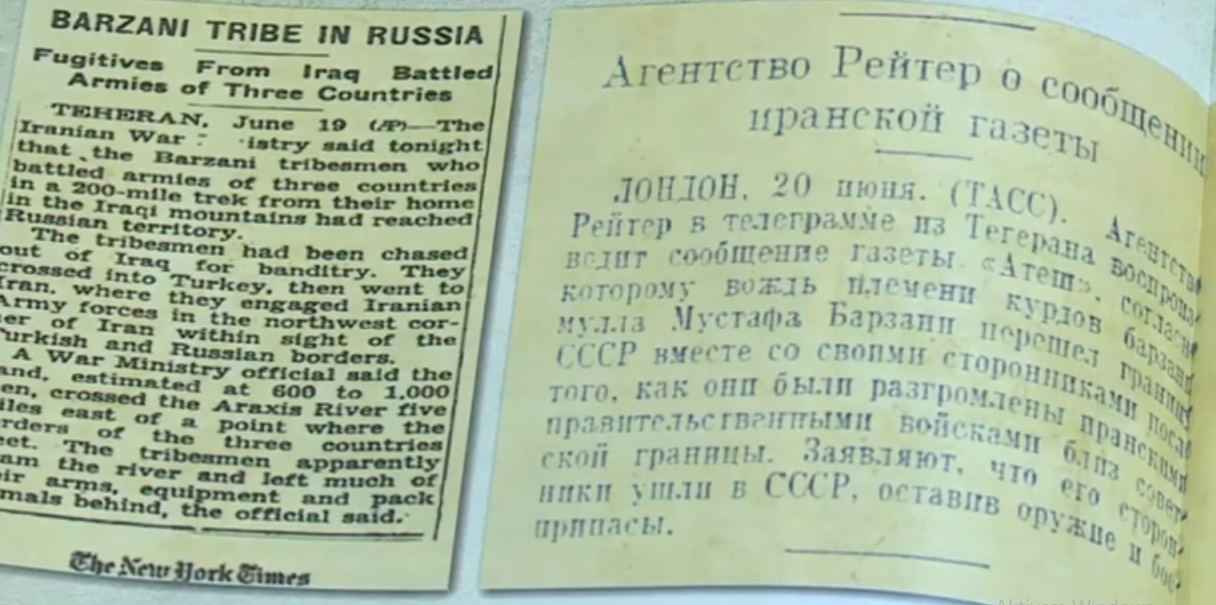
The New York Tımes June 19th, 1947. The NT calls the Kurdish freedom fighters for bandits. This desinformation at Media has been caused by England's pro-Islamist Turkey attitude.
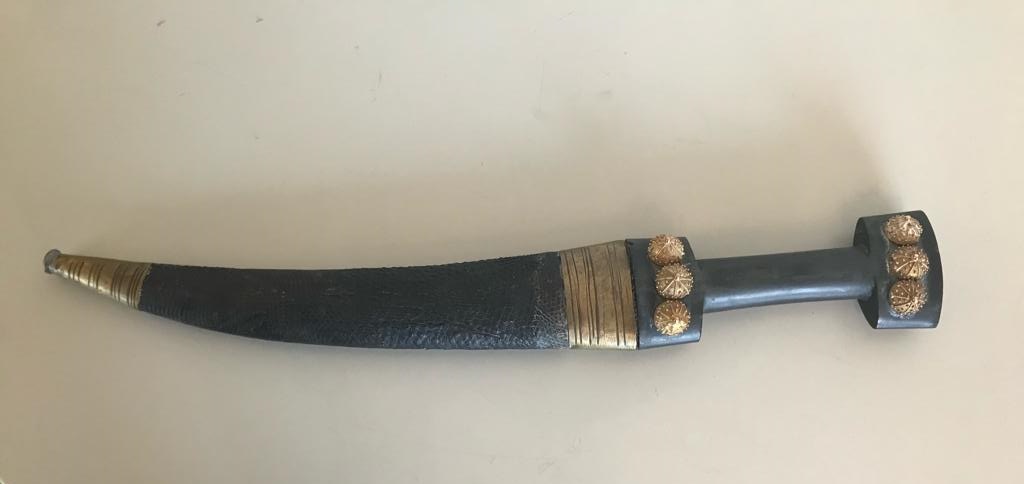


Ev xencer dibe ku rehmetî Mele Mistefa bi diyarî dabe Mamoste Cemal Alemdar'î
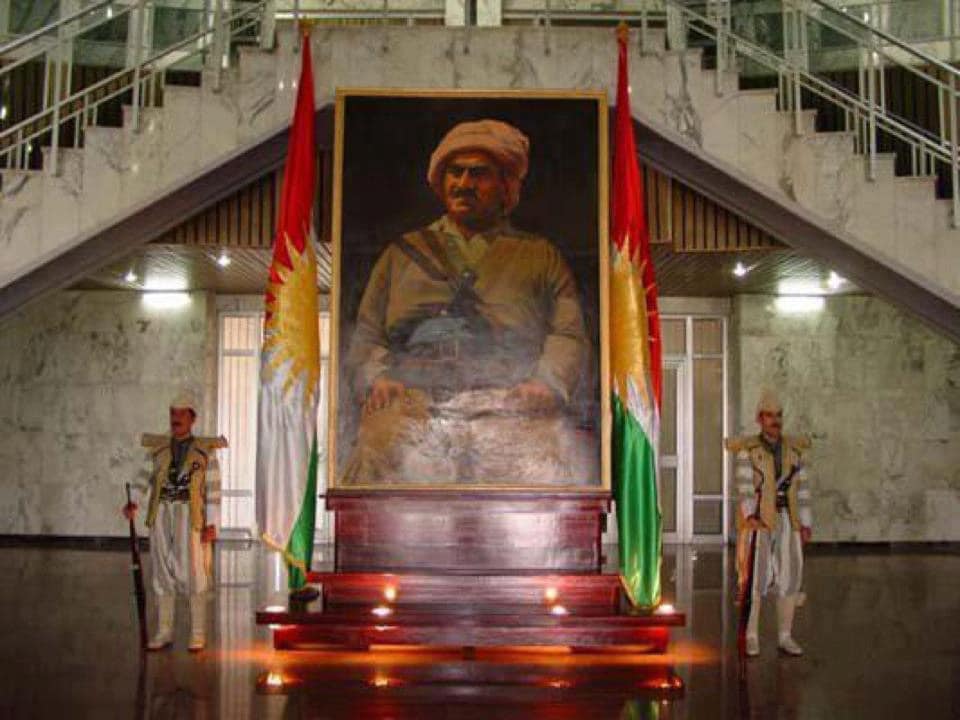


Entererance of the Kurdistan Parliament Building in Hewlêr


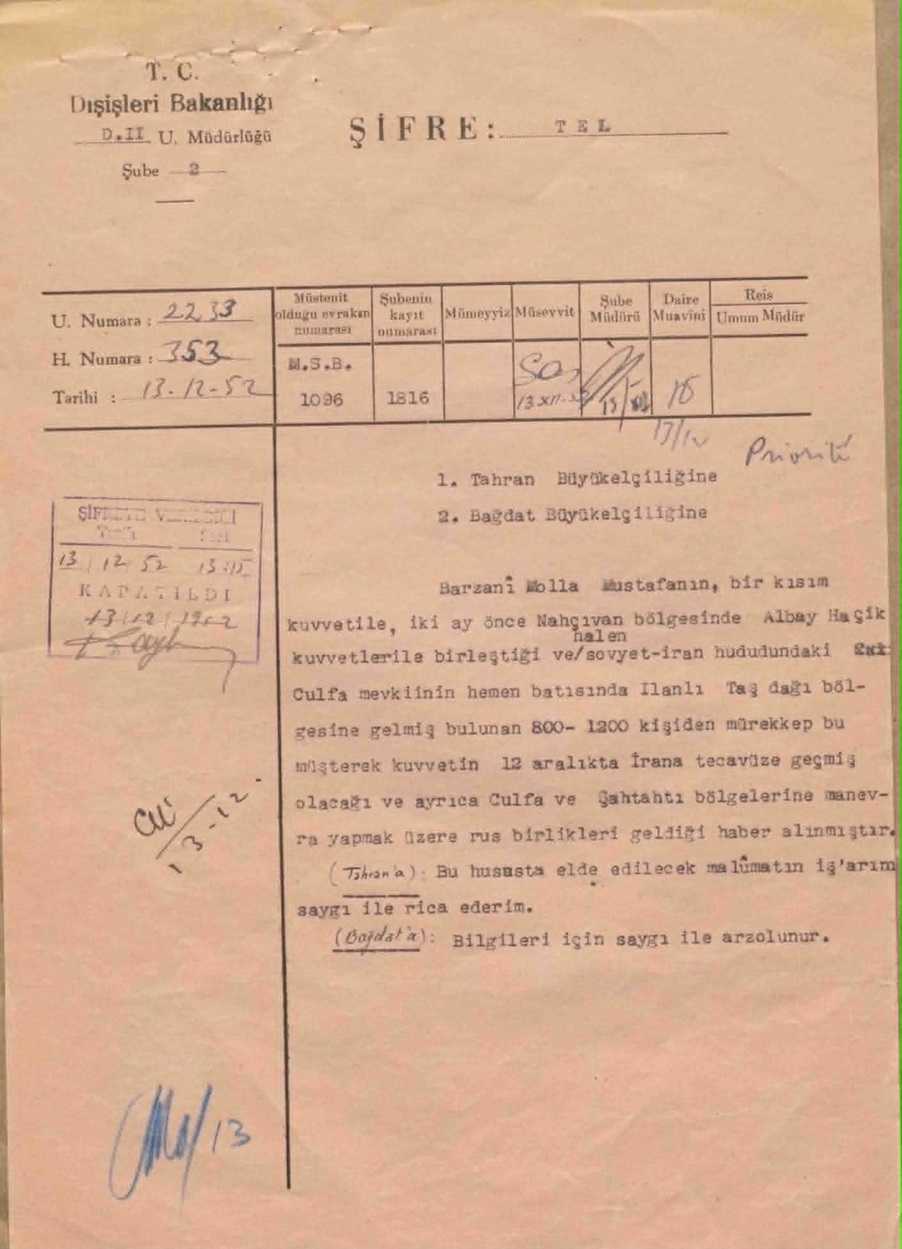
A Letter from Mustafa Barzani to U.S. President John F. Kennedy


A letter dated July 12, 1963, was sent by Mustafa Barzani to U.S. President John F. Kennedy via the American Embassy in Tehran.


Through the mediation of the Embassy of the United States of America in Tehran,

To the Honorable, Exalted Sir, Mr. John F. Kennedy, President of the United States of America,

Just as the diplomats of the United States government are well aware of the events and incidents in the region, and as the American authorities in Baghdad and Washington know, the human rights and national rights of the Kurdish nation in Iraq have been continuously violated.

We in no way seek separation from Iraq; rather, we merely demand the implementation of the human and national rights of the Kurdish nation within the Republic of Iraq.

The war that has erupted between us and the central government in Baghdad since 1961 is in fact a war to defend our national existence and to defend humanity and freedom.

Our wish is peaceful coexistence within the framework of unity with the Arabs of Iraq and other peoples of this country.

We, the Kurdish nation, expect the great and free nation and government of America to support us in this just and humanitarian struggle.

Our nation has always held respect and faith in the science, civilization, freedom, and progress of the American people, and hopes that the American government will also pay attention to the sentiments of our nation.

As Your Excellency is aware, the Kurdish nation has, throughout history, always faced injustice, discrimination, persecution, and suffering — and now, within the Republic of Iraq, it is facing a harsh fate.

We demand that the rights of the Kurdish nation be respected just like the rights of other nations, and that we may live a free and humane life.

We believe that with the help of truth-seeking and freedom-loving friends, we shall reach these ideals.

We sincerely hope, with the support and assistance of such truth-seeking and freedom-loving friends, to attain our human ideals.

We most respectfully and earnestly ask Your Excellency for a positive and reassuring response.

With our highest and most heartfelt respects,


Mustafa Barzani


Amerika Birleşik Devletleri Tahran Büyükelçiliği aracılığıyla,

Yüce, saygıdeğer Bay John F. Kennedy’ye, Amerika Birleşik Devletleri Başkanı’na,

Amerika Birleşik Devletleri hükümetinin diplomatlarının bölgedeki gelişmeleri ve olayları çok iyi bildiği gibi, Bağdat ve Washington’daki Amerikan yetkilileri de Irak’ta Kürd milletinin insan haklarının ve ulusal haklarının sürekli olarak ihlal edildiğinin farkındadır.

Bizler Irak’tan ayrılmak ya da bağımsızlık istemiyoruz; sadece Kürd milletinin insanî ve millî haklarının Irak Cumhuriyeti sınırları içinde tanınmasını ve uygulanmasını talep ediyoruz.

1961 yılından bu yana Bağdat’taki merkezî hükümet ile aramızda süren savaş, esasen ulusal varlığımızı, insanlığı ve özgürlüğü savunma mücadelesidir.

Arzumuz, Irak’taki Arap halkı ve bu ülkenin diğer halklarıyla birlik çerçevesinde barışçıl bir şekilde bir arada yaşamaktır.

Biz Kürd milleti olarak, büyük ve özgür Amerika halkının ve hükümetinin bu haklı ve insanî mücadelemize destek olmasını bekliyoruz.

Milletimiz, her zaman Amerikan halkının bilimine, medeniyetine, özgürlüğüne ve ilerlemesine saygı duymuş ve inanmış; Amerika hükümetinin de milletimizin duygularına kulak vereceğini umut etmiştir.

Yüce şahsiyetinizin de malumu olduğu üzere, Kürd milleti tarih boyunca her zaman adaletsizliğe, ayrımcılığa, zulme ve acıya maruz kalmıştır – ve bugün de Irak Cumhuriyeti içinde sert ve zalimane bir kaderle karşı karşıyadır.

Talebimiz, Kürd milletinin haklarının da diğer milletlerinki gibi tanınması ve özgür, onurlu, insanî bir hayat yaşamamızın sağlanmasıdır.

Biz, hakikatin ve özgürlüğün dostları olan insanların yardımıyla bu insanî ideallere ulaşacağımıza inanıyoruz.

Böylesi hakikat arayıcı ve özgürlüksever dostların desteği ve yardımıyla insanî ideallerimize ulaşmayı içtenlikle umut ediyoruz.

Yüce şahsiyetinizden saygı ve samimiyetle, olumlu ve güven verici bir yanıt beklediğimizi arz ederiz.

En derin ve içten selamlarımızla,

Mustafa Barzanî


The Last Years of Mustafa Barzani

Mustafa Barzani’s triumphal posthumous return to Iraqi Kurdistan was the culmination of a journey whose final leg, it might be said, began on a steamy early August afternoon in 1975, at New York’s John F. Kennedy Airport. His arrival in the United States that day on an Iran Air flight from Tehran was a closely guarded secret. He and his three companions had made the trip in the comfort of the first-class cabin of the Boeing 747 airliner. Now they were to be spared the tedious scrutiny of U.S. immigration and customs officials to which their fellow passengers would have to submit. As they stepped from the ramp to the tarmac, they were met by two men attired in business suits, white shirts, and ties. These two, obviously Americans, led the visitors to black unmarked cars that stood not far from the aircraft, their motors running. The party bundled into the cars and was sped out a side gate onto the expressway toward New York City.

Barzani walked slowly and with a limp, though without apparent fatigue from the trip. The business suit he wore fit him poorly, and his tie was badly knotted. Everything about him said that this was not his usual dress and that these were not his usual surroundings. But even at the age of seventy-two and ailing, he presented a striking figure. It was not his height that distinguished him–he stood no more than five feet six inches tall. But the extraordinary breadth of his shoulders and his big-boned, strongly muscled limbs gave him an aura of great physical power. His large head, covered by short, thinning black hair interspersed with grey, was set squarely upon his torso as though without intermediary of a neck. An eagle’s beak nose jutted from his face, and bushy black brows were set over eyes that seemed to be lit by a fiercely blazing fire. It was the eyes, in fact, that everyone saw first, that extraordinary piercing light in them that foreign correspondents who over the years had made the hard and perilous trek to Barzani’s mountain headquarters in Kurdistan had written about.

His travelling companions were an old friend and two younger men, both in their mid-thirties, one a Kurd and an aide to Barzani, the other an Iranian. After an overnight stop in New York City, the party emplaned the next morning for Minneapolis and there changed to a flight for Rochester, Minnesota, site of the Mayo Clinic. For Barzani was ill, perhaps mortally stricken. Yet he had hope, and this hope had brought him to America.

THE KURDISH REVOLT OF 1974-75

The Kurdish military collapse had come just five months earlier, in March 1975, and with disconcerting suddenness. Exactly a year before that, in March 1974, Barzani had issued a call to arms to the Kurds of Iraq. He had been the target of at least a dozen assassination attempts–two of them nearly successful–by the Arab regime in Baghdad. He had lost faith in Iraq’s willingness to carry out the agreement for Kurdish autonomy that he had signed in March 1970 with Vice President Saddam Husayn at Takrit. So, though he was now past seventy, he decided to fight once again. It looked like a reasonable bet, for Barzani was now the undisputed leader of the Kurds of Iraq and he enjoyed the more or less open backing of the shah of Iran, Mohammed Reza Pahlavi. And, more important still, he felt, he had the secret backing of the United States government, extended on the personal orders of President Richard Nixon and Henry Kissinger, Nixon’s national security advisor and later secretary of state.

Iraq’s Kurds responded unhesitatingly to Barzani’s appeal. Kurdish tribesman rallied, Kurdish officers and men deserted the Iraqi army, professionals left their jobs in Baghdad, Kirkuk, and Mosul, and students abandoned their classrooms in high schools and universities everywhere. All joined the ranks of Barzani’s Pesh Merga fighters or worked for the cause in whatever other way they could. They brought their families with them. Hundreds of thousands of women, children, and elderly crowded into the Kurdish “liberated area” and spilled over into Iran. They came in high spirits. Such was the confidence in the seasoned leadership of this old warrior, Mulla Mustafa Barzani, that most were persuaded that in six months at the latest, an independent Kurdish state would be born in the mountains of northeastern Iraq. After all, for over fifteen years, ever since his return in 1958 from exile in the Soviet Union, Barzani had been building from strength to strength, outsmarting his Kurdish rivals, humbling the Iraqi army on the field of battle, by turns bringing down governments in Baghdad and negotiating with them. Why should it be different this time?

But now there was a difference. While professing to make peace with the Kurds, the Arab government in Baghdad prepared for war. It restructured and expanded the Iraqi army and refitted it with massive deliveries of Soviet tanks, artillery, and fighter and bomber aircraft. What Barzani got from his allies couldn’t match what the Soviets were sending the Iraqis. From the shah, Barzani got money, plenty of money, and some arms, but never enough arms or ammunition. His forces had only rifles–some of them of World War I vintage or earlier–machine guns, light mortars, and, toward the end, a few antitank weapons. Israel, a long-time friend, gave mainly training and a few weapons. The Americans gave money directly to Barzani’s group, though much less than the Iranians; and they financed some of the arms that were delivered by the Iranians. But for Barzani, the symbolism of the American contribution was more important than its size; for him it guaranteed that the shah would not one day suddenly cut him off.

The result, however, was that Barzani’s Pesh Merga, one hundred thousand strong by the beginning of 1975, were always badly outgunned. The Iraqis controlled the skies everywhere and the ground wherever armored vehicles could tread; they bombed and strafed the Kurds–not just the Pesh Merga but Kurdish villages and farms–at will. On the ground, the Kurds had the advantage of the highland mountain terrain, as well as the advantage of defending their homeland. The fighting was fierce, and both sides suffered heavy casualties. In the big battles, the Iranians occasionally evened the score by moving long-range artillery up next to their border with Iraq to pound the Iraqi attackers. But more often than not, the Kurds had to pull back in the face of the Iraqi army’s absolute superiority both in firepower and manpower.

Still, the Kurds were undaunted. Their Pesh Merga had little training in modern warfare but were indescribably tough and courageous. Israeli generals who visited them marvelled at the endurance of the Kurdish soldier, at his uncomplaining acceptance of hardship and his unquestioning obedience to orders. So long as the Pesh Merga had the weapons and the ammunition to do so, they would fight on. Barzani didn’t expect to win this war on the battlefield, not with an enemy so superior in weaponry and in numbers. Rather, as in the past, he counted on wearing the Baghdad regime down, bleeding its army and its finances to the point where it would desist and, finally, accede to the Kurdish demand to be left to run their own affairs. He had done it before: his insurrections had brought down, or contributed to bringing down, Iraqi governments all through the 1960s. There seemed no reason to think that he couldn’t do it again in the 1970s.

Except that now both Iraq and the world were changing. In the 1960s, Iraq’s huge oil resources–second only to those of Saudi Arabia, it was said–produced only puny revenues; oil was dirt cheap on the international market, and the big American, British, and Dutch companies controlled both pricing and production. Governments in Baghdad were as chronically short of money as they were congenitally weak. But in 1968, the Ba`th party seized power in Baghdad. At the time, it seemed like just another coup d’état, but before long it became clear this one would be different. By the mid 1970s, the Ba`th government had clamped an iron rule onto Iraq, one unlike any that country of disparate and warring peoples had ever known. In 1972, the government nationalized the Western oil companies, and after the October 1973 Arab-Israeli war, world oil prices shot up to ten times the level of the 1960s. Money cascaded into the Iraqi treasury–money enough for guns and butter, enough to fight a war with the Kurds and launch the country down the road to unprecedented prosperity and development.

This time Barzani had a different adversary, not just in the clique that ruled in Baghdad and the resources at its disposal, but in Saddam Husayn, its rising new leader, a jet black-haired man in his mid-thirties whose steely gaze and will to power made his youthfulness seem irrelevant; a man unlike anyone Barzani had ever before faced off against. In his long journey, Mullah Mustafa, a man whose formal education amounted at most to a few years of elementary school, had matched wits with the most cunning and devious Arabs that successive governments in Baghdad could offer up against him. Rarely, if ever, had he come out second best. But never before had he been pitted against someone quite so wily, and so utterly ruthless, as this young star of the Ba`th regime.

THE KURDISH COLLAPSE

It seems not to have occurred to Barzani that Saddam Husayn, finding that military victory eluded him, would turn to diplomacy. Nor did he imagine the Iraqi would try to buy off the shah; or that the shah would callously sell Barzani and his people out for what in the end amounted to paltry territorial concessions. The news that the shah and Saddam Husayn had met in Algiers on the margins of a conference for heads of state of the Organization of Petroleum Exporting Countries, and, on March 5, 1975, struck a deal, came to Barzani and his embattled Pesh Merga, and to the rest of the world, like a thunderclap out of a clear blue sky.

It was a surprise even to the shah’s own ministers, and also to Richard Helms, the U.S. ambassador to Iran and a former director of the CIA. Helms was at Tehran airport on March 6 when top Iranian officials gathered to welcome the shah back from Algiers. He found the shah’s aides as uninformed, and as puzzled, as he was. Helms watched wryly as the monarch amazed them all by issuing instructions the moment he stepped off the aircraft, right there on the tarmac, not even waiting to get to his palace to convene a meeting. He directed that all Iranian military support to the Kurds should cease immediately, along with all financial and other assistance, and that the border between Iran and Iraq should be sealed after a brief delay.

Helms went to call on the shah the next morning and found him characteristically imperious. He did not ask the United States to join him in cutting off assistance to the Kurds–assistance that he himself, three years earlier, had urged President Nixon to extend. He simply told Helms that the cutoff of Iranian assistance to Barzani’s Kurdish insurrection would also entail terminating all American assistance. He offered Helms no apology for this sudden action, for he was not a man given to making apologies. He did, however, have an explanation. Barzani, he said, was not putting up much of a fight against the Iraqis; he was just sitting back and asking others to do his fighting for him. Officers of the CIA station at Helms’s embassy–those who for three years had worked with Barzani and his group–were embarrassed and upset, indeed angry by this news. But Helms himself didn’t need persuading. He regarded the agreement between Iran and Iraq as a positive development, one that would bring stability to the region. And he could understand perfectly well that governments, whether in Baghdad or in Tehran, should object to having their territory taken away by unruly minorities.

When he cabled in his report of his conversation with the shah, Helms expected that his boss, Secretary of State Henry Kissinger, would welcome the normalization of relations between Tehran and Baghdad. He was surprised when Kissinger reacted with irritation. It wasn’t a matter of principle or humanitarian concern for the betrayed Kurds that aroused Kissinger’s ire. As was widely thought within the State Department, it was simply that Kissinger had been looking forward to having the Kurds continue to tie down the Iraqis and prevent Baghdad’s making trouble for Israel. He was unhappy over the shah’s decision, but he wasn’t going to try to change it. Henry Kissinger was not about to quarrel with Shah Mohammed Reza Pahlavi, who was, after all, indispensible, the pillar of American policy in the Middle East, the man Washington relied on to maintain stability in the vital Persian Gulf region.

The shah made Barzani wait almost a week, until March 11, before receiving the Kurdish leader and officially notifying him of his fate. Waiting with Barzani was Shafiq Qazzaz, the man who had been (in all but formal title) Barzani’s ambassador in Tehran, head of an office comprising some thirty staff. Qazzaz was responsible for the most important and sensitive dealings with the government of Shah Mohammed Reza Pahlavi for the transfer of money and arms to the (in all but name) Kurdish government in neighboring northeastern Iraq; the management of Kurdish hospitals in Iran, in which the war wounded and sick were treated; a Kurdish refugee population that numbered half a million; and also for contacts with “Justin,” the code name of a top officer of the Central Intelligence Agency’s station in the Iranian capital. Qazzaz was a tall, slender, handsome man who in a pleasantly clipped British accent spoke flawless English. Four years earlier, he had completed a doctoral thesis at the American University in Washington in which he had been critical of Barzani. That was before he truly knew the Kurdish leader. Now Qazzaz was as devoted to Barzani as son to father.

To Qazzaz, the long wait seemed an act of cruelty typical of an oriental despot, for March 11, 1975, marked the date five years earlier on which Barzani had concluded his agreement with Saddam Husayn–an agreement the shah believed Barzani had promised him he would not conclude. Now, Qazzaz felt, the Iranian was savoring his revenge, twisting his dagger, as it were, in the flesh of the man against whom it was practiced.

Qazzaz accompanied Barzani and Dr. Mahmoud Osman, Barzani’s personal physician and top lieutenant, to the shah’s palace. The Iranian monarch was brief and to the point. He explained that he had been drawn deeper into war than he had expected when he undertook to aid the Kurds. It was too heavy a burden for him, and he had been obliged to conclude an agreement with Iraq. At that moment, he said, he regarded the agreement with the Ba`th government as temporary. He did not know if the Iraqis would in fact respect it; it would be a test of relations between the two countries. But in the meantime, he was terminating all assistance to the Kurds. The Iranian border would remain open to them for another thirty days, during which time Kurds who wanted to come across would be welcomed; they would, he assured, be “given jobs and treated as our own citizens.” After that, the border would be sealed.

Osman was outraged. Was the struggle of a people who had sacrificed their blood and treasure to be turned on and off at the pleasure of this one man? He spoke up to protest. “When you promised to help us there was nothing said about pulling back . . .” The shah cut him off in midsentence. “I am telling you my decision. There is nothing to discuss.” Barzani listened in silence and departed in silence, too disgusted or too downcast, Qazzaz thought, even to ask the shah to reconsider.

But meeting afterwards with his senior advisors, Mullah Mustafa declared that the armed struggle would continue. He sent his two sons, Idris and Mas`oud, into Iraqi Kurdistan to regroup the Pesh Merga for a return to the hit-and-run guerrilla tactics of the 1960s. He flew back to his headquarters in the village of Nauperdan, just over the border in Iraq. At a gathering there a few days later, under a large tent set on a barren hillside, Barzani described the agreement between the shah and Saddam Husayn as only a temporary setback for the Kurdish cause. He was, he said, “90 percent confident” that things would work out for the best. These remarks surprised the military commanders and party officials who had assembled to hear Barzani. After Barzani left, everyone gathered around Qazzaz. What, they asked, gave Barzani cause for such optimism? Qazzaz couldn’t answer. Did Barzani know something he hadn’t shared with others? Or was he simply trying to keep morale up?

Very soon, however, Barzani’s optimism changed to resignation. On March 18, meeting with senior military commanders, he announced he could not go on. Iran, he pointed out, would be closing its border to the Kurds on April 30; Turkey had already closed its border; and the Iraqi army would seal off Kurdistan to the south and west. It was a hopeless situation, but if anyone wanted to take up the battle in his place, Barzani said, he would give that man his full moral support. The offer, however, seemed more pro forma than real. To those who heard him, it was clear that Barzani was saying “this is the end, we must stop now.” So when he canvassed the room, the commanders agreed that without an open border through which to receive arms and supplies, it would be impossible to continue; all save one,`Ali `Askari, who asked for a few days to sound out his troops and then acknowledged that he too considered resistance futile.

Many of the commanders, battle-hardened men, left this meeting shattered, in tears. When the news spread, there was utter chaos among some of the Pesh Merga units. Some soldiers smashed their weapons, others threw them into gulleys or rivers in despair, still others wept and spoke of suicide. There was an outcry of disillusionment, of shock and bitterness over a past of wasted hopes and dreams and a future that offered only a bleak choice between exile in Iran or return to Iraq on faith of the Ba`th government’s offer of an amnesty that all knew would very likely–and that for many thousands did in fact–mean exile, prison, or death. The shock of the collapse prompted Barzani’s personal physician and aide, Dr. Osman, to break with Barzani and denounce him for giving up the armed struggle.

What happened to change Barzani’s mind so drastically in the few days between the two meetings? It was noted that just before making his announcement on March 18, Barzani received two telephone calls from Tehran. Had the Iranians threatened him? Had the Americans intervened to discourage him? No one could say for sure, but later some who knew Barzani well concluded that this man, who had led every major Kurdish revolt since the 1940s, was moved less by threats than by sheer egotism. At seventy-two, he knew he no longer had the iron health and the boundless energy to lead another mountain guerrilla campaign. In the war just ended, unlike his earlier ones, he had kept mostly to the comfort of his headquarters. No longer was he able to make the all-night marches for which he was famed, over mountain terrain between one position and another, surveying the enemy’s dispositions, giving instructions, occasionally even joining in battle. If Mustafa Barzani could no longer lead, how could anyone else? He simply had no confidence, it was said, in the ability of others to do what he had done for so long.
A few Kurds judged him even more severely. It wasn’t just that Barzani didn’t consider anyone else capable of taking his place; the truth, they felt, was that he didn’t want anyone to take his place. He could not bear the thought of another man picking up the reins that he had held exclusively in his own hands for so long. So if Mustafa Barzani could no longer direct the Kurds in their struggle, no one should.

GUEST OF THE SHAH

With the end of the Kurdish revolt, Barzani became the “guest” of Shah Mohammed Reza Pahlavi, the very man who had betrayed him. He and members of his family were moved to a house in the Tehran compound of Sazman Kashvar Va’amniyat Ettala’at, better known as SAVAK, the shah of Iran’s secret police agency. The house, spacious and comfortable, lacked nothing material. Still, Barzani found himself living under virtual house arrest, cut off from his followers and from the rest of the world, a prisoner. Frustrated, fretful, and depressed by his failure, he became increasingly concerned about his health. Ever since the early 1970s, he had suffered a pain in his left leg that caused him to limp and restricted his movements. The doctors diagnosed it as spinal stenosis, a pinched nerve in popular parlance, nothing life threatening, just one of the many potential complications of old age.

Now, however, a new and more troubling symptom flared up–a pain in his upper right chest. By early July 1975, it became insistent enough for Mullah Mustafa’s son Idris to ask Dr. Najmaddin Karim, a young Kurdish physician from Kirkuk, to examine his father. As a student at the Mosul University faculty of medicine, Karim was consumed by Kurdish nationalist fervor. The moment he finished his residency, in August 1973, he left to join the Barzanis in the mountains. Together with Dr. Osman, Karim set up a small field hospital at Barzani’s headquarters. As Osman became drawn into the political and military direction of the war, Karim took charge of the hospital, attending to hundreds of patients daily, too absorbed in his work to involve himself in headquarters politics or even to follow the war’s progress very closely. He gradually took Osman’s place as the Barzani family’s physician.

A cursory examination told Karim that the old man’s heart was sound. The problem, he discovered, was a painful lump near the collarbone. Karim suspected lung cancer. That was what the symptoms indicated, and Barzani smoked heavily. He never smoked store-bought cigarettes; he rolled his own using the pungent tobacco of the Kurdish mountains. He smoked the equivalent of two or more packs a day and had done so for almost sixty years. A diagnosis, however, could not be made without taking x-rays. Barzani stoutly refused, and he refused just as insistently to see the Iranian specialists that the shah wanted to send him. “I don’t want to have any x-rays here,” he told Karim. “If I start treatment here, they’ll never let me go, they’ll tell me to finish my treatment here.”

He wanted to get to the United States, not just because he expected to get better medical care there but to plead the Kurdish case, in person, to Henry Kissinger, who only two weeks before the shah’s agreement with Saddam Husayn had written to Barzani: “I want you to know of our admiration for you and your people and for the valiant effort you are making.” Barzani counted on having influential allies in the United States, in particular Senator Henry “Scoop” Jackson, the powerful conservative Democrat from the state of Washington, and George Meany, head of the AFL-CIO, both of whom had been effusive in their support for Kurdish rights. He also expected to find a sympathetic hearing among the American public. Illness served as a means to break free of his Iranian prison and get to America.

Neither the shah nor Kissinger wanted Barzani parading about the United States exposing the embarrassing and still secret story of America’s aid to the Kurds of Iraq and its abrupt abandonment of them. But Mullah Mustafa did in fact have powerful friends in Jackson and Meany, friends who could bring out his story if they thought he was unjustly denied medical treatment in the United States. Reluctantly, the shah and Kissinger decided the safest course would be to let Barzani come to the United States for diagnosis and treatment but to keep his movements and contacts carefully circumscribed. The CIA would make all arrangements–and pay all bills–while CIA and SAVAK officers would at all times escort Barzani and the members of his party. And so it was that Barzani was finally allowed to travel to the United States, arriving on that steamy afternoon in August 1975.

TREATMENT IN THE UNITED STATES

Mohammed Dosky, a Kurd from a prominent family in northern Iraq, first visited Barzani at the Mayo Clinic in September 1975. Dosky, a stocky, pokerfaced man in his mid-forties who looked a decade older, had admired Mullah Mustafa Barzani since childhood but had never been active in the Kurdish cause. He had been an officer of the Iraqi diplomatic service until 1971, when the Ba`th regime in Iraq issued a regulation requiring those married to “foreign” women–women who were neither Arab nor Muslim–to divorce their wives or resign from government service. At that point, Dosky decided to leave both the Iraqi diplomatic service and the country itself. With his American wife, whom he had married while a visiting student in the early 1950s, he moved to the United States.

Before going, he offered to put his diplomatic experience to good use for the Kurdish cause. He sent out feelers and met Barzani, who appreciated his skills. Few Kurds at that time lived in the United States, and Barzani’s Kurdistan Democratic Party had no representation in Washington, so Barzani asked Dosky to make contacts for him there and report back. Dosky arrived in Washington in 1972, and made the rounds of Congress and the State Department. He developed contact with Senator Jackson, and with Jackson’s young assistant, Richard Perle; and with George Meany, and Meany’s son-in-law, Ernest Lee, who headed the AFL-CIO’s foreign department.

But Dosky was a latecomer to the Barzani entourage, and as such did not enjoy their full trust. He was not informed when Mullah Mustafa’s son Idris and Dr. Osman traveled secretly to Washington for meetings at the CIA headquarters that same year. Nor did he have a part in the subsequent relationship between the Barzanis and the CIA, though eventually he got wind of it. It wasn’t until after Barzani came to the United States in August 1975 that Dosky was accepted, albeit still with some reservations, into Barzani’s inner circle.

When Dosky visited Barzani at the Mayo Clinic in September 1975, he realized that for all practical purposes, the Kurdish leader had become a ward of the CIA and of SAVAK. Dosky’s subsequent trip to the clinic in early October had a cloak-and-dagger quality. He arrived in Rochester in the afternoon and registered under a false name at the hotel where Barzani was staying, adjacent to the clinic. Dosky then called the room number Shafiq Qazzaz had given him. Forty-five minutes later, Qazzaz and Mas`oud Barzani, who had by then joined his father in Rochester, knocked at Dosky’s door. They explained the plan. At 8:30 p.m., the two of them would take the CIA and SAVAK officers to dinner. They would lay on the Middle Eastern hospitality, buy drinks and order several courses, and so keep their guests at the dinner table for at least two hours, giving Mullah Mustafa ample time to confer with Dosky.

Dosky found Barzani sitting in bed, looking well enough, but his hair fallen out from radiation and chemotherapy. Barzani listened intently as Dosky read a letter from Senator Jackson and conveyed an oral message from George Meany. The message from Meany interested Barzani in particular, for Meany proposed to launch a publicity campaign in favor of the Kurds. After hearing the two messages, Barzani startled Dosky.

“Do you think the AFL-CIO could abduct me from here?” Barzani pointed out that he had been at the clinic since August. He had completed radiation therapy, and the chemotherapy he was now receiving could be administered anywhere. He had asked repeatedly to be allowed to go to Washington, but his CIA minder kept finding excuses. It was always next week, or tomorrow, or the day after tomorrow. Perhaps, Barzani suggested, Dosky could hire a small plane, and while Mas`oud and Shafiq kept the CIA and SAVAK men at dinner he could slip out of the hotel with Dosky and fly to Washington.

Dosky didn’t tell Barzani how ridiculous he found the idea. This was, after all, the United States, not some Middle Eastern police state. You didn’t hire a plane; you just got on a commercial flight. But Dosky didn’t want to argue with Barzani, so he said only that he was sure it could be managed one way or another. Barzani instructed Dosky to work up an escape plan and come back to see him the next evening.

When Dosky returned, he was surprised to find himself greeted coldly. “Did you talk to anyone since you saw me yesterday?” Barzani shot at him. Only Shafiq and Mas`oud, Dosky answered. Why did Barzani ask? “Because this afternoon the CIA man came to me and said they have approval for me to go to Washington. I thought maybe you talked to them.” Definitely not, Dosky assured. Perhaps there was a listening device in the room, Dosky suggested. Should he check? “Don’t bother,” Barzani replied. “If we find it, they’ll just put another one somewhere else.”

Barzani instructed Dosky to return to Washington and arrange for him to see not only Jackson and Meany but Senator William Proxmire of Wisconsin and others. Dosky flew back to Washington the next day, then waited . . . and waited. Two weeks passed and he had heard nothing. At the beginning of the third week, Dosky called the hotel in Rochester. The party, he was told, had long since departed, leaving no forwarding address. Dosky was near panic. Had the CIA kidnapped them, had it sent Barzani back to Iran, or taken him to some secret place of captivity?

At the beginning of the fourth week, Qazzaz called. He explained that the CIA had taken Barzani and the members of his party for a “vacation.” They had spent a week at Lake Tahoe, in California, and toured elsewhere in the West. Three days earlier they had arrived in Washington, where the CIA lodged them in a house in the Virginia suburbs with a telephone that didn’t work. CIA minders had taken Barzani and his party on a “sightseeing tour” of Washington. The CIA drove them by the White House and informed them “this is the White House” but refused to stop when Barzani asked them to. Same story at the Capitol. Qazzaz had only managed to get away on the pretext of seeing his daughter by a marriage, then ended, to an American woman living in the Washington area.

Later on the day of the call, Dosky met Qazzaz in the lobby of the Marriott Hotel in Rosslyn, just across from Georgetown. The CIA, Qazzaz reported, insisted that Mullah Mustafa return to Iran. Barzani was resisting, saying that he didn’t want to leave until cured, that he couldn’t get proper treatment in Iran, that if he had to leave the United States, he wanted to go to Switzerland or Sweden or someplace where he could be assured of good medical care. The answer to all these objections, Qazzaz said, was a blunt “the shah wants you to go back.”

When Barzani resisted returning to Iran, the answer to his objections was a blunt “the shah wants you to go back.”

Barzani finally gave in, fearing, Dosky thought, that if he continued to refuse, harm might come to his followers or his family living in Iran. He was to be granted one small concession before departing. Barzani had repeatedly asked to meet with Henry Kissinger, sure that if only he could lay the case before Kissinger, the secretary of state would set things right with the Kurds. The old Kurdish warrior had no idea how badly he had misjudged the man who had written to him so warmly in earlier times. Kissinger would later (it was said, though he denied it) dismiss the entire episode of U.S. aid to the Kurds with the contemptuous remark that “covert action should not be confused with missionary work.” He had no intention now to see Barzani. Evidently, however, he thought it imprudent to snub Barzani entirely. So he instructed Joseph Sisco, his undersecretary for political affairs: “Hear Barzani out and let him blow off steam, nothing more.”

For Sisco, it was a distasteful mission. Sisco had been assistant secretary for Near East and South Asian affairs in 1972, when Kissinger had first established the clandestine aid channel to the Kurds, but Sisco hadn’t known anything about it. Even after he became undersecretary in 1974, Sisco was not made privy to the handling of the program or any of its details, all of which remained strictly in Kissinger’s hands. Now, however, Kissinger asked him to face the man who felt himself betrayed by the termination of that program.

Sisco was driven in darkness to the CIA safe house where Barzani and his party were living. Barzani struck him as not looking well, but he spoke vigorously and expressed dissatisfaction with the way he had been treated. He went over the history of his dealings with the U.S. government and spoke of the trust he had placed in the Americans. He had never trusted the shah but when the Americans backed him, he said, he was confident of not being abandoned. He would never have gone to war with the Baghdad government had he had any doubt about the firmness of the U.S. commitment.

Sisco explained that the United States had come in to help the Kurds at the request of the shah; and now, at the request of the shah it was pulling out. Bound by his instructions, Sisco could not hold out any hope that the United States might reconsider. He could only say that he would report to his superiors what Barzani had told him.

Barzani’s visit to the United States came to an end in late October 1975. On the morning of his flight back to Iran, the CIA minders delivered a six-month supply of medication to him. Dosky and Qazzaz both thought it a cynical gesture. The agency, they were sure, had been told by its physicians that Barzani couldn’t last more than half a year. They didn’t expect to see him again, and the medicine was their way of saying a guilty goodbye.

If that was in fact their intention, they were wrong, but hardly more so than the doctors at the Mayo Clinic. The diagnosis at Mayo, after x-rays and blood tests in August, was “aggressive cancer.” The cancer had metastasized from the lung into the upper chest and had become inoperable. “It will spread rapidly,” the attending physician at Mayo told Shafiq Qazzaz. “I would say he has perhaps eight months to a year to live.” A less hardy man might not have lived even that long. But Mullah Mustafa Barzani’s iron constitution
carried him for three and a half more years.

AGAIN PRISONER OF THE SHAH

Back in Tehran, Barzani was once again a prisoner of the shah, cut off from the people he had earlier led. Many of them had voluntarily gone back to Iraq, but several hundred thousand remained in Iran and their reception in no way resembled the one the shah had promised. Most were in heavily guarded camps, without jobs, living on near starvation rations and continually threatened with forceable return to Iraq or dispersion to remote areas of Iran. Having followed Barzani blindly, many now cursed him, blaming him for the disaster that had befallen them.

It was a depressing time for Barzani. His brother, Sheikh Babo, a friend and companion since childhood, died in February 1976. Qazzaz and Karim were with Barzani when the news came. Neither had ever before seen him in tears. Now they watched as he wept with abandon, like a wounded animal. Babo’s death seemed to unleash all the sorrow that was pent up in Mullah Mustafa, and his illness made the time more depressing still. He was ambulatory, and his cancer was kept in check by the chemotherapy, but the chemotherapy itself made him sick. Dr. Karim, still the family’s personal physician, administered the treatment at a hospital in Tehran and stayed with Barzani afterwards through the vomiting and the pain, giving him intravenous fluids and medication to make him more comfortable.

Barzani lamented his return to Iran. It had been a great mistake, he told Karim. He wanted to go back to America. If only he could get there once more, he was sure he could persuade the Americans to resume their aid to the Kurds and oblige the shah to reverse course. The Iranians ignored Barzani’s request to return to the United States, as did the American embassy in Tehran. So Dosky was put to work in Washington.

After Barzani had left Washington, Dosky avoided on-the-record interviews for fear of causing the Barzanis trouble back in Tehran, but he did quietly spread word about Barzani’s illness and how he had been treated by the CIA during his U.S. stay. In November 1975, Dosky went to see Daniel Schorr, a CBS television newsman, and gave him the story. Schorr broadcast it on the CBS Evening News, and on February 16, 1976, The Village Voice published excerpts from a secret congressional document that confirmed both the Nixon administration’s covert aid to the Kurds and its shamefully abrupt cutoff.

Early in May 1976, Dosky called on Sidney Sober, a deputy assistant secretary of state for the Middle East. Sober initially brushed aside Dosky’s plea for a U.S. visa for Barzani and for the State Department’s intervention with the shah’s government to allow Barzani to leave Iran.

“We can’t interfere in Iran’s internal affairs,” Sober declared. “The shah doesn’t allow such things.”
Dosky decided he would have to get tough. “Last year I told CBS certain things about how the U.S. has treated Barzani,” Dosky said, “but there is a lot more to tell. Now Barzani is a dying man. If you don’t allow him to come back for medical treatment, I’m going to tell the whole story.”

Dosky was bluffing. Interviewed more than a decade later, he admitted that he had not known much more than he had already told Schorr; and in any case, he wasn’t at all sure Barzani would have authorized him to speak out. But the bluff worked.

A worried Sober replied, “Wait, let me look into this and I’ll get back to you.” Two days later, Sober told Dosky that the State Department would authorize a visa for Barzani. All he had to do was send his passport to the U.S. embassy in Tehran. But how was Barzani to get the Iranians to give him a passport? Dosky asked. That’s not our affair, Sober replied. Dosky blew up.

“Politically you have murdered Barzani. Do you intend to do it physically too? The man is sick, he needs to come here for treatment. To deny him this treatment means killing him. There is no reason for this. Your relations with Iran are very good. Barzani is not going to do any harm to you or to Iran if he is allowed to come here for treatment.”

Dosky could see that he had made an impression. “I’ll call you back in a day or two,” Sober said. Forty-eight hours later, Dosky was back at the State Department. “All right,” Sober said, “we have been informed that the Iranians will let General Barzani go.” But, Sober added, there were conditions for Barzani’s stay in the United States. This time he would have to come at his own expense; and he would have to commit himself not to meet with the media or make political statements. Dosky agreed but said he had conditions of his own: this time Barzani would not be controlled by the CIA. He would be free to go where he liked and to meet with anyone so long as he did not have contact with the press.

THE UNITED STATES, REVISITED

In June 1976, Mullah Mustafa Barzani deplaned at John F. Kennedy Airport for the second time. Dosky, who was at the terminal to meet Barzani, was disturbed to find a tall American whom he quickly identified as a CIA officer waiting for the Kurdish leader. The man protested that he had come only to welcome Barzani because he had known him earlier. Nonetheless, the agency did at first continue to track Barzani and, despite Sober’s insistence, to pay for him. When Barzani went to the Mayo Clinic for a checkup and treatment, a CIA officer was there, too. On moving to Washington, the agency rented him a luxury suite at the Shoreham Hotel, the same suite that Spiro Agnew had kept in the days, half a decade earlier, of his vice presidency. In early August, the agency hosted a lavish dinner there for Barzani with senior people from its operations directorate and from the State Department.

As the year before, the CIA and SAVAK again tried to persuade Barzani to return to Iran. This time, however, he refused. He was still persuaded that somehow he could work a turnaround in American opinion, and he knew that in Iran he could do nothing for the Kurds and could not get the medical attention he needed. When Barzani refused to go back to Iran, the CIA cut off his funding.

Dosky found him a house on the outskirts of Georgetown, where he stayed for approximately a year before moving across the Potomac to McLean. Barzani returned periodically to Mayo, and in between visits there was given radiology and chemotheraphy treatments at Georgetown University Hospital and at Sibley Hospital. The cancer was kept in check and he was able to lead a more or less normal life. He met with Senators Jackson and Proxmire, with George Meany, Congressman Stephen Solarz of New York, and others. Still, he chafed under the State Department’s ban on public appearances, the more so as journalists insistently pressed him for interviews.

In the spring of 1977, Roberta Cohen, executive director of the International League for Human Rights (at the time, the only significant American human rights group), invited Barzani to her New York office. Outraged over the Department of State’s violation of Barzani’s right to free speech, Cohen reasoned that the federal government could muzzle an alien but it couldn’t tell her, an American citizen, not to speak to journalists. Cohen brought the old Kurdish warrior together with reporters in the same room, invited the reporters to ask her questions, which she in turn asked Barzani, to which he then replied–in the reporters’ presence–to Cohen. This charade brought protests from the State Department, but by then Kissinger was no longer secretary of state and a Democratic administration that proclaimed its dedication to human rights had taken office. Barzani did not have to worry about being deported.

Barzani’s lobbying efforts got Congress to let some one thousand Iraqi Kurds admitted to the United States as refugees, but that was all. He could not bring about the reversal of American policy he had been so sure he could accomplish, or even put the Kurdish question on the U.S. foreign policy agenda. The Kurds continued to be ignored, and, increasingly, so was Barzani. Morris Draper, the State Department’s office director for Northern Arab affairs, for a time maintained contact with the Kurdish leader. Barzani was flattered by Draper’s attentions. But in 1978, Draper moved up to become deputy assistant secretary and turned his liaison with Barzani over to Mary Ann Casey. Casey was a more junior officer, but it was less her position that bothered Barzani than the fact that she was a woman, which to him meant that the U.S. government considered him to be no longer of any importance whatsoever. With Draper, he had always been restrained in his expressions of disappointment over his abandonment by the United States in 1975. He continued at first to be so with Casey, but one day late in 1978, Barzani exploded. He poured out to the young woman all his rancor over what he regarded as an unpardonable betrayal.

To Dosky, Barzani frequently lamented the trust he had placed in the United States. “If I had known that America is such a mixture of people, who nobody knows where they came from, I never would have done it,” he remarked on one occasion. On another, he blurted out: “How was I to know that the CIA isn’t a part of this nation, that it is disliked so much by the Congress and the people of America?”

From early 1977 until his death in March 1979, Barzani was haunted by an overwhelming sense of failure. Frequently, he blamed others but at times he took responsibility upon himself. Once, in the summer of 1977, while Barzani was lunching at a Middle Eastern restaurant in the Washington, D.C. area with Qazzaz, Dosky, Karim, and Jamal Alamdar (his former representative in London), a man approached their table and addressed them in Arabic. “You are Kurds, aren’t you?” he asked. “I hear you speaking Kurdish.” The man identified himself as an Assyrian, a sect that had suffered almost as much as the Kurds as the result of the collapse of Barzani’s rebellion. Not recognizing Barzani, he declared: “So tell me, how is it that this man Barzani who is supposed to be so wise, how is it that he could have done such a stupid thing as to put his trust in the shah of Iran?” Barzani sat silently while others told the man to mind his own business. But as they left the restaurant Alamdar noticed that Barzani was very quiet. Seeking to comfort him, Alamdar said he hoped the Assyrian’s remarks had not upset him. In a voice barely audible, Barzani replied, “No, everything he said is quite true. I was very stupid. I have been a failure.”

American friends also sought to comfort Barzani. They reminded him that he had accomplished great things in his life. They assured him that he would be remembered in history as a great man. But when they tried to persuade him to dictate his memoirs, he steadfastly refused. “If I had been a success, I would,” he replied on one occasion. “But my life has been a failure. There is nothing worth telling.”

Barzani’s cancer remained essentially in check until the very end of 1978, when it began to spread rapidly. His condition worsened and he became bedridden and was flown back to Mayo early in January 1979. When Barzani left, the attending physician remarked sadly to Dosky, “I don’t think I will see him again.”

Barzani went back to his house in McLean. Early in February, when he realized there was nothing more the doctors could do for him, Barzani announced that he wanted to return home, to die on Kurdish soil, even if only in Iranian Kurdistan. He charged Dosky with making arrangements for a flight to Tehran but the plan immediately ran into trouble. When the airlines learned that Barzani would require an oxygen cylinder during the flight, they demanded medical certification that he was well enough to survive the journey. Dosky explored the possibility of a private charter, but found the price prohibitive.

Barzani was still at the McLean house when, at the beginning of the last week in February, his right arm swelled frighteningly and painfully, like a balloon. Idris, Dosky, and Mohsin Dizayee (a long-time Barzani loyalist) urged him to go to a hospital but Barzani dismissed the advice. “There is nothing they can do for me,” he said. But a doctor was called in, and on his advice that the arm could be drained to relieve the swelling, Barzani went to the Georgetown University Hospital. Dosky and Barzani’s young grandson, Farhad Barzani, stayed there with him every day from 7 a.m. to 7 p.m., while Idris and Mohsin Dizayee took the night shift. By the beginning of March, Barzani’s condition had improved to the point where his physicians promised to issue certification for his travel to Iran.

When Dosky and Farhad arrived at the hospital on the morning of March 3, 1979, they found Barzani much improved. He was alert and talking and no longer in pain. The day passed uneventfully. At about five that afternoon Barzani asked to be moved from his bed to an armchair in his room. Neither Dosky nor Farhad saw anything unusual in this; it had been done many times before. Dosky pulled the armchair near to the bed and Farhad, a stocky, powerfully built young man, placed one arm behind his grandfather’s back and another under his legs, the procedure he had earlier used. But as Farhad began to lift his grandfather he was startled to see him turn a deep red. He immediately set the old man back down on the bed. Barzani rested a moment and then commanded his grandson to try again. Farhad did not feel right about doing it, but he obeyed, having been brought up never to question his grandfather’s order.

As Farhad lifted him for the second time, Barzani turned crimson. His head jerked upwards and then slumped to one side. Dosky hurriedly called a nurse and within minutes a doctor came. He confirmed that Mullah Mustafa Barzani was dead.

Farhad seized the receiver from the telephone at his grandfather’s bedside and began frantically dialing, calling his uncle Idris at the McLean house. He had known the number well, but now he could not remember it. He put the receiver down and tried to collect himself. Again he dialed, but only a few digits would come to him. Finally, Dosky spoke out the numbers while Farhad completed the call.

The body was taken to a funeral home in Washington, and the next day hundreds of Kurds crowded the waiting room to pay last respects to their fallen leader. On March 5, 1979, the coffin bearing Barzani’s remains was placed in the aisle of the first-class cabin of an Iran Air Boeing 747. Idris Barzani, Farhad Barzani, Mohsin Dizayee, and Mohammed Dosky sat aside it throughout the long trip to Iran.

In Tehran the next morning, the casket and the members of the party transferred to Iranian army helicopters to be flown to a small town west of Mahabad in Iranian Kurdistan, adjoining the Iraqi border. There an enormous crowd, larger than any Farhad had ever seen, waited to welcome Mustafa Barzani home one last time. Men wept and fired their weapons in the air, and women wailed. The grief of an unacknowledged nation poured out across the wintry Kurdish mountains.

In death his mistakes were forgiven. Mustafa Barzani was no longer a failure but once again the hero that he had been for so much of his life, the greatest the Kurdish people had ever known. The date was March 6, 1979, four years to the day that Shah Mohammed Reza Pahlavi stepped off his plane from Algiers and issued the orders that brought Barzani and his people to ruin and exile; and only a few weeks after the same Mohammed Reza Pahlavi was driven from his throne, hated and reviled by his people.

Kissinger’s Letter to Barzani

The personal files of the late Mohammed Dosky, the Kurdistan Democratic Party representative in Washington during the 1970s, contain the following “paperless paper,” a communication not on letterhead and with only the barest of identification (the salutation includes no name, the sender provides only his initials). We believe it to be a genuine letter from Secretary of State Henry Kissinger to Mustafa Barzani, transmitted to him through CIA channels.

February 22, 1975

My Dear General:


I was most pleased to receive your message of January 22, 1975. I want you to know of our admiration for you and your people and for the valiant effort you are making. The difficulties you have faced are formidable. I very much appreciated reading your assessment of the military and political situation. You can be assured that your messages receive the most serious attention at the highest level of the United States Government because of the importance we attach to them.
If you would like to send a trusted emissary to Washington to give the U.S. Government further information about the situation, we would be honored and pleased to receive him. I am convinced that secrecy has been of paramount importance in maintaining our ability to do what we have done; it is only for this reason – plus our concern for your personal safety – that I hesitate to suggest a personal meeting here with you. I look forward to hearing from you.
Please accept my sincerest good wishes and high esteem.


General Mustafa Barzanî

Askerî olarak Ghandhi'den daha HÜMANİST idi. Bir fransiz TB'sine verdiği bir mülakatta: ''Biz karşı taraf gibi barbar değiliz,
Onlar kadın ve çocuk bile katlediyor acımadan. Ama biz asla böyle büyük bir suça temayül etmeyiz''. dedi.

Esir düşman askerine değil işkence yapmak, onlara su, yiyecek ve giyecek bile veriyordu. Üstün askerî manevra kabiliyetiyle,
birçok defa bir btün Irak ordusunun hepsini esir alıyor. Ama sonra hepsini serbest bırakıyor. Askerler emir kuludur, onları
bekleyen çocukları ve eşleri var diyordu. Onun bu esire kötü muamele yapmama asil kürdî duruşu karşısında ise düşma ordusu
binlerce savaş esiri kürd tutsağa gayri insani işkenceler yaparak katlediyordu. İşte kürdün düşmanları bu kadar barbar, kalleş ve kancıktırlar.
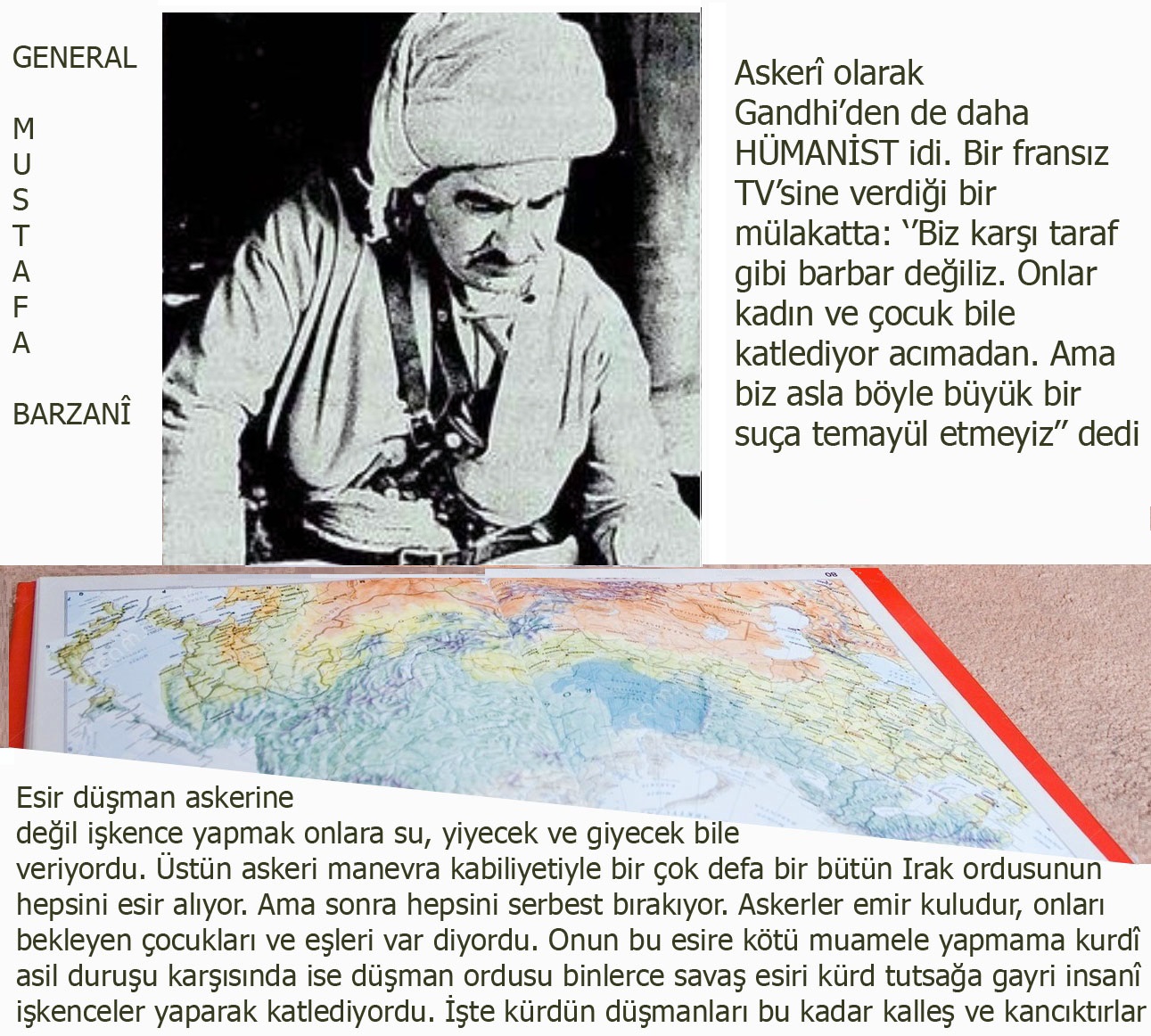
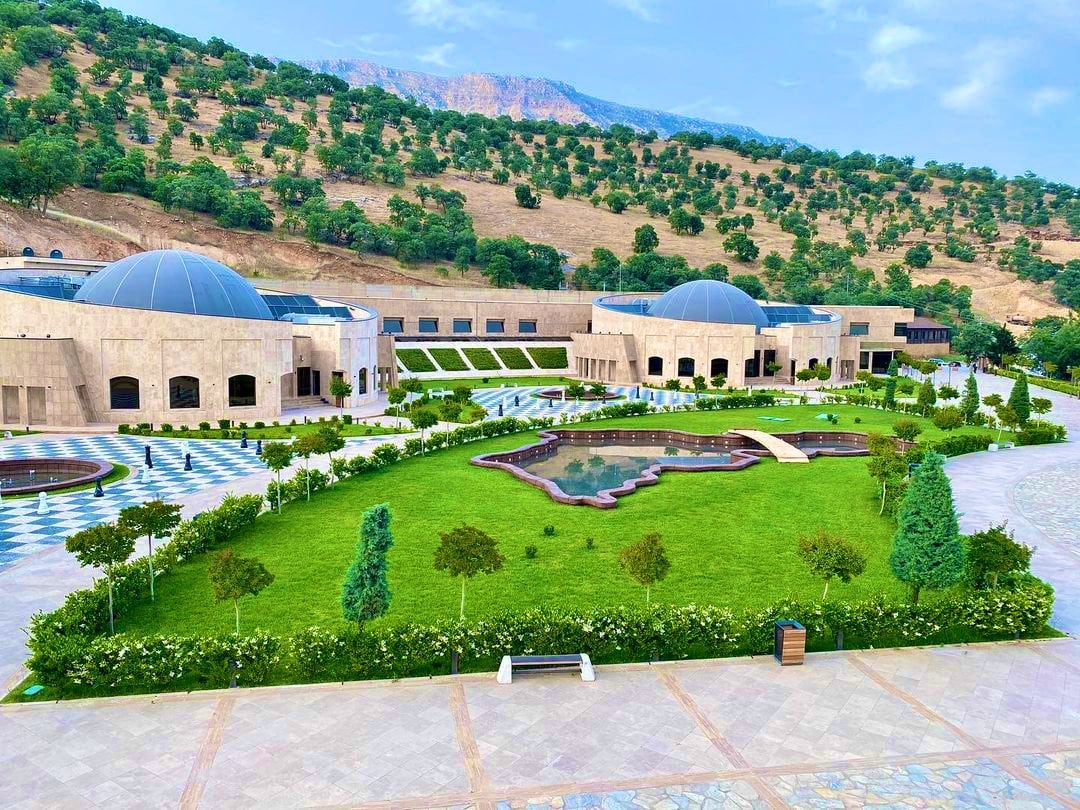


Barzan'da Parkın içinde ki Kürdistan harita'sı havuz
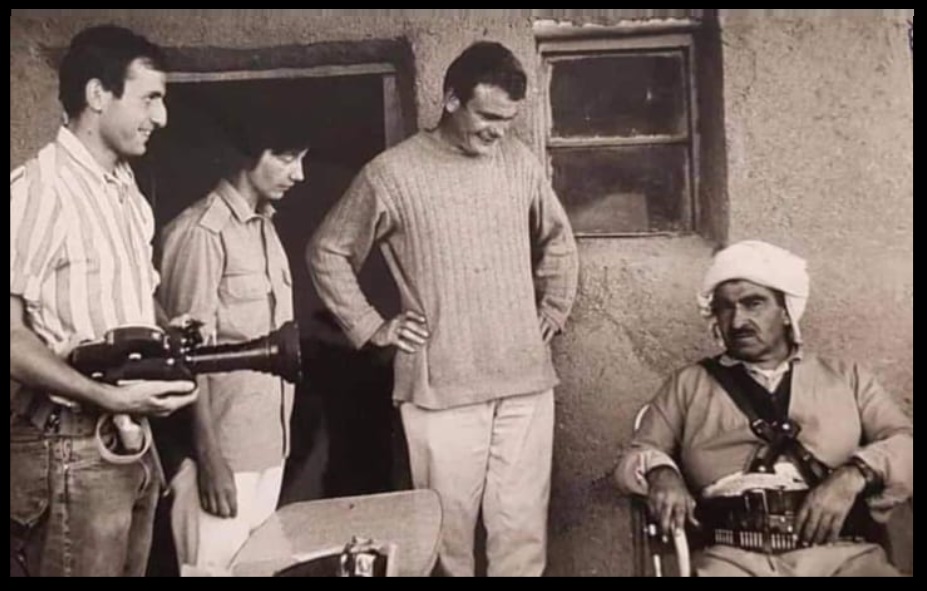


An American TV-team interviewing Barzani, in early 1969s


Goristana Barzanî, li devera Barzan


100 MİLYON KÜRD İÇİN OTONOMİ YETERLİ OLAMAZ

-- Kürdlerin Kayıp Yılları: 1970’ten 1975’e Büyük Yenilgi

11 Mart 1970'te kürdlerin işgalci-ırkçı Irak arab Baas devleti ile imzaladığı Otonomi Anlaşması, başlangıçta kürd halkı için bir kazanım olarak görülse de, uzun vadede özellikle güney kürdleri ve genel anlamda tüm dünya kürdleri için büyük bir siyasal yenilgiye yol açtı. 1975'te Cezayir Anlaşması ile işgalci-ırkçı Irak arab Baas devleti bu otonomi sözünü tamamen rafa kaldırdı ve kürd hareketini ağır bir darbe ile karşı karşıya bıraktı. Bu durum, kürdlerin Irak yönetimine karşı duyduğu güvensizliği daha da derinleştirirken, aynı zamanda kürd bağımsızlık mücadelesinin yalnızca otonomi talepleriyle sınırlı kalamayacağını bir kez daha gözler önüne serdi.

Otonomi çözümü, yaklaşık 100 milyona yakın büyük kürd ulusu için güvenilir ve kalıcı bir yol değildir. Tarihsel deneyimler göstermektedir ki, otonomi ya da federasyon gibi yarı-egemenlik statüleri, kürd ulusunun siyasal, askeri, diplomatik ve kültürel egemenliği açısından bir geri adım ve teslimiyetten başka bir şey değildir. Bir ulusun kendi kaderini tayin hakkı, ancak tam bağımsızlıkla anlam kazanır. Güçlü bir ulusal bilinç ve ortak bir siyasal irade oluşturulmadıkça, bölgesel ve uluslararası aktörlerin sunduğu geçici çözümler, eninde sonunda kürd halkını yeni bir çıkmaza sürüklemekten öteye gitmeyecektir.

Mele Mustafa Barzani'nin liderliğindeki Kürd Hareketi, bu dönemde büyük umutlar beslemiş, ancak işgalci-ırkçı Irak arab devleti ve rejiminin taktiksel manevraları ve bölgesel güçlerin çıkar çatışmaları nedeniyle hayal kırıklığına uğramıştır. Kürdlerin mücadele tarihi, sadece silahlı direnişle değil, ama aynı zamanda siyasi birlik ve diplomatik akılcılıkla silahlı mücadele ile paralel şekillenmelidir. Kürd halkı için gerçek çözüm, geçici anlaşmalara bel bağlamaktan ziyade, kendi öz gücüne ve ulusal dayanışmaya dayalı uzun vadeli stratejiler geliştirmekten geçmektedir.

Goran Candan


Almost all Kurdish leaders accepted the occupation of Kurdistan by enemy armies in the name of religious ideology and remained silent in the face of it. Among Kurdish leaders, only Mustafa Barzani demonstrated a national reflex by fighting against the occupation carried out in Kurdistan through the banner of religious ideology.

— Goran Candan


(Kürd liderlerin hemen hepsi din ideolojisi için düşman askerinin Kürdistan'ı işgaline ses çıkarmayıp işgali sineye çektiler. Kürd liderler arasında bir tek Mistefa Barzani din ideolojisi yoluyla Kürdistan'da yapılan işgale karşı savaşarak ulusal bir refleks gösterdi.

– Goran Candan)


En grupp framträdande internationella personligheter som dog 1979 och vi hittade en bild på Mustafa Barzani bland de mest framträdande globala personligheterna.
Fotot är publicerat i den schweiziska tidningen Le Nouvelliste, utgiven den 29 januari 1979


Amerika Barzani'yi yakından takib ediyordu
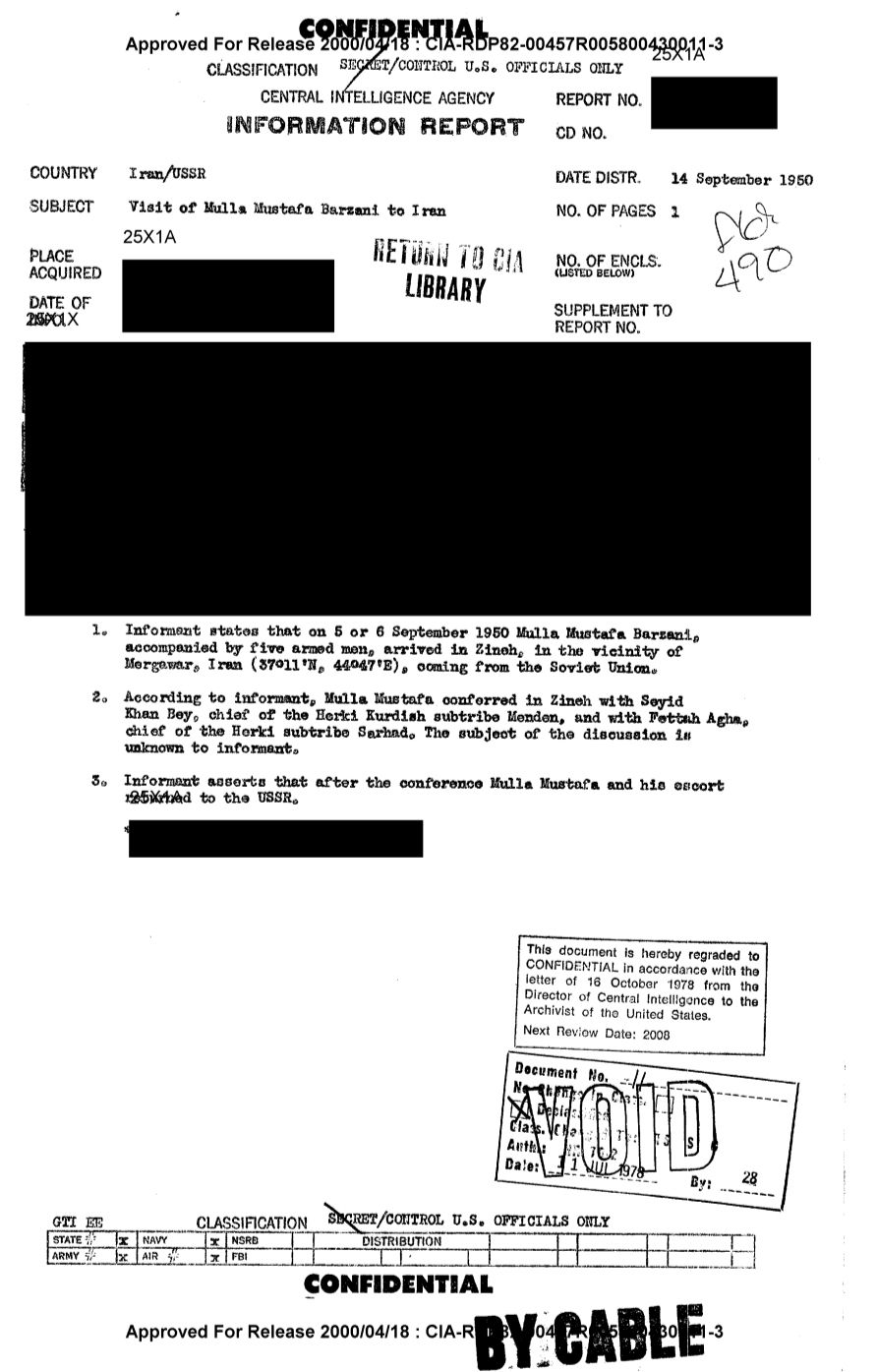
Barzani ve Herki aşiretinin liderleri
ABD Merkezi İstihbarat Arşivi’nde 14 Eylül 1950 tarihli bir belgede şu önemli noktalar yer almaktadır:

  1. 5 veya 6 Eylül 1950’de Mustafa el-Barzani, Sovyetler Birliği’nden beraberinde beş silahlı adamla birlikte İran’a bağlı bir köye ulaştı.

  2. Mustafa el-Barzani, Harki aşiretinin liderleri Sayed Khan Bag ve Fatah Agha ile bir görüşme yaptı.

  3. Muhbir, bu görüşmede nelerin konuşulduğunu bilmiyor.

  4. Görüşmeden sonra Molla Barzani ve silahlı arkadaşları Sovyetler Birliği’ne geri döndüler.
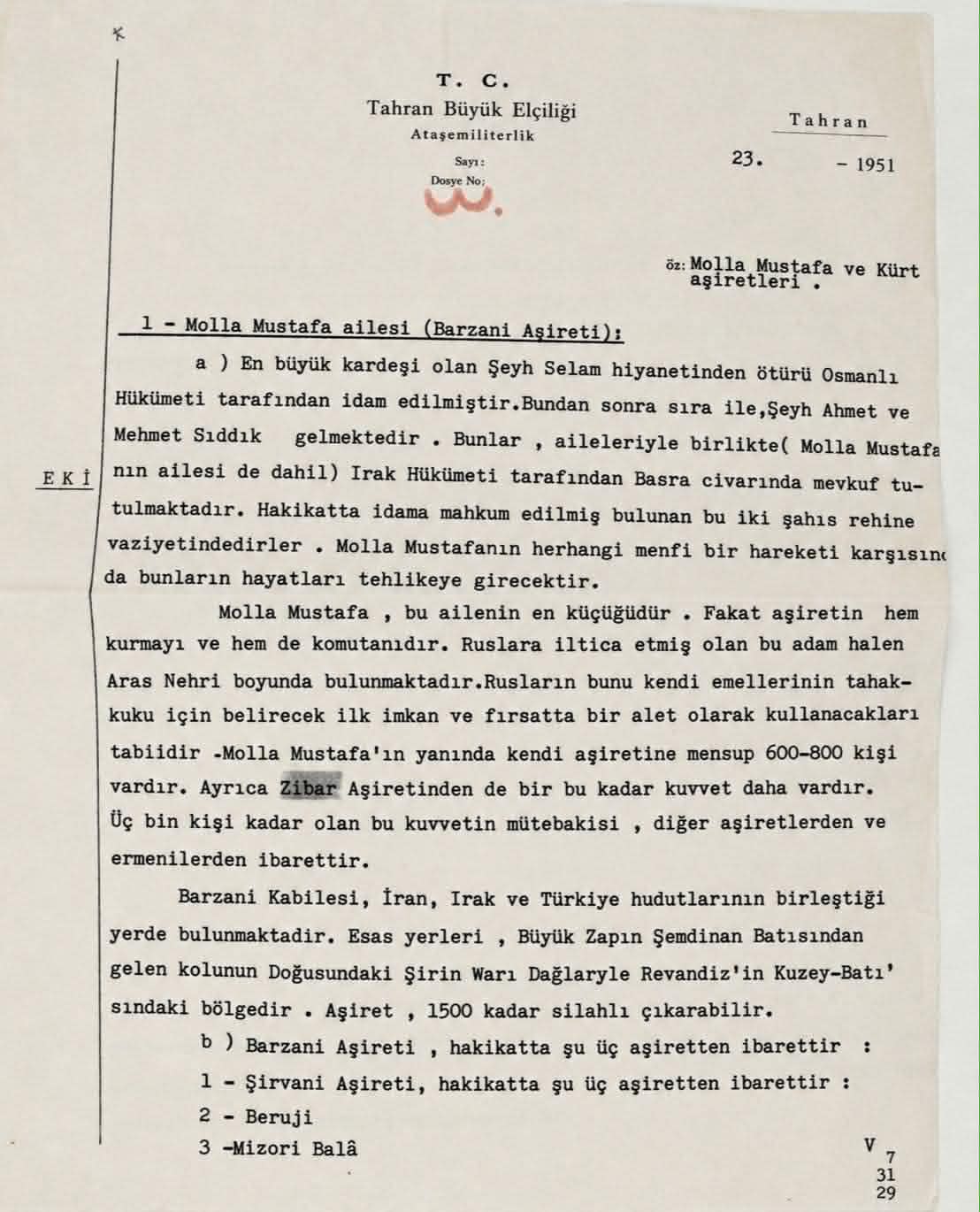


Qebra Mistefa Barzanî & kurê wî îdrîs
Wesiyeta wî: "Qebra min bila ji qebra pêşmergeyek ne bilindtir be''!
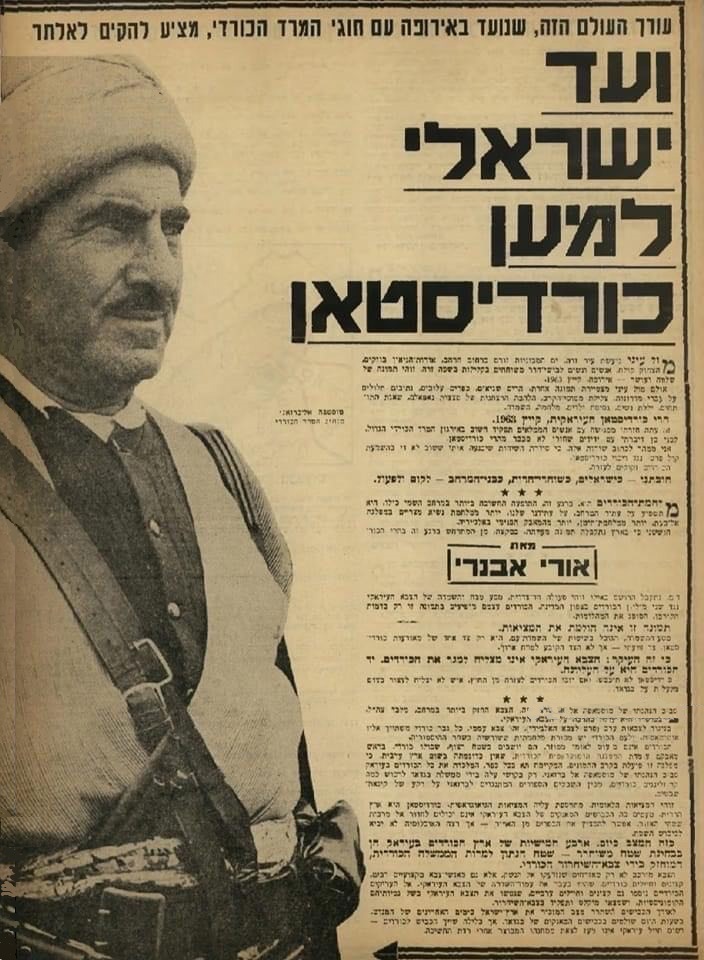


Mustafa Barzanı in Israeli press
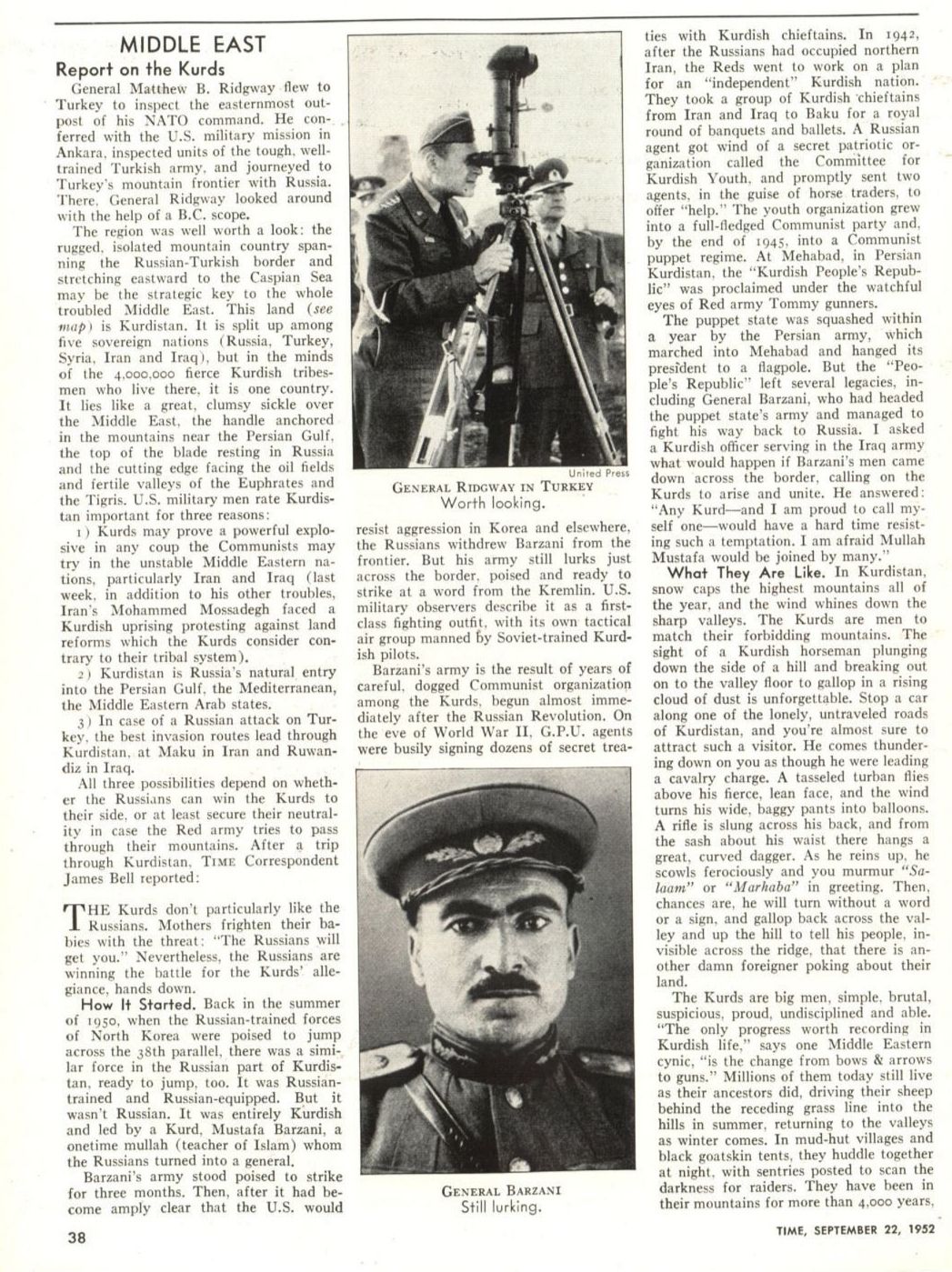


The American magazine Time published in its September 22, 1952 issue an article titled "Report on the Kurds," and this page is a part of that article.
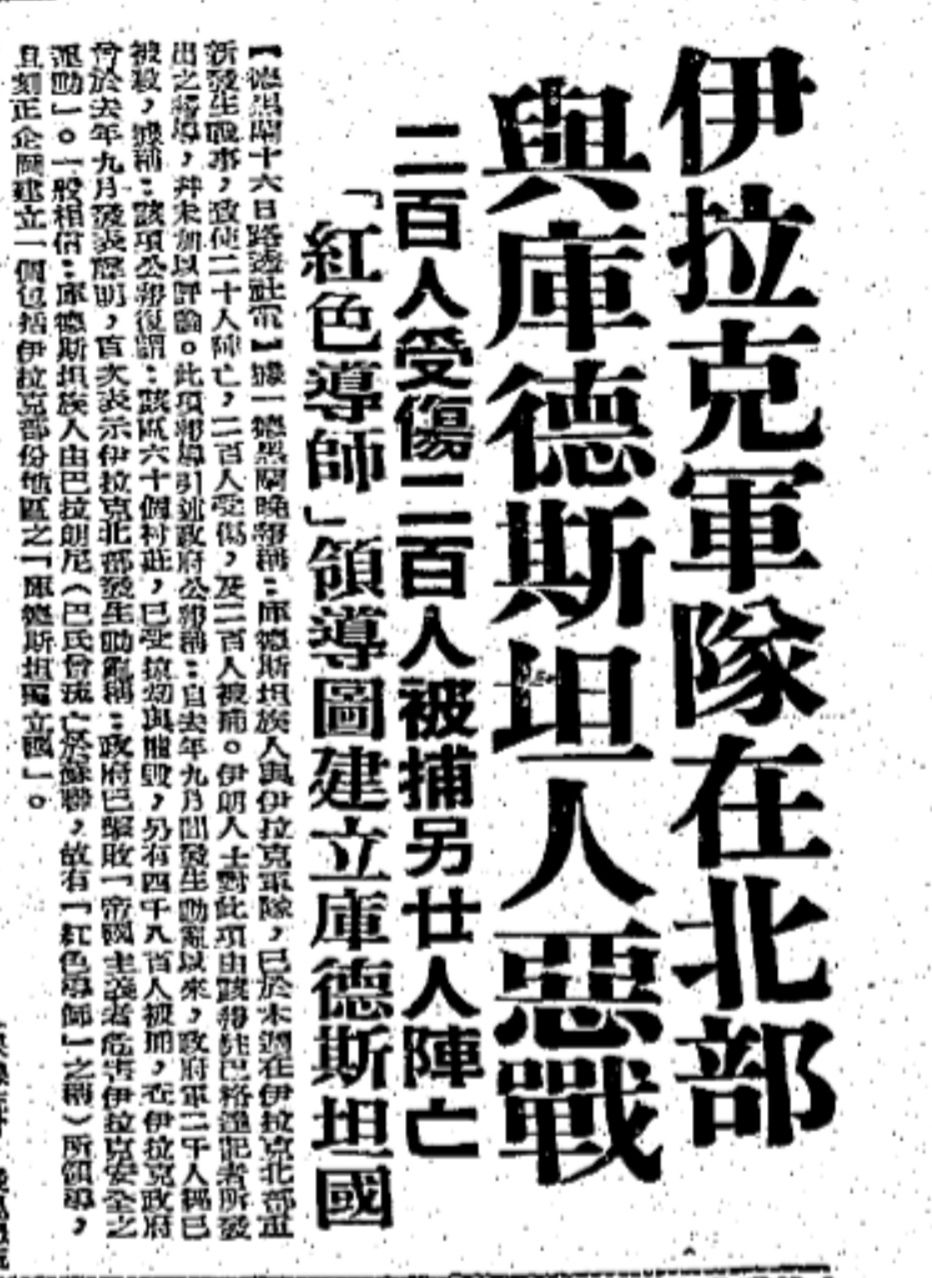


The Chinese newspaper Hong Kong published in its issue of February 17, 1962,
News about the ongoing clashes between the Iraqi army and the Kurdish National Forches Peshmerga.
The newspaper states that the Red Commander wants to establish a Kurdish state.

The one referred to as the Red Commander is Mustafa Barzani.
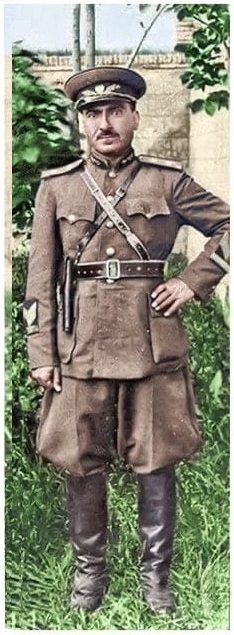


Îsmaîl Bêşîkçî: Mele Mistefa Barzanî bi hezkirin bi bîr dihênin
Barzani's Trip To Israel (1960ies)
Read More about Mustafa Barzani on Wikipedia:
http://sv.wikipedia.org/wiki/Mustafa_Barzani
or

Search more pictures of him on Google


PESMERGE


ELÎ ŞÊR
SHEYX SAÎD

SHEIKH MAHMOUD BARZANJI

SEYID RIZA

LEYLA QASEM

MARGARET SHELLO

Dr SHIVAN (Sait Kirmizitoprak)

MÎR CELADET BEDIR XAN

PÊŞEWA - QAZÎ MIHEMED

GENERAL ÎHSAN NÛRÎ PAŞA

MASOUD BARZANI
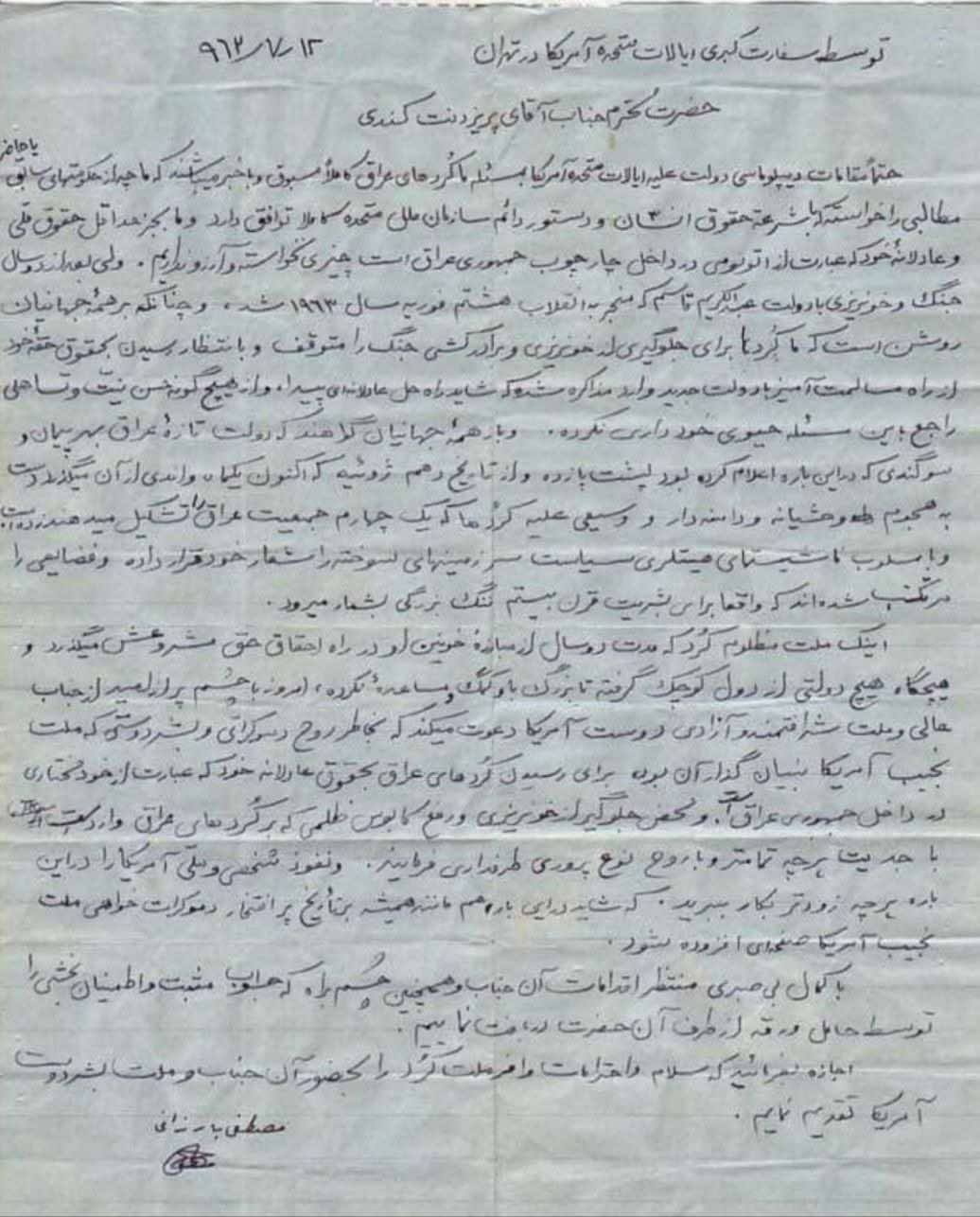


GALERY


Foundation For Kurdish Library & Museum